
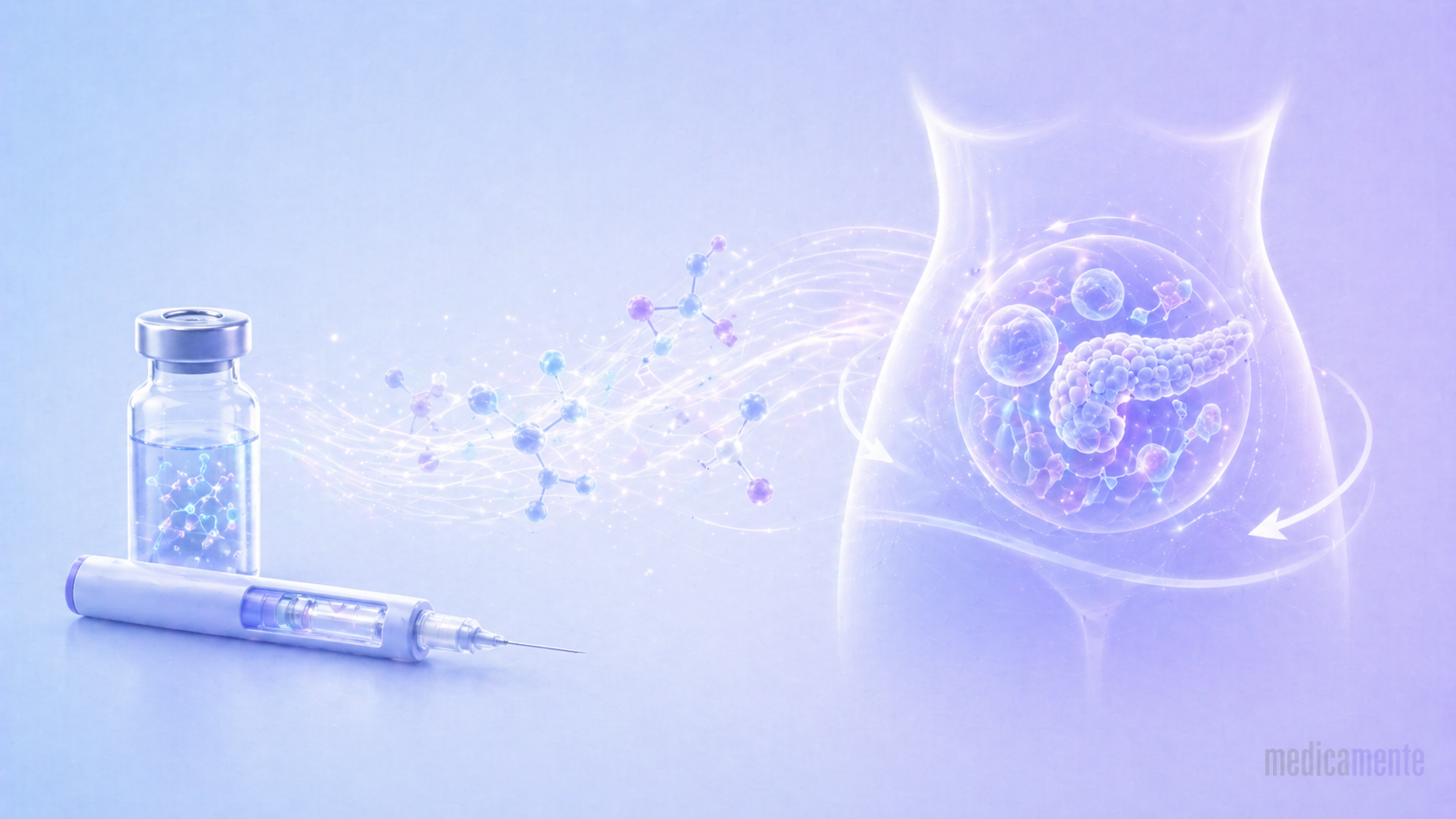
Why weight treatment has become part of systemic medicine
The treatment of obesity is undergoing one of the most notable shifts in modern medicine. For a long time, weight reduction was perceived mainly as a matter of diet, physical activity and personal discipline. This approach proved to be overly simplified. Today, obesity is regarded as a chronic disease involving neuroendocrine, metabolic, genetic, behavioral and social factors. This change is important not only for terminology, but also for treatment selection: medicine is moving from the general advice to “lose weight” toward interventions targeting specific regulatory mechanisms of metabolism.
Drugs affecting the incretin system have taken a central place in this shift. Incretins are intestinal hormones involved in the regulation of appetite, insulin secretion, glucose levels and satiety. The best-known target is the GLP-1 receptor. Drugs in this group imitate the action of glucagon-like peptide-1, slow gastric emptying, enhance the feeling of fullness and help improve glycemic control. As a result, therapy affects not only body weight, but also metabolic parameters associated with the risk of type 2 diabetes, cardiovascular complications and liver disease.
Why these are not simply “weight loss drugs.” Obesity rarely exists in isolation. It is often associated with insulin resistance, arterial hypertension, dyslipidemia, sleep disorders, chronic inflammation, fatty liver disease and increased stress on the joints. Therefore, weight reduction has clinical significance when it is accompanied by improvement in the metabolic profile and reduction of complication risk. Modern drugs are evaluated not only by the number of kilograms lost, but also by their effect on waist circumference, glucose levels, blood pressure, lipids, inflammatory markers, liver function and cardiovascular outcomes.
An important stage has been the expansion of indications for already known drugs. Metabolic-associated steatohepatitis, also known as MASH, is a serious liver disease associated with fat accumulation, inflammation and progressive scarring of liver tissue. The development of pharmacological approaches to MASH shows that drugs initially known for treating obesity and diabetes may also occupy a place in the treatment of organ complications of metabolic disease. This is an important example of how obesity treatment is gradually being integrated into broader systemic medicine.
This example is especially important for understanding the future of metabolic medicine. Fatty liver disease was long considered a condition in which the main treatment consisted of weight loss, risk factor control and follow-up. The appearance of drug approaches to MASH means that metabolic disorders are beginning to be treated not only at the level of body weight, but also at the level of specific organ damage. At the same time, therapy does not eliminate the need for lifestyle changes, because nutrition, physical activity, sleep and control of comorbidities remain basic elements of treatment. However, drug therapy may become a tool for patients in whom non-pharmacological measures alone are insufficient.
The next wave of drugs is associated with combined effects on several hormonal pathways. If the first widely known agents were mainly focused on GLP-1, newer molecules may activate several receptors simultaneously. Tirzepatide is an example of a drug that acts on GIP and GLP-1 receptors. Another approach is represented by experimental drugs with activity at both GLP-1 and glucagon receptors. Such combinations are being studied because they may influence appetite, glucose metabolism, energy expenditure, visceral fat and liver metabolism through several biological mechanisms at the same time.
The dual action of such drugs has biological logic. GLP-1 is linked to satiety and glycemic control, while effects on the glucagon receptor may influence energy metabolism and adipose tissue, including visceral fat and hepatic metabolism. This does not mean that every new combination will automatically be better than existing methods. Clinical value must be confirmed not only by weight reduction, but also by safety, tolerability, effects on muscle mass, the liver, the cardiovascular system and long-term outcomes. Therefore, even promising late-stage results require further analysis in full publications and subsequent follow-up.
Particular attention is paid to body composition. Weight loss alone does not show what exactly has been lost. For the patient, reduction in fat mass, especially visceral fat, is important, while significant loss of muscle tissue is undesirable. Muscles participate in glucose metabolism, support physical function and influence the risk of falls and quality of life, especially in older adults. This is why modern studies increasingly assess not only total body weight, but also fat distribution, waist circumference, preservation of muscle mass and functional indicators. This makes obesity treatment more precise and less focused on a single number on the scale.
Another important direction is the effect of drugs on cardiovascular risk. Obesity is associated with an increased likelihood of myocardial infarction, stroke, heart failure and rhythm disorders. If therapy reduces body weight but does not affect long-term vascular outcomes, its significance is limited. This is why large studies assess the frequency of cardiovascular events, hospitalizations, progression of chronic kidney disease and other complications. In recent years, such data have led to drugs affecting the incretin system being considered not only by endocrinologists, but also by cardiologists, nephrologists, gastroenterologists and sleep medicine specialists.
Metabolic medicine is becoming interdisciplinary. The same patient may have obesity, prediabetes, arterial hypertension, MASH, obstructive sleep apnea, chronic kidney disease and depressive symptoms. In such a situation, therapy must be evaluated not in isolation, but in the context of overall risk. Weight reduction may improve breathing during sleep, reduce joint load, lower insulin resistance and improve liver markers. But it does not replace diagnosis and treatment of each condition. Therefore, the patient needs not only a prescribed drug, but also a comprehensive assessment of comorbid diseases.
Safety remains a fundamental issue. Drugs affecting the incretin system may cause gastrointestinal adverse events, including nausea, vomiting, diarrhea or constipation. Some patients require gradual dose escalation, dietary adjustment and monitoring. The physician must take into account a history of gallbladder disease, pancreatic disease, severe gastrointestinal disorders, concomitant medications and individual contraindications. The broader the indications become, the more important it is to avoid turning treatment into uncontrolled mass use. Medical therapy for obesity requires patient selection, explanation of goals and regular assessment of efficacy and tolerability.
A separate issue is treatment duration. Obesity is a chronic disease, so a short course of medication does not always lead to a durable result. After discontinuation of therapy, some patients may regain weight because the neuroendocrine mechanisms of appetite and energy expenditure tend to return the body to its previous level. This is not a “failure of willpower,” but a reflection of disease biology. Therefore, treatment should be planned as a long-term strategy in which drug therapy is combined with lifestyle modification, follow-up, correction of associated factors and realistic goals.
The future of this field will probably be connected with personalization. Not every patient needs the same drug, the same dose and the same target for weight reduction. In one person, the main problem may be diabetes and high cardiovascular risk; in another, MASH; in a third, pronounced visceral fat and sleep apnea; and in a fourth, weight regain after previous treatment. Molecular, metabolic and clinical characteristics of the patient will help select therapy more precisely. Oral forms of drugs, new combinations of hormonal mechanisms and approaches aimed at preserving muscle mass are also being developed.
The main conclusion from these changes is that obesity is no longer viewed as a simple aesthetic or behavioral problem. It is becoming part of systemic medicine, where body weight is connected with the liver, blood vessels, kidneys, breathing, inflammation, endocrine regulation and quality of life. New drugs offer significant possibilities, but they require careful and professional use. Their value is determined not only by how quickly weight decreases, but by how much treatment reduces medical risks, preserves function and helps control a chronic metabolic disease over the long term.
Write a review
Required fields are marked with *
Categories
- Therapy (81)
- News (48)
- GP (23)
- Cardiology (20)
- urology (12)
- Endocrinology (8)
- Ortopedics (4)
- Dermatology (3)
- Ultrasound (1)
- Mobile app (1)
Articles





Archive
- September 2026 (11)
- August 2026 (11)
- July 2026 (11)
- June 2026 (11)
- May 2026 (9)
- April 2026 (8)
- March 2026 (8)
- February 2026 (8)
- January 2026 (8)
- December 2025 (5)
Categories
- Therapy (81)
- News (48)
- GP (23)
- Cardiology (20)
- urology (12)
- Endocrinology (8)
- Ortopedics (4)
- Dermatology (3)
- Ultrasound (1)
- Mobile app (1)


