
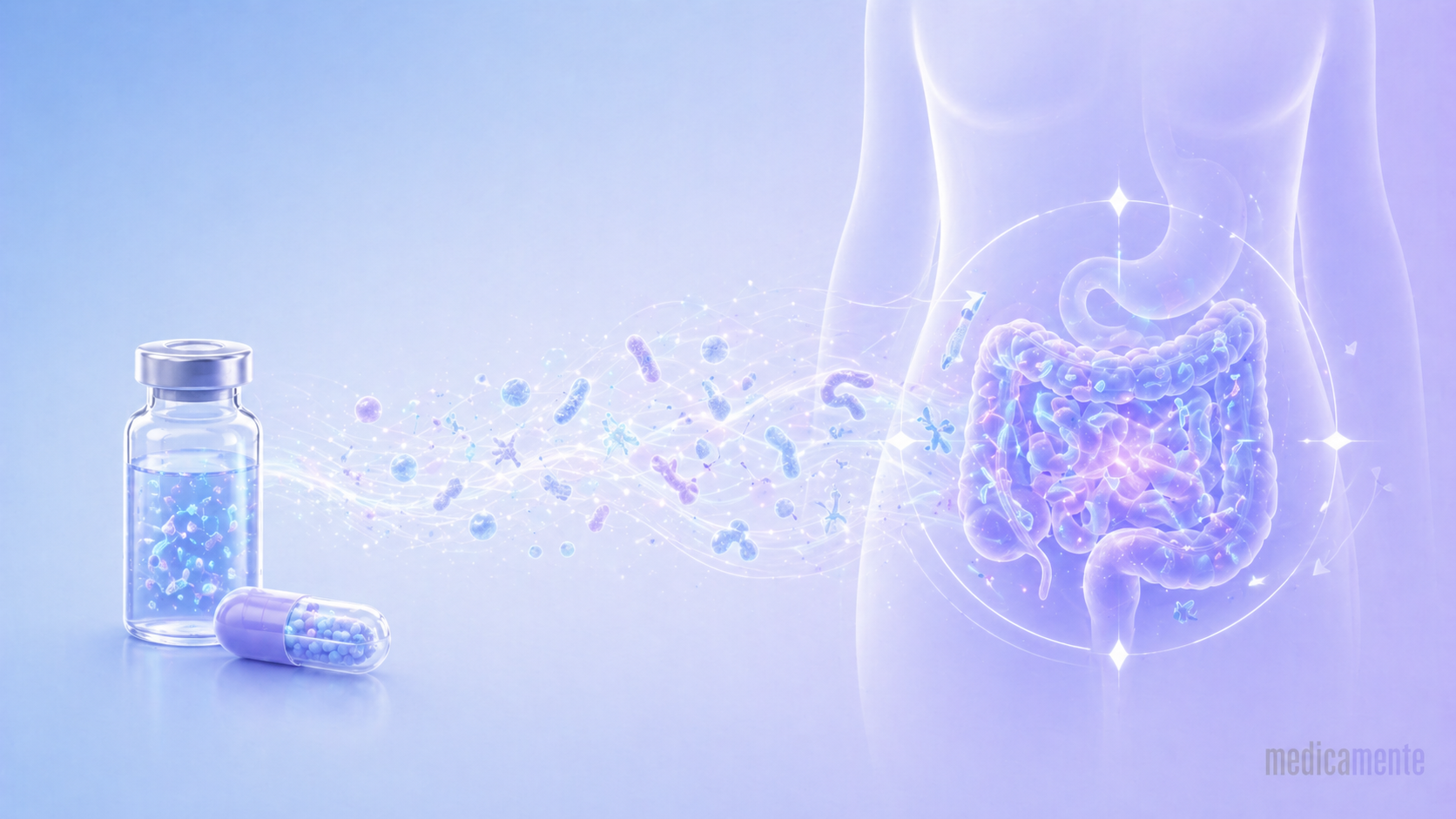
How gut bacteria are becoming part of modern medicine
The microbiome has become one of the most interesting topics in modern medicine because it lies at the intersection of gastroenterology, immunology, infectious diseases, oncology, neurology and metabolic medicine. The microbiome is usually understood as the collection of microorganisms, their genes and metabolic products that exist in the human body, especially in the intestine. These microorganisms are not random passengers. They participate in digestion, immune response formation, metabolite synthesis, protection against pathogens and regulation of inflammation.
For a long time, the intestinal microbiota was described mainly as an element of digestion. Today, this view is considered too narrow. The intestine is not only an organ for nutrient absorption, but also a major immune, endocrine and metabolic system. Microorganisms interact with the mucosal barrier, immune cells, bile acids, the nervous system and dietary components. Therefore, disruption of microbial balance may be associated not only with diarrhea or bloating, but also with systemic processes: chronic inflammation, insulin resistance, autoimmune reactions, drug sensitivity and even features of neuroinflammation.
What makes the microbiome a therapeutic target. In classical pharmacology, a drug is usually directed at a receptor, enzyme, hormonal pathway or cellular structure of the human body. In the case of the microbiome, the target is an entire ecosystem. A physician or researcher may try to change its composition, functions or metabolic activity. This can be done in different ways: through diet, prebiotics, probiotics, antibiotics, bacterial consortia, fecal microbiota transplantation, purified microbial products or molecules produced by bacteria. Each approach has a different level of evidence and different clinical tasks.
The most mature area of microbiome therapy is associated with recurrent Clostridioides difficile infection. This disease often develops after disruption of the normal intestinal microbiota, especially after antibiotic therapy. Antibiotics can suppress not only pathogenic bacteria, but also protective microbial communities. As a result, C. difficile gains the opportunity to multiply, produce toxins and cause severe inflammation of the colon. The problem is that after standard treatment the infection may return because the microbial ecosystem remains unstable.
This is where restoration of the microbiota has received the most convincing clinical application. Standardized microbiota-based products have been developed to prevent recurrence of C. difficile infection in adults after antibacterial treatment. It is important that such products are intended specifically to prevent another episode, not to treat an active infection. This distinction is clinically important because microbiome therapy in this setting is aimed at restoring colonization resistance after antibiotics have controlled the acute infection.
This example shows how microbiome medicine differs from the ordinary idea of simply “adding beneficial bacteria.” It is not a matter of arbitrary probiotic use, but of a standardized biological product that undergoes donor material control, manufacturing procedures, safety assessment and clinical testing. Modern microbiome-based products must meet quality requirements because they contain living microorganisms or their components. This is especially important for patients with weakened immunity, severe comorbidities or disruption of the intestinal barrier.
The next important issue is microbiome functionality. It is not enough simply to describe which bacteria are present in the intestine. It is more important to understand what they do. Some microorganisms participate in the formation of short-chain fatty acids, others transform bile acids, some influence drug metabolism, and others may support or reduce inflammatory responses. For this reason, modern science is gradually shifting from lists of bacteria toward analysis of functions, metabolites and interactions. Two people may have different microbial composition but similar functional capacity, or, conversely, a similar composition but different metabolic effects.
The microbiome is actively studied in oncology. Some studies suggest that intestinal bacteria may influence the effectiveness of immunotherapy, especially immune checkpoint inhibitors. A possible mechanism is related to the fact that the microbiota regulates innate and adaptive immunity and also produces metabolites that may strengthen or weaken antitumor responses. This direction does not mean that the microbiome can simply be “corrected” to treat cancer, but it shows that the intestinal ecosystem may be part of the oncological response.
A separate direction is connected with metabolic diseases. The microbiome participates in the processing of dietary fiber, formation of short-chain fatty acids, regulation of bile acids and interaction with energy metabolism. Therefore, it is studied in obesity, type 2 diabetes, metabolic-associated fatty liver disease and inflammatory bowel diseases. However, the evidence base here is more complex than in recurrent C. difficile infection. Microbiome changes may be not the cause, but the consequence of diet, medications, body weight, inflammation or lifestyle. Therefore, it is not enough to show that patients with a disease have a “different microbiome.” It is necessary to prove that targeted modification of the microbiome improves specific medical outcomes.
The microbiome is also connected with the effects of antibiotics. Antibacterial therapy can be lifesaving, but it changes the microbial ecosystem. These changes may persist for different periods depending on the class of antibiotic, duration of therapy, baseline microbiota and individual characteristics of the patient. This does not mean that antibiotics should be avoided when they are indicated. But it emphasizes the need for rational antibiotic prescribing and an understanding of their long-term influence on the microbial environment.
There is also strong interest in the relationship between the microbiome and the nervous system. The gut-brain axis includes immune, metabolic, endocrine and neural mechanisms. The microbiome is studied in Parkinson’s disease, depression, anxiety disorders, autism spectrum disorders and neurodegenerative diseases. Scientific caution is necessary here. An association between the microbiome and a disease does not prove causality. Microbial changes may be a consequence of diet, medications, reduced mobility, inflammation or the disease itself. Therefore, any claims about treating neurological or psychiatric diseases through the microbiome must be based on clinical trials, not only on observational data.
One of the main problems in microbiome medicine is individual variability. The microbiome depends on age, diet, geography, medications, previous infections, lifestyle, comorbidities and even recent dietary changes. Therefore, a universal definition of a “healthy microbiome” remains difficult. In different people, a normal microbial ecosystem may look different. This makes diagnosis and treatment more complicated: it is not possible simply to compare a patient with one ideal sample and conclude that disease is present. Functional criteria, clinical context and a proven link between intervention and outcome are needed.
Clinical trials of microbiome interventions also have specific difficulties. More reliable evidence appears when the microbiome is treated as a mechanistic mediator, not merely as an endpoint. In other words, it is important not only to show that bacterial composition changed after an intervention, but also to explain how this change is connected with improvement in the patient’s condition. This approach helps distinguish biologically meaningful results from random microbial fluctuations.
The future of microbiome therapy will probably be more precise and less similar to classical fecal transplantation. Researchers are working on defined bacterial consortia, purified spores, synthetic communities, metabolites and drugs that influence microbiome functions. This path may be safer and more reproducible because the composition of therapy will be better controlled. Instead of unstructured transfer of donor microbiota, medicine will aim for precise restoration of specific functions: colonization resistance, anti-inflammatory metabolism, normal bile acid processing or support of immune balance.
The main meaning of microbiome medicine is not that bacteria are becoming a universal explanation for all diseases. That would be an incorrect oversimplification. The significance of this direction is different: the human organism cannot be considered separately from the microbial communities that participate in its physiology. Where the connection has been clinically proven, the microbiome is already becoming a therapeutic target. Where the data remain preliminary, it remains an important research field. In the coming years, the success of this area will depend on strict clinical trials, standardization of products, safety assessment and the ability to distinguish real medical mechanisms from popular but unproven interpretation.
Write a review
Required fields are marked with *
Categories
- Therapy (81)
- News (48)
- GP (23)
- Cardiology (20)
- urology (12)
- Endocrinology (8)
- Ortopedics (4)
- Dermatology (3)
- Ultrasound (1)
- Mobile app (1)
Articles





Archive
- September 2026 (11)
- August 2026 (11)
- July 2026 (11)
- June 2026 (11)
- May 2026 (9)
- April 2026 (8)
- March 2026 (8)
- February 2026 (8)
- January 2026 (8)
- December 2025 (5)
Categories
- Therapy (81)
- News (48)
- GP (23)
- Cardiology (20)
- urology (12)
- Endocrinology (8)
- Ortopedics (4)
- Dermatology (3)
- Ultrasound (1)
- Mobile app (1)


