
Why bacterial viruses are returning to infectious disease medicine
Antibiotic resistance has become one of the most serious problems in modern medicine. Its significance extends far beyond infectious diseases. Without effective antibiotics, surgery, intensive care, organ transplantation, cancer treatment, care for premature infants and therapy for severely ill chronic patients all become more dangerous. Antibiotics were long perceived as a reliable foundation of modern clinical practice, but bacterial resistance is gradually changing this confidence.
The essence of the problem is that bacteria can adapt to drug pressure. With inappropriate, excessive or prolonged antibiotic use, strains with protective mechanisms survive. They may destroy the drug, alter its target, pump the molecule out of the cell or reduce antibiotic penetration into the cell. These bacteria then spread between people, in hospitals, in the environment, through food chains and in animal farming systems. For this reason, antibiotic resistance cannot be viewed only as the problem of one patient. It is a systemic biological and public health problem.
The scale of the threat has already been confirmed by international data. Bacterial antimicrobial resistance directly caused a large number of deaths and was associated with an even larger number of deaths worldwide. Surveillance systems increasingly analyze bloodstream infections, urinary tract infections, gastrointestinal infections and sexually transmitted bacterial infections to understand how resistance spreads. Such monitoring is essential because treatment decisions depend not only on the individual patient, but also on local and global resistance patterns.
Resistance among gram-negative bacteria is especially concerning. These include Klebsiella pneumoniae, Escherichia coli, Acinetobacter baumannii and Pseudomonas aeruginosa. These microorganisms can cause bloodstream infections, pneumonia, urinary tract infections, wound infections and complications in intensive care patients. When resistance develops to carbapenems, fluoroquinolones and cephalosporins, treatment options become limited. Sometimes the physician faces a situation in which standard regimens do not work, while available alternatives have high toxicity or insufficient effectiveness.
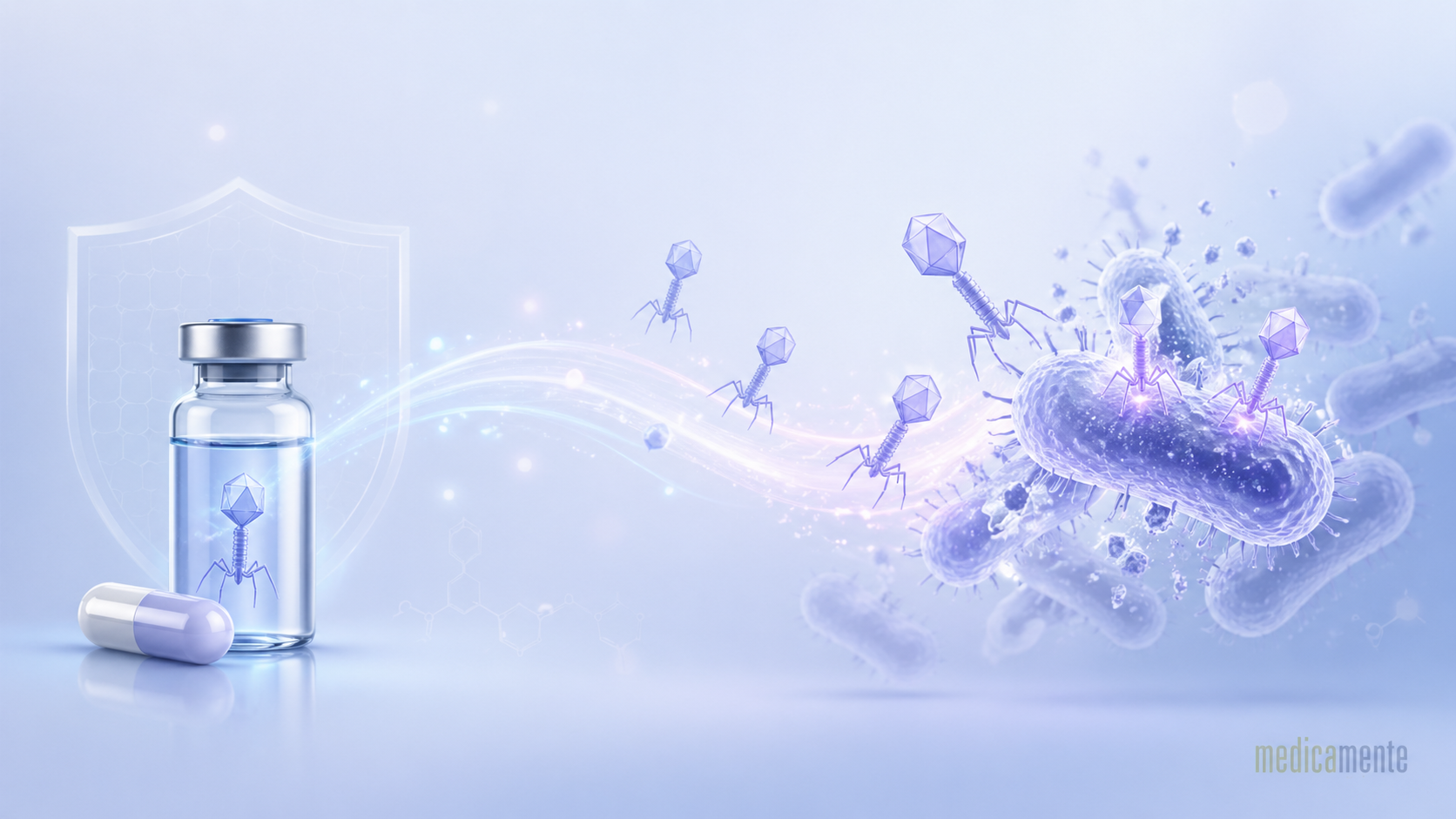
Against this background, interest in phage therapy has intensified again. Bacteriophages are viruses that infect bacteria. They are not human viruses in the usual clinical sense. Their biological target is the bacterial cell. A phage attaches to specific receptors on the surface of a bacterium, injects genetic material, uses bacterial mechanisms to reproduce and, in many cases, destroys the cell. It is this ability that makes bacteriophages a potential therapeutic tool against bacterial infections.
The idea of phage therapy is not new. Bacteriophages were discovered and studied before antibiotics became widely available. However, after the introduction of penicillin and other antibacterial drugs, interest in phages declined in Western medicine. Antibiotics were more convenient, easier to standardize and broader in spectrum. Today, the situation is changing. Rising resistance, a shortage of new antibiotics and the difficulty of treating chronic bacterial infections are bringing phage therapy back into clinical research.
The main difference between phages and antibiotics is their high specificity. An antibiotic may act against a broad range of bacteria, including part of the normal microbiota. A phage is usually directed at a specific species or even a specific bacterial strain. This can be an advantage because therapy may disturb normal microbial communities less. But the same feature creates difficulty: before use, it is necessary to know the pathogen precisely and select a phage that can actually destroy it. Unlike a standard antibiotic, phage therapy often requires individualized microbiological analysis.
Phage therapy is especially interesting in infections where bacteria form biofilms. A biofilm is an organized microbial community attached to a surface and protected by an extracellular matrix. Such structures occur on joint prostheses, catheters, implants, chronic wounds, in the lungs of patients with cystic fibrosis and in some urological infections. Bacteria within a biofilm are less sensitive to antibiotics and immune responses. Some phages can penetrate biofilms or produce enzymes that help disrupt their structure. This makes them particularly attractive for difficult chronic infections.
One notable modern example is personalized inhaled phage therapy for chronic lung infections. Such approaches are being studied in patients with bacterial respiratory infections, where individualized phages are selected according to the specific bacterial isolate. This example shows why phage therapy is now considered not as a simple replacement for antibiotics, but as a personalized infectious disease technology. The physician must isolate the bacterium, determine its sensitivity to available phages, assess the infection site, the patient’s immune status, the presence of biofilm, the possibility of drug delivery and the combination with antibiotics.
Sometimes phages may be used together with antibacterial therapy. Such a combination may be biologically justified because phage pressure can sometimes make bacteria less virulent or more sensitive to antibiotics. In this model, phages do not replace antibiotics, but become part of a combined strategy. The goal is not only to kill bacteria directly, but also to change the evolutionary pressure on the pathogen in a way that improves treatment possibilities.
However, phage therapy has its own limitations. Bacteria can become resistant not only to antibiotics, but also to phages. They may change surface receptors, activate defense systems, use CRISPR-Cas mechanisms or other ways to avoid infection. At the same time, resistance to phages does not always mean that the situation worsens. Sometimes a receptor change that protects a bacterium from a phage reduces its ability to cause infection or decreases antibiotic resistance. But this effect cannot be considered universal. It requires laboratory testing and clinical confirmation.
The patient’s immune response also remains an important question. The body may neutralize administered phages, especially during repeated or prolonged use. Such observations are important because they show that a phage is not simply “another type of antibiotic,” but a biological agent interacting with the immune system. Future protocols may therefore require assessment not only of bacterial sensitivity, but also of the patient’s immune response to the phage preparation.
The regulatory side of phage therapy remains complex. The classical model of a drug assumes stable composition, identical dosage, reproducible manufacturing and clearly defined quality control. Personalized phage therapy may require selection or modification of the composition for a specific strain. This creates difficulties for registration, standardization, manufacturing and clinical trial design. Controlled clinical studies are especially important because they provide more reliable data on efficacy and safety than individual emergency-use cases.
Safety requires special attention. A phage product must be purified from bacterial toxins, undesirable genetic elements and contaminants. Preference is usually given to lytic phages, which destroy bacterial cells, rather than temperate phages, which can integrate into the bacterial genome. It is necessary to exclude the transfer of toxin genes or antibiotic resistance genes. Therefore, phage production requires strict microbiological and molecular characterization. For clinical medicine, it is not enough simply to find a virus that kills bacteria in a Petri dish. It must be shown that the product is safe, stable, purified and active in the patient’s body.
Phage therapy also does not solve antibiotic resistance by itself. If antibiotics continue to be used incorrectly, resistance will continue to develop regardless of new technologies. Rational antibiotic prescribing, infection control, vaccination, diagnostics, sanitation measures, surveillance of hospital-acquired infections and limitation of unnecessary antibiotic use in medicine and agriculture remain the foundation of resistance control. Phages may become part of this strategy, but they do not replace it.
The future of this field will probably include several formats. In some cases, ready-made phage cocktails against common pathogens may be used. In others, personalized preparations selected for the bacterium of a specific patient may be required. Engineered phages are also being developed, with modified properties designed to increase activity, broaden the spectrum or deliver additional antibacterial mechanisms. These technologies are promising, but require particularly strict evaluation because intervention in phage biology increases both possibilities and regulatory requirements.
The main significance of phage therapy is that it brings infectious disease medicine closer to a more precise approach. The physician treats not an abstract infection, but a specific bacterium with a specific resistance profile, in a specific anatomical environment and in a specific patient. This aligns with the broader trend toward personalization in medicine. Just as oncology selects therapy according to the molecular profile of a tumor, infectious disease medicine may use phage therapy to select a biological agent according to the properties of the bacterial strain.
Phage therapy has not yet become a universal standard for treating resistant infections. Its place will be determined by controlled studies, manufacturing quality, regulatory decisions and clinical protocols. But the renewed interest in it is logical. The world is facing a situation in which old antibiotics are losing reliability faster than new ones appear. In these conditions, bacteriophages represent not a speculative alternative, but a serious scientific direction that may complement antibiotics, especially in complex, chronic and drug-resistant infections.
Write a review
Required fields are marked with *
Categories
- Therapy (81)
- News (48)
- GP (23)
- Cardiology (20)
- urology (12)
- Endocrinology (8)
- Ortopedics (4)
- Dermatology (3)
- Ultrasound (1)
- Mobile app (1)
Articles





Archive
- September 2026 (11)
- August 2026 (11)
- July 2026 (11)
- June 2026 (11)
- May 2026 (9)
- April 2026 (8)
- March 2026 (8)
- February 2026 (8)
- January 2026 (8)
- December 2025 (5)
Categories
- Therapy (81)
- News (48)
- GP (23)
- Cardiology (20)
- urology (12)
- Endocrinology (8)
- Ortopedics (4)
- Dermatology (3)
- Ultrasound (1)
- Mobile app (1)


