
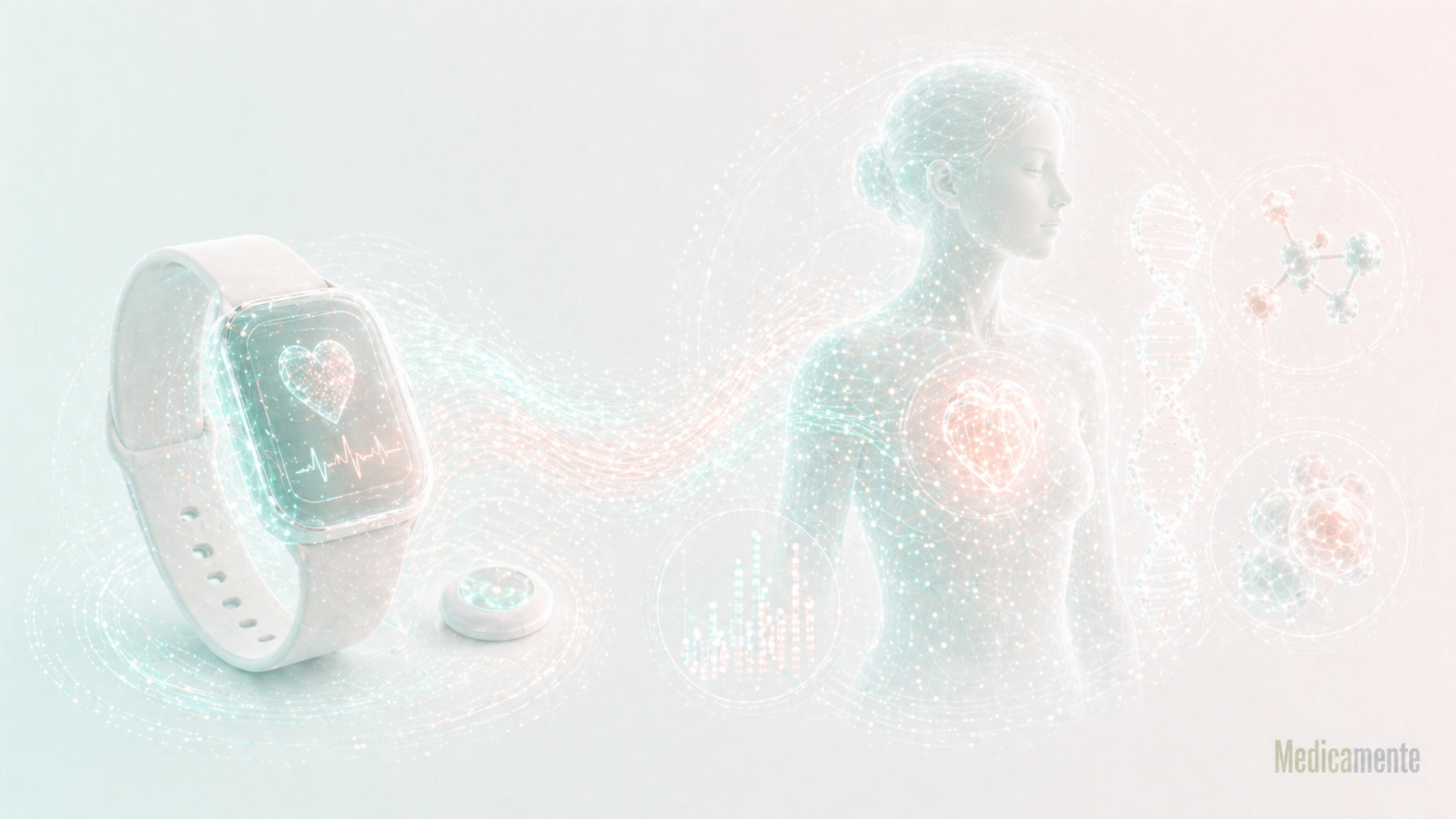
How sensors, algorithms and implants are changing patient care
Medical devices are changing faster than many other tools of clinical practice. In the past, a medical device was most often understood as a physical instrument: an ultrasound machine, pacemaker, glucose meter, endoscope, surgical tool or implant. Today, the boundaries have become broader. A device may include sensors, a mobile application, a cloud platform, an artificial intelligence algorithm, a data transmission system and an interface for the physician. Modern medical technology is therefore increasingly not a single object, but an ecosystem that collects, analyzes and transmits medical information.
The main change is the transition from episodic measurement to continuous monitoring. In the traditional model, the patient comes to an appointment, undergoes an examination, receives a result and returns home. Between visits, the physician often does not see how the condition changes in real life. Wearable sensors and home devices are changing this model. They can record pulse, heart rhythm, oxygen saturation, glucose, blood pressure, sleep, activity, breathing, temperature, tremor, gait or other physiological parameters. This is especially important in chronic diseases, which change gradually and do not always manifest during a medical visit.
Personalized medicine receives a new type of data from such devices. Genetic analysis, laboratory values and imaging show important characteristics of the patient, but they are often isolated points in time. Sensors add dynamics: how the patient sleeps, moves, tolerates treatment, responds to exertion, recovers after surgery or approaches an exacerbation of a chronic disease. This makes it possible to observe not only the disease as a diagnosis, but also the patient’s everyday physiological trajectory.
One of the most mature areas is diabetology. Continuous glucose monitoring has already changed the approach to diabetes treatment. Instead of separate blood drop measurements, the patient and physician receive a curve of glucose changes throughout the day. This allows detection of nocturnal hypoglycemia, post-meal spikes, the effects of physical activity, stress reactions and medication influence. In combination with insulin pumps and automatic correction algorithms, such systems approach a closed-loop model, where the device not only measures, but also helps adapt therapy. This is an example of how a medical device becomes part of continuous disease management.
Another example is cardiac devices. Implantable pacemakers, defibrillators and rhythm monitors have long been used in clinical practice. The new generation of technologies adds remote data transmission, automatic event detection and integration with digital platforms. The patient may be at home while the system transmits information to the physician about rhythm disturbances, device function, episodes of heart failure or changes in physiological parameters. This approach does not eliminate in-person examinations, but it helps detect events earlier that might otherwise remain unnoticed.
Artificial intelligence increases the significance of medical devices. It can analyze medical images, ECG signals, sensor data, ultrasound images, breathing patterns, movement or laboratory values. It is important to understand that artificial intelligence inside a device does not automatically make it more useful. The algorithm must solve a specific medical task, be tested on appropriate data and show benefit in a real clinical process. For example, AI may help the physician evaluate an image faster, but if the result does not change diagnosis, treatment or outcome, its practical value is limited. Therefore, medical technology must be assessed not by its level of innovation, but by whether it improves accuracy, safety, speed, accessibility or quality of care.
One clear example of device development is AI-supported ultrasound diagnostics. Portable devices, built-in algorithms and simplified interfaces may help in regions and clinical situations where access to expert ultrasound is limited. Such technologies are especially relevant for emergency departments, mobile services, rural clinics and healthcare systems with limited resources. However, accessibility must not be achieved at the cost of quality. If a device is used by a less experienced specialist, requirements for interface design, training, error control and clinical routing become even higher.
The next direction is smart implants. Previously, an implant was often a passive structure: a joint prosthesis, vascular stent, valve or orthopedic system. Modern implants may contain sensors, electronics, stimulators and wireless data transmission. Neurostimulators for Parkinson’s disease, epilepsy, chronic pain and certain movement disorders already demonstrate that a device can not only replace a structure, but also actively interact with the nervous system. In the future, such systems will increasingly adapt to the patient’s current state rather than operate with one fixed setting.
Wearable and implantable biosensors form a separate technological area. Unlike rigid instruments, such systems must flexibly fit the body, withstand movement, maintain accuracy and not interfere with everyday activity. Especially interesting are sensors that analyze not only physical parameters, but also chemical signals. Sweat, saliva, interstitial fluid, breath and other biological media may contain information about metabolism, inflammation, hydration, drug concentrations or stress responses. Many such technologies remain research-based or early commercial solutions, but their potential significance is high.
The clinical meaning of chemical and biochemical sensors is that the physician may receive not a static laboratory result once every few months, but a more frequent picture of biological changes. This may be important for chronic diseases, sports medicine, intensive monitoring and pharmacotherapy. However, biochemical monitoring is more difficult than measuring pulse or movement. The sensor must remain stable, distinguish the target molecule from similar substances, work in changing temperature and humidity conditions and provide results that can be clinically interpreted.
The regulatory distinction between a wellness device and a medical device becomes fundamental. A fitness bracelet that shows activity or sleep for general self-monitoring has one level of responsibility. A device that claims to diagnose arrhythmia, measure blood pressure accurately, detect disease or recommend treatment must meet much stricter requirements. This distinction is important for patients. A user may perceive a wrist device as a medical instrument even if it is intended only for general self-monitoring. Misunderstanding may lead to anxiety, false reassurance or incorrect decisions.
For example, a normal value in an application does not always exclude disease, and an alarming notification does not always mean a diagnosis. Therefore, the manufacturer must clearly explain the device’s purpose, and the physician must help the patient understand which data have medical meaning. The more medical claims a device makes, the more evidence it must provide. In healthcare, convenience and accessibility are valuable only when accompanied by accuracy and safety.
A major challenge is data quality. A wearable sensor may make errors because of movement, poor contact with the skin, temperature, sweat, individual tissue characteristics, skin color, device position, signal quality or software processing. In clinical medicine, such errors have consequences. If a device misses a dangerous episode, the patient may seek help too late. If it frequently gives false signals, the patient and physician face anxiety, unnecessary examinations and system overload. Therefore, accuracy must be evaluated not only in the laboratory, but also in real life.
Another challenge is integration of data into the physician’s work. If a patient brings dozens of graphs showing sleep, pulse, blood pressure, glucose and activity, this does not always make diagnosis easier. Data must be structured, filtered and presented so that the physician can quickly see clinically significant changes. Otherwise, digital noise appears. Personalized medicine requires not the maximum amount of information, but the right information at the right moment. Therefore, the future of medical devices depends not only on sensors, but also on interfaces, data standards and clinical protocols.
Confidentiality and cybersecurity become part of patient safety. Medical devices may transmit data through Bluetooth, Wi-Fi, mobile applications and cloud services. If an implantable device, remote adjustment or a system influencing treatment is involved, protection from unauthorized access becomes critical. Security is not an additional technical detail, but part of the medical reliability of the device. A system that collects sensitive data must protect not only measurements, but also the patient’s autonomy and trust.
The future of medical devices will probably be connected with adaptive systems. A device will not only measure a parameter, but also take into account the patient’s history, medications, comorbidities, genetics, behavior and data from other sensors. For example, a diabetes treatment system may consider activity and sleep, a cardiac monitor may consider stroke risk and symptoms, a rehabilitation device may consider movement progress, and an oncological platform may consider molecular profile and treatment tolerability. This makes medicine more personal, but also raises the requirements for explainability and control.
The main significance of new medical devices is that they bring medicine closer to the patient’s everyday life. Disease does not exist only in the physician’s office. It manifests during sleep, movement, eating, work, stress, recovery and response to treatment. Sensors, implants and algorithms allow some of these processes to be seen more precisely. But technology has medical meaning only when it helps make a better decision. Personalized medicine of the future will be built not on one device, but on the responsible combination of data, clinical experience, safety and respect for the patient.
Write a review
Required fields are marked with *
Categories
- Therapy (81)
- News (48)
- GP (23)
- Cardiology (20)
- urology (12)
- Endocrinology (8)
- Ortopedics (4)
- Dermatology (3)
- Ultrasound (1)
- Mobile app (1)
Articles





Archive
- September 2026 (11)
- August 2026 (11)
- July 2026 (11)
- June 2026 (11)
- May 2026 (9)
- April 2026 (8)
- March 2026 (8)
- February 2026 (8)
- January 2026 (8)
- December 2025 (5)
Categories
- Therapy (81)
- News (48)
- GP (23)
- Cardiology (20)
- urology (12)
- Endocrinology (8)
- Ortopedics (4)
- Dermatology (3)
- Ultrasound (1)
- Mobile app (1)


