
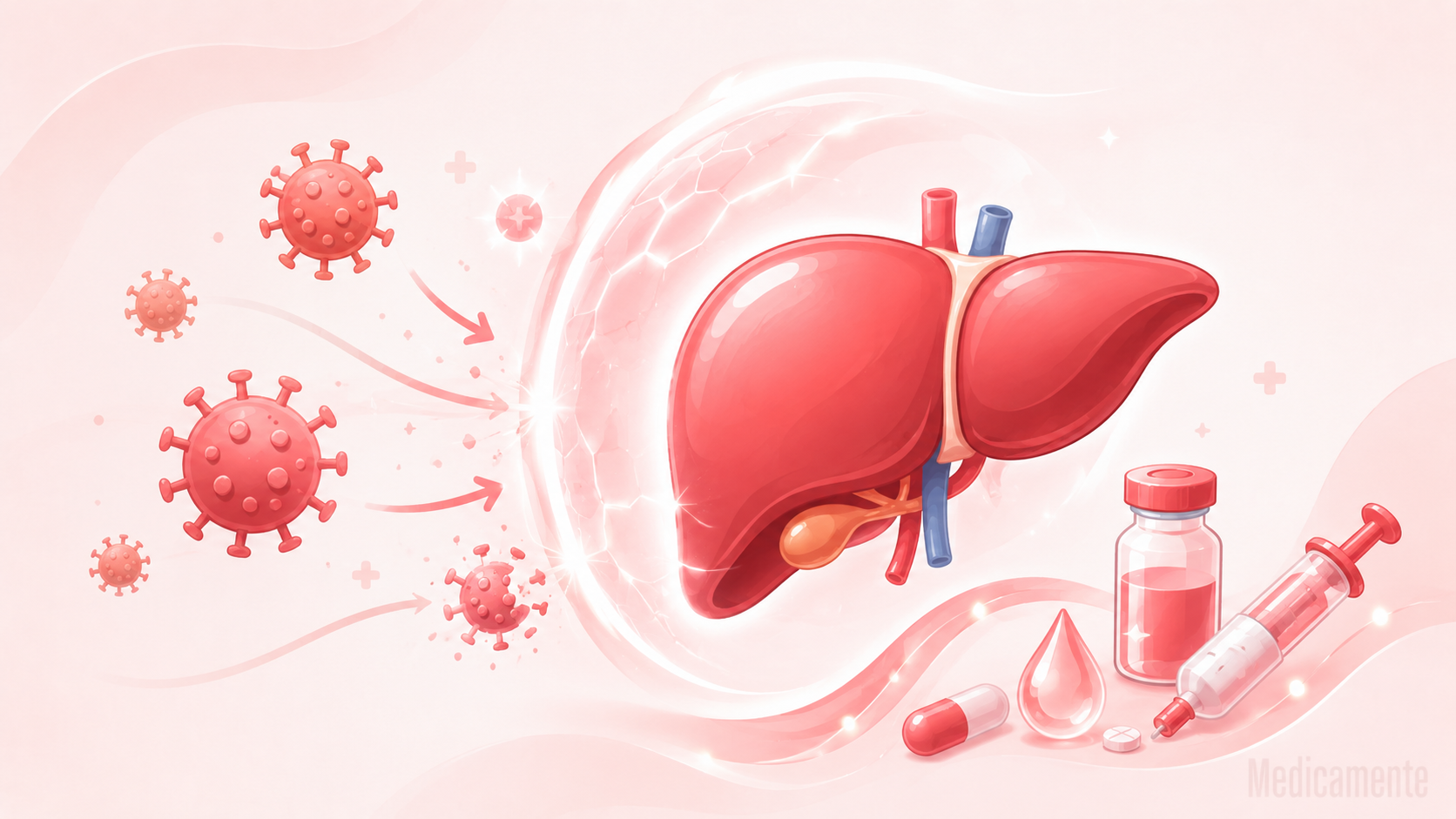
Why a viral liver infection is becoming a target of precision therapy
Chronic hepatitis B: why the disease can remain unnoticed for years
Chronic hepatitis B has a special place among liver diseases. It can persist for years without pronounced symptoms, while maintaining chronic inflammation, gradually damaging liver tissue and increasing the risk of severe complications. The main danger of the disease is that the absence of complaints does not always mean the absence of viral activity or liver damage.
The liver has a high compensatory capacity. Even with long-term inflammation, a person may not feel pain, weakness or other specific signs. This is why chronic hepatitis B is often detected accidentally: during preventive testing, before surgery, during pregnancy screening, blood donor testing or examinations in people from risk groups. In other cases, the diagnosis is made only when signs of fibrosis, cirrhosis or impaired liver function have already appeared.
The hepatitis B virus belongs to infections that can persist in the body for a long time. After infection, different scenarios are possible. In some adults, the infection is acute and ends in recovery. In others, a chronic course develops. The risk of chronic infection is especially high when infection occurs in early childhood. This is why vaccination against hepatitis B has become one of the most important tools for preventing chronic liver disease.
How the virus damages the liver
The hepatitis B virus does not always directly destroy liver cells. A significant part of the damage is connected with the body’s immune response. The immune system recognizes infected hepatocytes and tries to limit viral activity. If this process continues for a long time, chronic inflammation persists in liver tissue. Gradually, it can lead to fibrosis — the accumulation of connective tissue instead of normal liver structure.
Fibrosis does not develop immediately. It is a gradual process influenced by viral activity, the level of inflammation, the patient’s age, comorbidities, alcohol use, metabolic disorders, the presence of fatty liver disease and other factors. If inflammation persists for years, fibrosis may progress to cirrhosis. In cirrhosis, the normal architecture of the liver is disrupted, regenerative nodules appear, blood flow through the organ worsens and the liver’s ability to perform its functions decreases.
Chronic hepatitis B also increases the risk of hepatocellular carcinoma — primary liver cancer. Importantly, the risk of cancer may persist even in some patients without advanced cirrhosis, especially with high viral activity, a family history of liver cancer or a long duration of infection. Therefore, follow-up in chronic hepatitis B should focus not only on viral load control, but also on long-term risk assessment.
Why hepatitis B is difficult to eliminate completely
One of the main reasons treatment is difficult is the biology of the virus itself. The hepatitis B virus can form a stable form of viral DNA inside the nuclei of liver cells. It remains there as a kind of reservoir of infection and can support the possibility of renewed viral activity. Even if the amount of virus in the blood decreases significantly during treatment, complete elimination of this intracellular reservoir remains a difficult task.
This is why modern therapy for chronic hepatitis B has long been directed mainly at suppressing viral replication. Drugs from the group of nucleoside and nucleotide analogues can effectively reduce viral load, decrease inflammation, slow the development of fibrosis and lower the risk of complications. These drugs include, for example, tenofovir and entecavir, which are used as important agents in long-term antiviral therapy.
However, these drugs usually do not lead to complete elimination of the virus from the body. In many patients, treatment requires long-term, sometimes many years or lifelong use. After therapy is discontinued, viral activity may return, so the decision to stop treatment requires caution, assessment of virological markers, the condition of the liver and the individual risk of relapse.
What functional cure means
In recent years, hepatology has increasingly discussed not only viral suppression, but also functional cure. This term does not mean complete sterile removal of all traces of the virus from the body. Functional cure usually refers to a state in which the surface antigen of hepatitis B virus, known as HBsAg, becomes undetectable, viral DNA is not detected or remains sustainably suppressed, and control of infection persists after therapy is completed.
This approach is important because sterile cure in hepatitis B remains an extremely difficult goal. The virus can preserve genetic forms in liver cells, and completely removing them with current methods is difficult. But if sustained control of infection can be achieved without continuous antiviral therapy, this may substantially change the long-term management of the patient.
Functional cure is considered a more realistic goal for new therapeutic strategies. It is connected not only with suppressing the virus, but also with restoring or strengthening immune control. In the chronic phase, the immune system is often unable to fully control HBV because the virus interacts with immune mechanisms for a long time and partly escapes effective response. Therefore, new approaches attempt to affect not only viral replication, but also viral proteins, antigens and the immunological environment.
Current therapy: viral control and liver protection
The main goal of chronic hepatitis B treatment is to reduce the risk of liver disease progression. If viral load remains high and inflammation is active, the likelihood of fibrosis and complications increases. Therefore, patients with indications for treatment receive antiviral drugs that suppress viral replication. During effective therapy, the level of HBV DNA decreases, inflammatory activity is reduced and liver markers may stabilize.
But treatment is not limited to prescribing a tablet. The physician evaluates several parameters:
- Virological activity — HBV DNA level, HBeAg status and HBsAg dynamics.
- Biochemical activity — ALT, AST and other liver tests.
- Degree of liver damage — presence of fibrosis, cirrhosis or portal hypertension.
- Risk of complications — age, family history, comorbidities and metabolic factors.
- Need for long-term follow-up — regular tests, ultrasound and liver cancer risk assessment.
This comprehensive approach is important because chronic hepatitis B is not the same in all patients. One person may have low viral activity and minimal liver damage. Another may have pronounced inflammation, high viral DNA levels and rapid fibrosis progression. Therefore, treatment is selected not only based on the presence of HBsAg, but according to the full clinical picture.
New drugs: why interest is shifting toward finite courses of therapy
The main limitation of traditional long-term therapy is that it suppresses the virus well, but rarely leads to sustained functional cure. Therefore, researchers are looking for methods that can reduce viral protein production, lower HBsAg levels, affect viral RNA, strengthen the immune response and create conditions for deeper control of infection.
One direction involves drugs that affect the synthesis of viral proteins. Antisense oligonucleotides and other molecules that can interfere with the formation of viral components are of particular interest. In late-stage studies of such approaches, part of patients with chronic hepatitis B achieved functional cure after a limited course of therapy. This does not mean that the problem of chronic hepatitis B has already been solved for all patients. Its significance is different: a scenario is becoming more realistic in which some patients may receive a finite course of therapy rather than only many years of viral suppression.
These results require careful interpretation. The effect depends on baseline patient characteristics, levels of viral markers and study inclusion criteria. New drugs must undergo full regulatory evaluation, and their place in clinical practice must be determined by evidence of efficacy, safety and long-term durability of response. Nevertheless, the direction itself reflects a major shift in hepatology: treatment goals are becoming deeper than simple reduction of viral load.
Why new methods do not replace follow-up
Even if new drugs gradually enter clinical practice, chronic hepatitis B will remain a disease requiring systematic follow-up. The reason is simple: the risk of liver damage depends not only on the current level of virus, but also on the duration of infection, already formed fibrosis, the presence of cirrhosis, additional risk factors and the individual risk of liver cancer.
A patient with chronic hepatitis B needs regular assessment of liver condition. This may include liver tests, virological tests, fibrosis assessment, liver ultrasound and additional methods depending on risk. In cirrhosis, follow-up becomes especially important because even with good viral control, the likelihood of complications remains. Therefore, the goal of treatment is not only to reduce viral load, but also to place the patient into a correct long-term monitoring system.
Coinfections must also be considered. In some patients, hepatitis B virus may coexist with hepatitis D, hepatitis C or HIV. HDV infection is especially important because hepatitis D virus can exist only in the presence of HBV, but often makes liver disease more severe. Therefore, when chronic hepatitis B is detected, the physician may order additional tests to exclude associated infections and assess risk more precisely.
Prevention remains a key part of disease control
Despite the development of new treatment methods, prevention of hepatitis B remains fundamental. Vaccination against HBV is an effective way to prevent infection and, therefore, the chronic liver diseases associated with it.
Prevention is especially important in newborns, pregnant women, healthcare workers, people with a higher risk of contact with blood, patients on dialysis, people with multiple sexual partners, household members of patients with HBV and people receiving immunosuppressive therapy. In pregnancy, detection of HBV is important not only for the woman herself, but also for preventing transmission of the virus to the child.
The safety of medical procedures, control of donated blood, use of sterile instruments, patient education and access to testing also have major importance. Chronic hepatitis B often remains undiagnosed, so screening plays an important role. A person may not know about the infection, but still need follow-up and assessment of liver condition.
What is changing in modern hepatology
The modern approach to chronic hepatitis B is becoming more precise. Previously, the main focus was whether the virus was present and how high the viral load was. Now the physician evaluates a more complex picture: the phase of infection, inflammatory activity, degree of fibrosis, risk of cirrhosis, risk of liver cancer, associated metabolic disorders, age, family history and the likelihood of response to therapy.
International recommendations on HBV management emphasize the importance of early diagnosis, risk stratification and individualized therapy selection. They also discuss developing definitions of functional and partial cure, reflecting the general shift in hepatology from simple viral load control toward deeper treatment goals.
This shift matters for patients. Chronic hepatitis B should no longer be perceived as a condition that is only observed until complications appear. With correct diagnosis, risk assessment and timely therapy, the likelihood of severe liver damage can be substantially reduced. New therapeutic directions also create grounds to expect that in the future some patients may achieve more stable control of infection after a limited course of treatment.
Main conclusion
Chronic hepatitis B is not only a viral infection, but also a long-term risk factor for the liver. It can progress silently, gradually leading to fibrosis, cirrhosis and liver cancer. Modern therapy already makes it possible to suppress the virus effectively and protect the liver from progressive damage, but the main challenge remains the same: achieving sustained control of infection without lifelong treatment.
New drugs and the concept of functional cure make this goal more realistic, although it is not yet achievable for all patients. Therefore, the main strategy remains comprehensive: prevention through vaccination, timely testing, precise assessment of viral activity, liver monitoring, individualized therapy selection and regular follow-up. This approach allows chronic hepatitis B to be seen not as an inevitably progressive disease, but as a condition that can be managed much more effectively than before.
Write a review
Required fields are marked with *
Categories
- Therapy (81)
- News (48)
- GP (23)
- Cardiology (20)
- urology (12)
- Endocrinology (8)
- Ortopedics (4)
- Dermatology (3)
- Ultrasound (1)
- Mobile app (1)
Articles





Archive
- September 2026 (11)
- August 2026 (11)
- July 2026 (11)
- June 2026 (11)
- May 2026 (9)
- April 2026 (8)
- March 2026 (8)
- February 2026 (8)
- January 2026 (8)
- December 2025 (5)
Categories
- Therapy (81)
- News (48)
- GP (23)
- Cardiology (20)
- urology (12)
- Endocrinology (8)
- Ortopedics (4)
- Dermatology (3)
- Ultrasound (1)
- Mobile app (1)


