
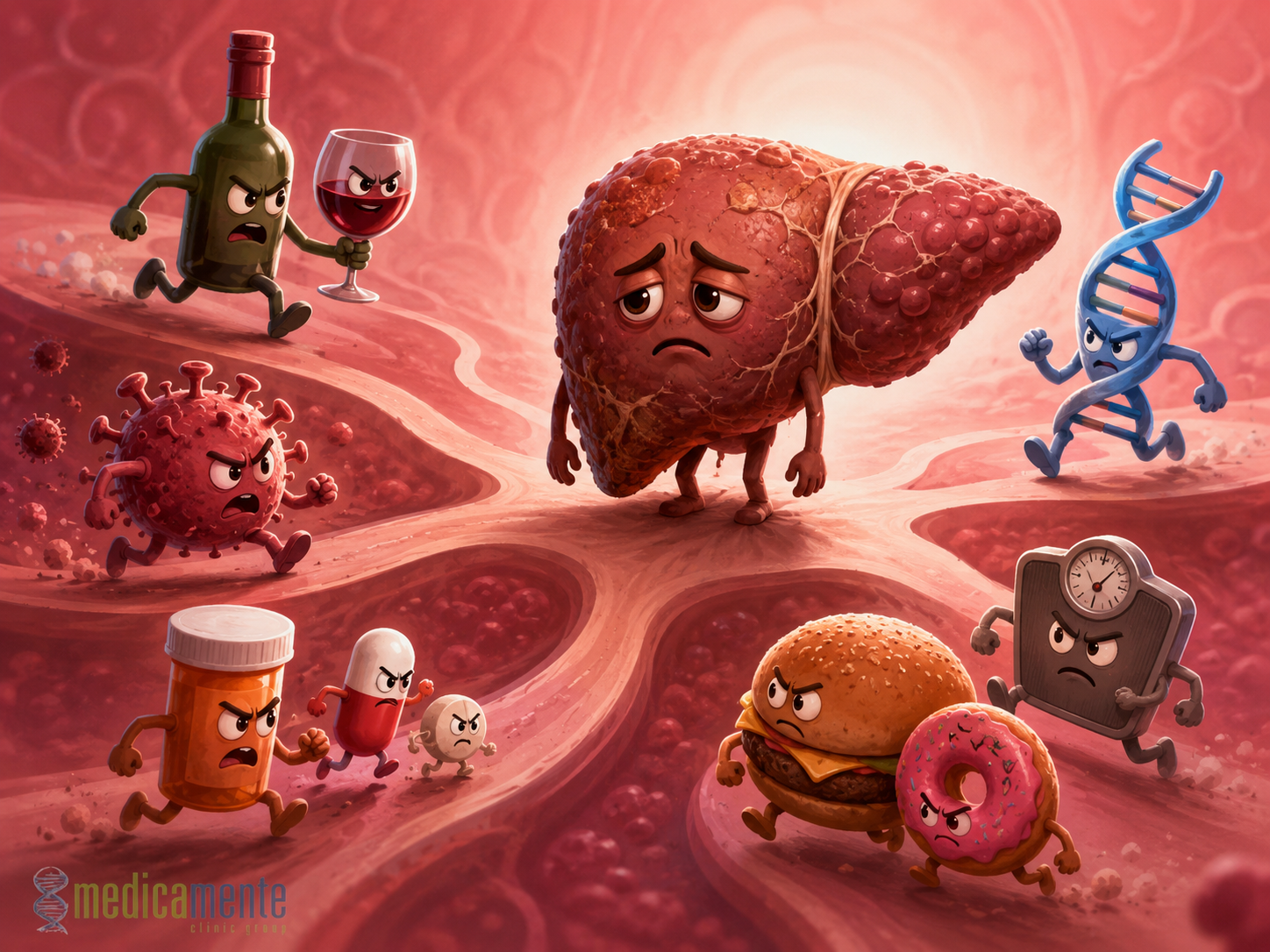
How chronic damage changes liver structure and function
Liver cirrhosis: why the diagnosis must be understood correctly
Liver cirrhosis is often perceived as a disease connected exclusively with alcohol. This idea is incomplete and medically inaccurate. Alcohol can indeed be one of the causes of cirrhosis, but it is far from the only one. Cirrhosis may develop due to chronic viral hepatitis B, C and D, fatty liver disease, autoimmune hepatitis, primary biliary cholangitis, primary sclerosing cholangitis, inherited metabolic diseases, drug-induced or toxic liver injury and long-term impairment of bile flow.
Cirrhosis is not simply “bad liver tests” and not a separate disease that appears suddenly. It is the result of a long process in which the liver faces inflammation or damage for years. First, fibrosis develops — the accumulation of connective tissue. Then, if the damaging factor persists, scar tissue becomes more pronounced, normal liver architecture is disrupted, regenerative nodules form, blood flow through the organ changes and the functional reserve gradually decreases.
The main feature of cirrhosis is that it affects not only liver tissue, but also the function of the entire body. The liver participates in protein synthesis, blood clotting, bilirubin metabolism, detoxification, regulation of energy metabolism, bile production and immune reactions. When liver structure is severely disrupted, many processes suffer at the same time. This is why cirrhosis is considered not a local problem of one organ, but a systemic condition with a risk of serious complications.
How cirrhosis forms
Cirrhosis is based on chronic damage. If inflammation or toxic exposure continues for a long time, the liver tries to repair itself. But continuous injury causes normal regeneration to become abnormal. Instead of full tissue restoration, scarring forms. Gradually, scar tissue divides the liver into areas, inside which regenerative nodules appear. These nodules consist of liver cells attempting to restore the organ, but they exist within an already altered architecture.
This remodeling disrupts normal blood flow. Blood entering the liver through the portal vein meets resistance inside the changed tissue. This leads to portal hypertension — increased pressure in the portal venous system. Portal hypertension is the basis of many complications of cirrhosis: enlargement of the spleen, decreased platelet count, ascites, varicose veins of the esophagus and stomach and the risk of bleeding.
At the same time, the liver’s ability to perform its functions decreases. In the early stages, the organ may compensate for damage for a long time. But as cirrhosis progresses, functional reserve diminishes. This may manifest as low albumin, impaired blood clotting, elevated bilirubin, fluid accumulation, altered consciousness in hepatic encephalopathy and general weakness. However, a long time may pass before such signs appear, which is why cirrhosis is sometimes detected only at the stage of complications.
Compensated and decompensated cirrhosis
To understand cirrhosis, it is important to distinguish between compensated and decompensated stages. In compensated cirrhosis, liver structure is already changed, but the organ still manages to perform its main functions. The patient may feel relatively well, work, and have no pronounced jaundice, ascites or bleeding. However, the risk of complications already exists, so regular follow-up is required.
Decompensated cirrhosis means that liver functional reserve has decreased enough for clinical complications to appear. Signs of decompensation include ascites, bleeding from varicose veins, hepatic encephalopathy, pronounced jaundice, severe blood clotting disorders, infectious complications and worsening kidney function in the setting of liver disease. This is a more serious stage requiring specialized follow-up and sometimes assessment for liver transplantation.
This distinction is important because prognosis and patient management differ significantly. A person with compensated cirrhosis needs control of the cause of disease, prevention of complications and regular monitoring. A patient with decompensated cirrhosis requires more intensive follow-up, treatment of complications, nutritional assessment, fluid control, prevention of bleeding and individualized decisions about further management.
Main causes of liver cirrhosis
Cirrhosis can be the final stage of different chronic liver diseases. Therefore, after the diagnosis is established, it is important not only to describe the condition of the liver, but also to determine its cause.
Common causes include:
- Chronic viral hepatitis.
Hepatitis B, C and D can maintain inflammation in the liver for years. Without diagnosis and treatment, they can lead to advanced fibrosis, cirrhosis and an increased risk of liver cancer. - Fatty liver disease.
Metabolic dysfunction-associated fatty liver disease is linked to obesity, type 2 diabetes, insulin resistance and lipid metabolism disorders. In the inflammatory form of the disease, fibrosis may develop and later progress to cirrhosis. - Alcohol-related liver injury.
Long-term toxic exposure to alcohol may cause fatty transformation of the liver, alcoholic hepatitis, fibrosis and cirrhosis. The risk depends on amount, duration of use, individual sensitivity and associated factors. - Autoimmune liver diseases.
Autoimmune hepatitis, primary biliary cholangitis and primary sclerosing cholangitis may lead to chronic inflammation and gradual scarring of liver tissue. - Inherited and metabolic diseases.
Hemochromatosis, Wilson disease, alpha-1 antitrypsin deficiency and other conditions may damage the liver due to accumulation of substances or metabolic disruption. - Drug-induced and toxic injury.
Some medications and toxic substances may cause chronic liver damage with long-term or severe exposure.
Sometimes cirrhosis has a mixed origin. For example, a patient may have previous viral hepatitis, fatty liver disease and regular alcohol use at the same time. In such cases, it is important not to look for one convenient cause, but to assess all factors that could have accelerated liver damage.
Symptoms: why cirrhosis may remain silent for a long time
In the early stages, cirrhosis may be almost unnoticeable. This is because the liver has a large functional reserve. Even with significant structural changes, some functions may remain preserved for quite a long time. Therefore, the absence of complaints does not exclude cirrhosis, especially in a patient with chronic hepatitis, long-standing fatty liver disease, autoimmune disease or other risk factors.
Possible early manifestations are nonspecific. The patient may notice fatigue, reduced work capacity, heaviness in the right upper abdomen, reduced appetite, loss of muscle mass, discomfort after eating or unexplained weight changes. But such symptoms occur in many conditions and do not allow the state of the liver to be determined independently.
As the disease progresses, more characteristic signs may appear: yellowing of the skin and sclera, itching, abdominal enlargement due to fluid, leg swelling, easy bruising, bleeding tendency, spider angiomas, redness of the palms, loss of muscle mass, sleep disturbance, drowsiness and confusion. The appearance of such signs requires medical evaluation because they may indicate reduced liver function or development of complications.
Complications of cirrhosis
Cirrhosis is dangerous not only because liver function declines, but also because complications may develop suddenly and have a severe course.
The main complications include:
- Portal hypertension.
Increased pressure in the portal venous system leads to enlargement of the spleen, decreased platelets and development of varicose veins in the esophagus and stomach. - Bleeding from varicose veins.
This is one of the most dangerous complications. It may present with vomiting blood, black stool, sudden weakness and low blood pressure. - Ascites.
Ascites is the accumulation of fluid in the abdominal cavity. It is related to portal hypertension, low albumin and changes in the body’s regulation of fluid. - Hepatic encephalopathy.
This is impaired brain function caused by liver failure and accumulation of toxic substances. It may manifest as drowsiness, behavioral changes, impaired concentration, confusion and, in severe cases, coma. - Infectious complications.
In cirrhosis, immune mechanisms are impaired, so the risk of bacterial infections increases, including spontaneous bacterial peritonitis in patients with ascites. - Hepatocellular carcinoma.
Cirrhosis significantly increases the risk of primary liver cancer. Therefore, patients with cirrhosis need regular surveillance even when laboratory results are stable. - Kidney dysfunction.
In severe cirrhosis, kidney function may worsen, especially during infections, bleeding, advanced ascites or circulatory disturbances.
Complications of cirrhosis require not only treatment, but also prevention. This is why regular follow-up is important even when the patient feels well.
Diagnosis of cirrhosis
Diagnosis of cirrhosis includes assessment of liver structure, liver function, the cause of disease and the risk of complications. A single blood test cannot fully describe the patient’s condition. The physician evaluates the combination of findings.
Usually, the following are used:
- Liver tests.
ALT, AST, bilirubin, GGT and alkaline phosphatase help assess liver cell injury, cholestasis and bilirubin metabolism. - Markers of synthetic liver function.
Albumin, INR and other clotting markers reflect the liver’s ability to synthesize important proteins. - Complete blood count.
Low platelet count may be an indirect sign of portal hypertension and spleen enlargement. - Virological and immunological tests.
They help detect viral hepatitis, autoimmune liver diseases and other causes of chronic damage. - Abdominal ultrasound.
Ultrasound allows assessment of liver size, tissue structure, spleen condition, presence of fluid, signs of portal hypertension and focal lesions. - Elastography.
This method helps assess liver stiffness and the probability of advanced fibrosis or cirrhosis. - CT or MRI.
These are used when it is necessary to clarify liver structure, vascular changes, focal lesions or complications. - Endoscopy.
It may be prescribed to detect varicose veins of the esophagus and stomach in patients with signs of portal hypertension. - Liver biopsy.
In selected cases, it helps clarify the diagnosis, cause of damage or disease activity when non-invasive methods are insufficient.
Diagnosis should answer several questions: why cirrhosis developed, how well liver function is preserved, whether complications are present, what the risk of liver cancer is and what follow-up strategy the patient needs.
Treatment: can cirrhosis be stopped
Treatment of cirrhosis depends on the cause, stage and complications. If cirrhosis is compensated and the cause of damage is removed or controlled, further deterioration can be slowed and the risk of complications reduced. In some cases, liver condition may remain stable for a long time.
Key directions of treatment include:
- Control of the cause of disease.
In viral hepatitis, antiviral therapy is used. In fatty liver disease, weight, diabetes, lipid disorders and metabolic risk are corrected. In autoimmune diseases, specialized anti-inflammatory or immunomodulatory therapy is used. In alcohol-related injury, alcohol cessation is necessary. - Prevention of complications.
Patients with portal hypertension may need endoscopic follow-up, prevention of bleeding, ascites control and assessment of infection risk. - Support of nutrition and muscle mass.
Sarcopenia, or loss of muscle mass, often develops in cirrhosis. Adequate protein and energy intake are very important, but must be selected according to the patient’s condition. - Control of medication burden.
In cirrhosis, some drugs may be more dangerous because of impaired metabolism in the liver, bleeding risk, effects on kidneys or effects on consciousness. Therefore, self-medication is undesirable. - Regular surveillance for liver cancer.
Patients with cirrhosis need monitoring for early detection of hepatocellular carcinoma. - Assessment for transplantation.
In decompensated cirrhosis and severe reduction of liver function, liver transplantation may be considered.
It is important to understand that cirrhosis does not always mean immediate severe liver failure. Many patients with compensated cirrhosis live for a long time with correct follow-up and control of the disease cause. But the diagnosis cannot be ignored, because the risk of complications remains even when well-being is good.
What should be changed in lifestyle
Lifestyle in cirrhosis is very important, but recommendations must be medically justified. The main principle is to reduce additional burden on the liver and lower the risk of complications.
Patients usually need to:
- Completely avoid alcohol, regardless of the cause of cirrhosis.
- Avoid medications and supplements unless agreed with a physician.
- Control body weight, diabetes, lipid levels and blood pressure.
- Follow nutritional recommendations, especially in ascites or loss of muscle mass.
- Undergo regular examinations even without symptoms.
- Discuss vaccination against infections that may be dangerous in chronic liver disease.
- Seek medical help immediately in case of bleeding, severe weakness, confusion, abdominal enlargement, fever or jaundice.
Self-directed “liver cleanses,” aggressive diets, fasting and uncontrolled use of herbs or supplements may be dangerous. In cirrhosis, the liver already has reduced reserve, so any intervention must be cautious and discussed with a medical specialist.
Main conclusion
Liver cirrhosis is not only an alcohol-related disease. It is a late stage of different chronic liver diseases, in which normal organ structure is replaced by scar tissue and regenerative nodules. The cause may be viral hepatitis, fatty liver disease, autoimmune processes, impaired bile flow, inherited metabolic diseases, toxic injury or alcohol-related injury.
The main danger of cirrhosis is that it may remain without pronounced symptoms for a long time, while the risk of severe complications persists. Therefore, early diagnosis of fibrosis, identification of the cause of disease, regular follow-up, assessment of liver function and prevention of complications are essential. With proper management, progression can be slowed, risks can be reduced and quality of life can be preserved.
Cirrhosis is a diagnosis that requires careful attention, but it should not be perceived as a sentence. Its course depends greatly on the cause, stage, timeliness of treatment and regularity of follow-up. The earlier chronic liver damage is detected and the more precisely its cause is controlled, the greater the chance of preventing decompensation and severe consequences.
Write a review
Required fields are marked with *
Categories
- Therapy (81)
- News (48)
- GP (23)
- Cardiology (20)
- urology (12)
- Endocrinology (8)
- Ortopedics (4)
- Dermatology (3)
- Ultrasound (1)
- Mobile app (1)
Articles





Archive
- September 2026 (11)
- August 2026 (11)
- July 2026 (11)
- June 2026 (11)
- May 2026 (9)
- April 2026 (8)
- March 2026 (8)
- February 2026 (8)
- January 2026 (8)
- December 2025 (5)
Categories
- Therapy (81)
- News (48)
- GP (23)
- Cardiology (20)
- urology (12)
- Endocrinology (8)
- Ortopedics (4)
- Dermatology (3)
- Ultrasound (1)
- Mobile app (1)


