
Cardiorenal risk, blood pressure, and metabolism
Why the kidneys and heart should not be considered separately
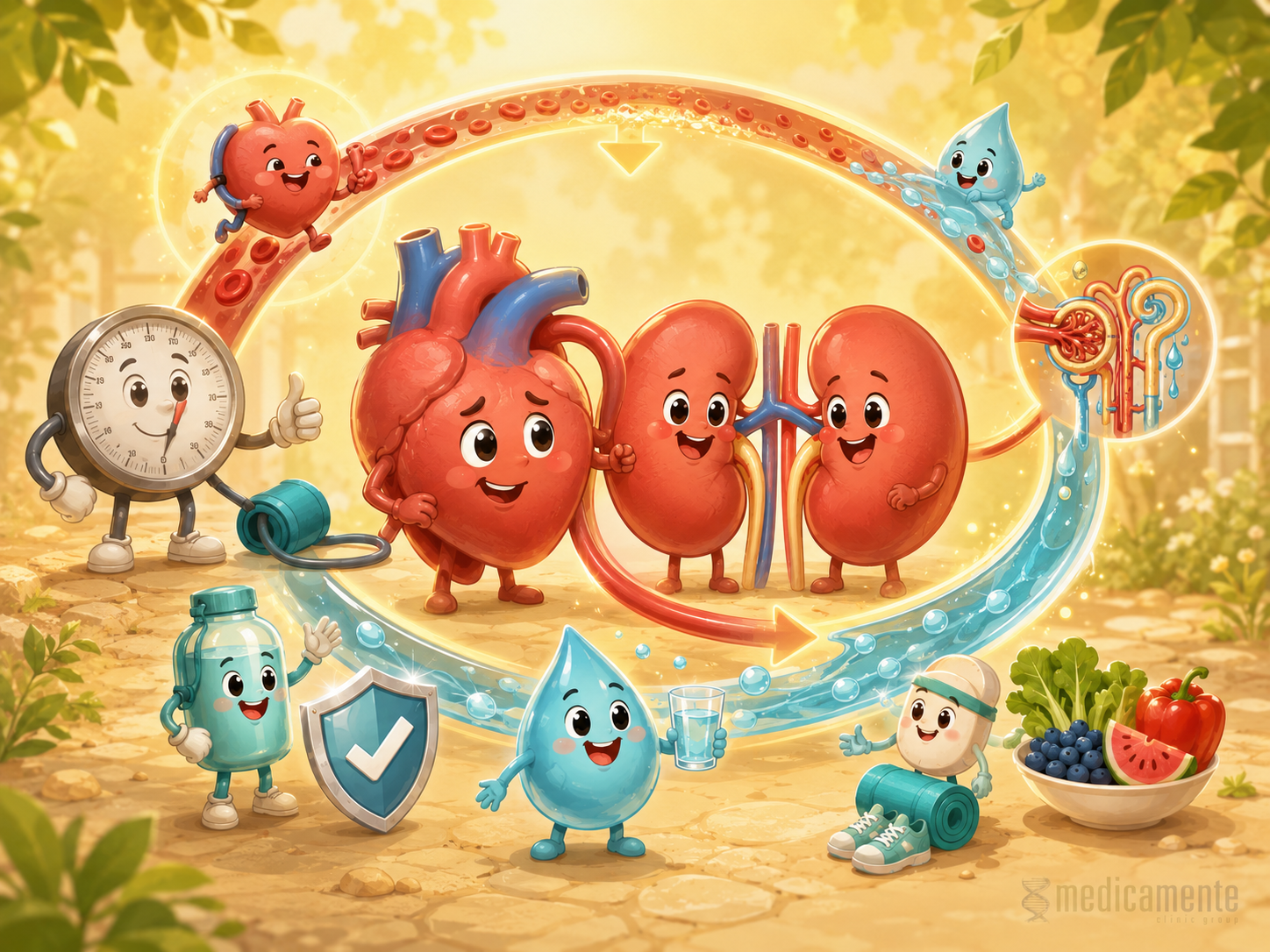
The kidneys and the heart are often discussed as separate organs, but in practice they function as one connected system. The heart pumps blood and maintains circulation, while the kidneys filter this blood, regulate fluid volume, control sodium and potassium balance, and influence blood pressure through hormonal mechanisms. If one part of this system is disturbed, the other is often affected as well.
When the heart does not pump blood effectively, the kidneys may receive less blood flow. In response, the body activates mechanisms that retain sodium and water and constrict blood vessels. At first, this may help maintain blood pressure and circulation. But if these mechanisms remain active for a long time, they can worsen fluid overload, increase blood pressure, and place additional strain on the heart.
When kidney function declines, the body may retain more fluid and sodium. Blood pressure may rise, electrolyte balance may change, anemia may develop, and mineral metabolism may become disturbed. These changes increase the workload on the heart and blood vessels. This is why chronic kidney disease is considered not only a kidney problem, but also an important cardiovascular risk factor.
How the heart affects the kidneys
The kidneys need a stable blood supply to filter properly. If the heart pumps less effectively, kidney perfusion can decrease. This may happen in heart failure, severe arrhythmias, valve disease, low blood pressure, or acute cardiovascular events. When the kidneys receive less blood, filtration can worsen and creatinine may rise.
In heart failure, the situation is especially complex. Even if the total amount of fluid in the body is increased, the kidneys may still perceive circulation as insufficient. This activates the renin-angiotensin-aldosterone system and sympathetic nervous system. As a result, the body retains sodium and water, blood vessels constrict, and the workload on the heart increases.
Fluid retention can lead to swelling, shortness of breath, elevated venous pressure, and congestion in organs. The kidneys in this situation work under difficult conditions: they may suffer both from reduced effective blood flow and from congestion in the venous system. This can contribute to worsening kidney function.
Acute heart problems can also affect the kidneys. During a heart attack, severe arrhythmia, sudden decompensation of heart failure, or very low blood pressure, acute kidney injury may develop. This does not always mean permanent damage, but it requires careful monitoring.
How the kidneys affect the heart
The kidneys influence the heart through several mechanisms. First, they regulate fluid volume. If the kidneys cannot excrete excess sodium and water effectively, circulating volume increases. This may raise blood pressure, worsen swelling, and increase the burden on the heart.
Second, the kidneys regulate electrolytes, especially potassium. Potassium is essential for normal heart rhythm. If potassium is too high or too low, the risk of rhythm disturbances increases. In chronic kidney disease, potassium may rise, especially when certain blood pressure or heart medications are used.
Third, kidney disease affects blood pressure. Impaired sodium excretion and activation of hormonal systems can support hypertension. High blood pressure damages the heart, thickens the heart muscle, increases the risk of heart failure, and accelerates vascular disease.
Fourth, chronic kidney disease is associated with anemia and mineral metabolism disorders. Anemia reduces oxygen delivery and makes the heart work harder. Disturbances in calcium, phosphorus, vitamin D, and parathyroid hormone can contribute to vascular calcification and increased arterial stiffness. All of this increases cardiovascular risk.
Cardiorenal syndrome: what this term means
The term cardiorenal syndrome is used when dysfunction of the heart and kidneys is interconnected and one organ worsens the function of the other. This may happen acutely or chronically. For example, acute heart failure can cause acute kidney injury. Conversely, acute kidney injury can worsen fluid overload and strain the heart.
In chronic situations, heart failure and chronic kidney disease often progress together. A patient may have hypertension, diabetes, atherosclerosis, obesity, and reduced kidney function at the same time. Each of these factors increases the burden on the cardiovascular and renal systems.
Cardiorenal syndrome is not one single disease. It is a clinical concept that helps explain why treatment should consider both organs. For example, a medication may improve heart function but require monitoring of creatinine and potassium. A diuretic may reduce congestion but, if the dose is too strong, may worsen dehydration and kidney perfusion.
This is why care must be balanced. The goal is not to protect one organ at the expense of the other, but to find an approach that supports circulation, reduces fluid overload, controls blood pressure, and preserves kidney function as much as possible.
Hypertension as a shared mechanism of damage
High blood pressure is one of the strongest links between heart and kidney disease. It damages blood vessels throughout the body, including the coronary arteries, brain vessels, and small kidney vessels. Over time, hypertension can lead to left ventricular hypertrophy, heart failure, stroke, and chronic kidney disease.
The kidneys are especially sensitive to long-term pressure overload. The glomeruli contain delicate filtering capillaries. If pressure remains elevated, these structures are gradually damaged. Albumin may appear in the urine, and filtration may decline over time.
At the same time, kidney disease can make blood pressure harder to control. Reduced sodium excretion, fluid retention, and hormonal activation all contribute to hypertension. This creates a cycle in which high blood pressure damages the kidneys, and damaged kidneys maintain high blood pressure.
Breaking this cycle is one of the key goals of treatment. Blood pressure control protects both the heart and the kidneys. It reduces the risk of stroke, heart attack, heart failure, albuminuria, and progression of chronic kidney disease.
Diabetes, obesity, and metabolism
Metabolic factors also connect the kidneys and the heart. Diabetes damages small and large blood vessels. In the kidneys, this may lead to albuminuria and declining filtration. In the heart and blood vessels, it increases the risk of coronary artery disease, heart failure, and stroke.
Obesity is associated with insulin resistance, hypertension, inflammation, dyslipidemia, and increased workload on both the heart and kidneys. Excess body weight can contribute to higher filtration pressure inside the kidneys and can worsen blood pressure control. It also increases the risk of sleep apnea, which may further raise cardiovascular risk.
Dyslipidemia contributes to atherosclerosis. When arteries become narrowed or stiff, blood supply to organs worsens, and the risk of cardiovascular events increases. The kidneys may also be affected by vascular disease, especially in older patients or those with diabetes and hypertension.
This is why prevention and treatment should focus not only on one test result. Glucose, blood pressure, body weight, lipid profile, smoking, physical activity, and kidney markers all need to be considered together.
Why chronic kidney disease increases the risk of heart complications
Chronic kidney disease increases cardiovascular risk through many pathways. Even a moderate decrease in kidney function may be associated with a higher risk of heart and vascular complications, especially when albuminuria is present.
Fluid retention can increase blood pressure and the workload on the heart. Electrolyte disturbances can affect heart rhythm. Anemia makes the heart pump more actively to deliver oxygen to tissues. Mineral metabolism disorders can contribute to vascular calcification. Chronic inflammation and oxidative stress may also be more active.
Albuminuria is an especially important marker. It reflects damage to the filtration barrier in the kidneys, but it is also associated with generalized vascular dysfunction. Therefore, albumin in the urine can be a signal not only of kidney risk, but also of cardiovascular risk.
For patients with chronic kidney disease, preventing heart complications is often just as important as preventing kidney failure. In many cases, cardiovascular events are the main threat to health. This is why kidney monitoring should be part of broader cardiovascular prevention.
Heart failure and the kidneys
Heart failure and kidney dysfunction often occur together. In heart failure, the heart cannot pump blood as effectively as the body needs. This may lead to fluid retention, shortness of breath, swelling, fatigue, and reduced exercise tolerance.
The kidneys in heart failure may receive less effective blood flow and may respond by retaining sodium and water. This can worsen congestion. At the same time, treatment often includes diuretics and medications that affect hormonal systems. These medications can be very useful, but they require monitoring of kidney function and electrolytes.
Sometimes creatinine rises during treatment of heart failure. This does not always mean that treatment is wrong. It may reflect changes in fluid status, blood pressure, kidney perfusion, or medication effects. The doctor evaluates the overall picture: symptoms, swelling, breathing, blood pressure, electrolytes, urine output, and kidney tests.
The balance is delicate. Too much fluid worsens heart failure and congestion. Too little fluid or overly aggressive diuresis may reduce kidney perfusion. Therefore, heart failure treatment often requires careful adjustment and regular follow-up.
Which tests help assess the heart and kidneys together
When heart and kidney risks are connected, evaluation usually includes several groups of tests. Kidney function is assessed with creatinine, estimated glomerular filtration rate, urinalysis, and albumin-to-creatinine ratio in urine. Electrolytes such as potassium and sodium are especially important.
Blood pressure measurement is essential. Home blood pressure monitoring may provide more realistic information than occasional office measurements. In some cases, ambulatory blood pressure monitoring is used.
For cardiovascular assessment, doctors may use electrocardiography, echocardiography, lipid profile, glucose and glycated hemoglobin, markers of heart failure when indicated, and other tests depending on symptoms. If there is shortness of breath, swelling, chest pain, palpitations, or reduced exercise tolerance, more detailed evaluation may be needed.
The goal is to understand whether kidney dysfunction is affecting the heart, whether heart disease is worsening kidney function, and which risk factors can be modified.
Why medications require balance
Many medications used in cardiovascular and kidney care are beneficial, but they require monitoring. Some blood pressure medications can protect the kidneys and reduce albuminuria, but may affect creatinine and potassium. Diuretics reduce fluid overload, but can cause dehydration or electrolyte changes if the dose is too high. Diabetes medications may require adjustment depending on kidney function.
This does not mean these medications should be avoided. On the contrary, properly selected therapy often protects both the heart and kidneys. The important point is that treatment must be individualized and monitored.
Patients should not stop medications independently because of a single abnormal test result. A change in creatinine or potassium needs interpretation. Sometimes the dose must be adjusted; sometimes another cause is found; sometimes the change is expected and acceptable. Decisions should be based on the full clinical picture.
Medication safety is especially important during acute illness. Vomiting, diarrhea, fever, dehydration, or severe infection can temporarily change kidney perfusion and electrolyte balance. In such situations, medical advice may be needed about whether any medications should be adjusted temporarily.
The role of lifestyle in protecting the heart and kidneys
Lifestyle changes affect both cardiovascular and kidney risk. Salt reduction can help control blood pressure and reduce fluid retention. This is especially important in hypertension, chronic kidney disease, and heart failure.
Regular physical activity improves blood pressure, insulin sensitivity, body weight, lipid profile, and vascular function. It should be adapted to the patient’s condition, especially if there is heart failure, advanced kidney disease, or other limitations.
Smoking cessation is one of the most important steps for vascular health. Smoking damages blood vessels, increases atherosclerosis risk, worsens blood pressure control, and can accelerate kidney function decline.
Weight control matters when obesity, hypertension, diabetes, and sleep apnea are present. Even moderate, sustainable weight reduction can improve metabolic parameters and reduce the burden on the heart and kidneys.
Nutrition should be individualized. Some patients need salt reduction; others also need attention to potassium, phosphorus, protein intake, or fluid intake. Universal strict diets are not suitable for everyone, especially when chronic kidney disease and heart disease occur together.
When patients need to be especially attentive
Patients should be especially attentive if they have a combination of hypertension, diabetes, chronic kidney disease, heart failure, coronary artery disease, previous stroke, obesity, or albuminuria. These conditions increase each other’s risks and require regular monitoring.
Warning signs include increasing shortness of breath, swelling, sudden weight gain, reduced urine output, persistent high blood pressure, chest pain, fainting, severe weakness, palpitations, confusion, or rapidly worsening general condition. Such symptoms require medical assessment.
However, it is important not to rely only on symptoms. Kidney and cardiovascular risk can increase silently. Regular testing and blood pressure monitoring help detect changes earlier than symptoms.
The kidneys and heart should be treated as one connected system. Stable blood pressure, controlled glucose, careful medication use, monitoring of creatinine, estimated filtration rate, albuminuria, electrolytes, and cardiovascular markers all help reduce risk. Protecting the kidneys also protects the heart, and protecting the heart helps preserve kidney function.
Write a review
Required fields are marked with *
Categories
- Therapy (81)
- News (48)
- GP (23)
- Cardiology (20)
- urology (12)
- Endocrinology (8)
- Ortopedics (4)
- Dermatology (3)
- Ultrasound (1)
- Mobile app (1)
Articles





Archive
- September 2026 (11)
- August 2026 (11)
- July 2026 (11)
- June 2026 (11)
- May 2026 (9)
- April 2026 (8)
- March 2026 (8)
- February 2026 (8)
- January 2026 (8)
- December 2025 (5)
Categories
- Therapy (81)
- News (48)
- GP (23)
- Cardiology (20)
- urology (12)
- Endocrinology (8)
- Ortopedics (4)
- Dermatology (3)
- Ultrasound (1)
- Mobile app (1)


