
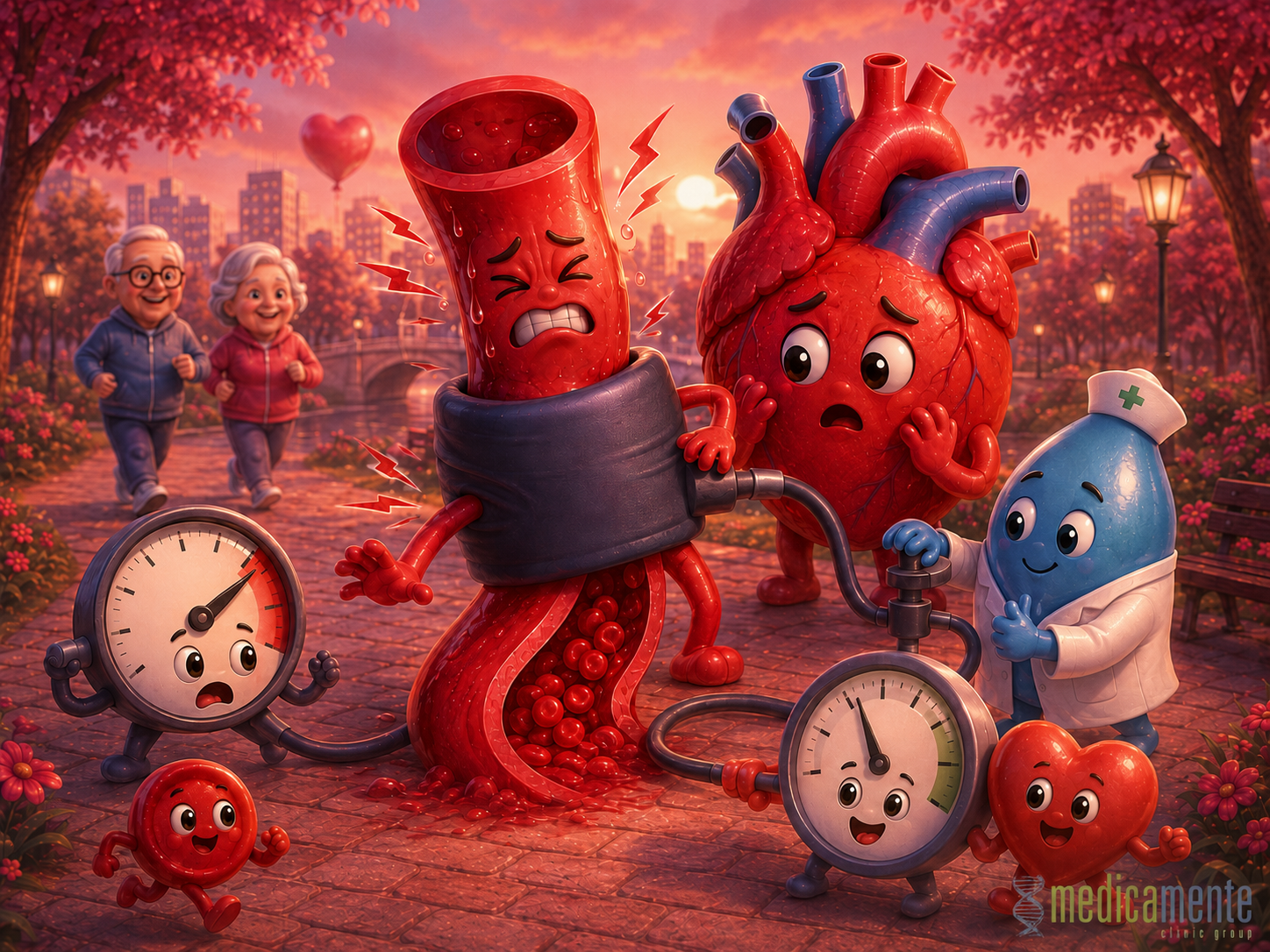
How high blood pressure damages the heart, vessels and kidneys
Arterial Hypertension: Why It Is More Than Just “High Numbers”
Blood pressure shows how strongly blood pushes against the walls of the arteries. This pressure is necessary for normal circulation: it allows blood to deliver oxygen and nutrients to the brain, heart, kidneys, muscles and other organs. But when blood pressure remains high over time, the blood vessels and the heart work under chronic overload.
Arterial hypertension is not the same as a short-term rise in blood pressure after stress, physical activity or poor sleep. What matters medically is persistent elevation that is repeated during measurements and remains present in everyday life. Over time, this condition can damage target organs: the heart, brain, kidneys, blood vessels and retina.
The main danger of hypertension is that it is often not felt. A person may have no headache, weakness, palpitations or other symptoms, while the vessels are already exposed to increased pressure. This is why blood pressure cannot be judged by how a person feels. It has to be measured.
Why blood pressure may rise
In most people, hypertension does not develop from one single cause. It usually results from a combination of factors. Blood pressure is influenced by age, family history, body weight, physical activity, diet, salt intake, stress, sleep quality, kidney function, hormonal regulation, vascular stiffness and metabolism.
With age, arteries may become less elastic. This increases resistance to blood flow and contributes to higher pressure. If this is combined with excess weight, low physical activity, smoking, high salt intake, chronic stress or sleep problems, the risk of hypertension increases.
The kidneys play a particularly important role. They regulate fluid volume, sodium excretion and hormonal systems that affect vascular tone. If the kidneys retain more salt and water, or if mechanisms that narrow blood vessels become activated, blood pressure may rise. In turn, long-term hypertension can damage the kidney vessels.
Sometimes high blood pressure is caused by a specific disease. This is called secondary hypertension. It may be related to kidney disease, narrowing of the renal arteries, endocrine disorders, certain medications, sleep apnea and other conditions. Secondary hypertension is less common, but it is important to suspect it when the disease has an unusual course.
Why hypertension often has no symptoms
Many people believe that high blood pressure must cause headache, ringing in the ears, facial redness, palpitations or weakness. In reality, this is not always the case. In many patients, blood pressure may remain elevated for years without obvious sensations.
The body gradually adapts to the new conditions. A person may become used to their state and consider it normal. Sometimes symptoms appear only during a sharp rise in pressure, severe stress, physical overload, a hypertensive crisis or after complications have already developed.
This is why hypertension is sometimes called a “silent” risk factor. It does not always warn through pain, but it constantly affects the vessels. Arteries become stiffer, their inner lining is more easily damaged, the heart works harder and the risk of vascular events gradually increases.
The absence of symptoms does not mean that treatment is unnecessary. The goal of blood pressure control is not only to improve well-being today, but also to reduce the risk of complications in the future.
How high blood pressure damages vessels
The vessel wall is designed for a certain level of pressure. If blood pressure remains elevated, arteries are exposed to mechanical stress. Over time, their walls may thicken, become less elastic, respond less effectively to the body’s needs and become more easily damaged.
Damage to the inner lining of blood vessels, the endothelium, plays an important role in the development of atherosclerosis. If a person also has elevated cholesterol, diabetes, smoking or chronic inflammation, the risk of atherosclerotic plaque formation becomes even higher.
Atherosclerosis can affect different vascular areas. In the coronary arteries, it increases the risk of angina and myocardial infarction. In the vessels of the brain, it increases the risk of stroke. In the arteries of the legs, it may cause pain during walking and impaired tissue blood supply. In the renal arteries, it may worsen kidney function and further increase blood pressure.
Therefore, hypertension rarely acts alone. It amplifies the effect of other risk factors and accelerates damage to the vascular system.
How hypertension affects the heart
When blood pressure is high, the heart has to contract more forcefully to push blood through the vessels. The left ventricle, the main chamber that pumps blood to the body, is especially affected.
Over time, the wall of the left ventricle may thicken. This condition is called left ventricular hypertrophy. At first, this adaptation helps the heart cope with the increased workload. Later, however, it can become harmful. The thickened heart muscle relaxes less effectively, requires more oxygen and may be more vulnerable to impaired blood supply and rhythm disturbances.
Hypertension increases the risk of heart failure. In heart failure, the heart can no longer meet the body’s needs efficiently. Symptoms may include shortness of breath, swelling, rapid fatigue, reduced tolerance of physical activity and a feeling of breathlessness when lying down.
High blood pressure also increases the risk of ischemic heart disease. If the heart vessels are affected by atherosclerosis, the increased workload on the heart muscle may contribute to chest pain, angina and a higher risk of heart attack.
Hypertension and stroke risk
Brain vessels are especially sensitive to long-term high blood pressure. Hypertension is one of the main risk factors for stroke. It can contribute to both ischemic stroke, caused by impaired blood flow due to a clot or narrowing of a vessel, and hemorrhagic stroke, caused by bleeding.
With long-term hypertension, the small vessels of the brain become more vulnerable. Their walls may be damaged, their lumen may narrow and blood flow regulation may be disturbed. This increases the risk of acute vascular events and chronic changes that can affect memory, concentration and cognitive function.
The combination of hypertension with smoking, diabetes, high cholesterol, atrial fibrillation, obesity and low physical activity is especially dangerous. In this situation, the risk of stroke becomes much higher than with one isolated factor.
Blood pressure control is one of the most effective ways to reduce stroke risk. It is important not only to lower very high numbers, but also to maintain blood pressure consistently within an individual target range.
Hypertension and kidneys
The kidneys contain many small vessels and filtering structures. A large volume of blood passes through them every day. If blood pressure remains high for a long time, the kidney vessels are gradually damaged, blood supply to kidney tissue worsens and filtration may decline.
In the early stages, kidney damage may appear as albumin or protein in the urine. Later, the estimated glomerular filtration rate may decrease and creatinine may rise. At the same time, a person may have no pain or noticeable changes in urination.
The connection between blood pressure and kidneys works in both directions. Hypertension damages the kidneys, while reduced kidney function may maintain or worsen hypertension through sodium retention, fluid retention and activation of hormonal mechanisms.
This is why in hypertension it is important to assess not only blood pressure, but also kidney function: creatinine, estimated glomerular filtration rate, urinalysis and albuminuria. These tests help detect target-organ damage before obvious symptoms appear.
How to measure blood pressure correctly
Correct blood pressure measurement is very important. Errors in technique can lead to falsely high or falsely low results. Blood pressure should ideally be measured in a calm state, after several minutes of rest, while sitting, with the back supported and the arm resting at heart level. The cuff should fit properly and be placed correctly.
Before measuring, it is better not to smoke, drink coffee, exercise or be in a state of acute stress. It is usually useful to take two measurements with a short interval and record the result.
Home blood pressure monitoring often gives a more complete picture than a single measurement at the doctor’s office. In some people, blood pressure rises during medical visits because of anxiety. This is called the “white coat” effect. In others, blood pressure may be normal in the office but elevated at home or at work. This is called masked hypertension.
Ambulatory blood pressure monitoring may be used to clarify the situation. It shows how blood pressure changes during the day and night, whether it decreases during sleep, and whether there are morning surges or periods of significant elevation.
Which examinations are needed in hypertension
When high blood pressure is detected, it is important to assess not only the numbers, but also overall cardiovascular risk. A doctor considers age, family history, smoking, weight, diabetes, cholesterol, kidney disease, previous cardiovascular events and lifestyle.
Basic evaluation may include blood tests, a lipid profile, glucose or glycated hemoglobin, creatinine with estimated glomerular filtration rate, electrolytes, urinalysis and albuminuria assessment. These indicators help determine whether there are associated risk factors or target-organ damage.
An ECG helps assess rhythm, conduction and possible signs of cardiac overload. Echocardiography may be needed to evaluate heart structure, wall thickness, valve function and contractility. Depending on the situation, kidney ultrasound, vascular studies, ambulatory blood pressure monitoring, Holter monitoring and other tests may be used.
If hypertension appears at a young age, is poorly controlled despite several medications, causes sudden spikes, is associated with potassium abnormalities, worsening kidney function or other unusual signs, a doctor may look for a secondary cause.
Salt, weight and physical activity
Lifestyle plays an important role in both the development and control of hypertension. One of the key factors is salt intake. Excess sodium promotes fluid retention and higher blood pressure, especially in people who are salt-sensitive, older patients, people with kidney disease, heart failure or diabetes.
It is important to consider not only the salt added at home, but also hidden salt in ready-made foods. Large amounts of sodium may be found in processed meats, cheeses, semi-prepared foods, sauces, canned products, snacks, fast food and ready meals.
Body weight also affects blood pressure. Excess weight increases the workload on the heart, worsens insulin resistance, promotes inflammation and contributes to sodium retention. Even moderate weight loss in people with obesity can improve blood pressure control and metabolism.
Regular physical activity helps blood vessels adapt better, lowers blood pressure, improves insulin sensitivity, supports weight control and reduces overall cardiovascular risk. Activity should be regular and appropriate to the person’s condition. If there are significant symptoms or known heart disease, exercise should be chosen after medical evaluation.
Sleep, stress and blood pressure
Blood pressure depends not only on diet and movement, but also on the nervous system, sleep and recovery. Chronic stress can maintain increased sympathetic nervous system activity, speed up the heartbeat, raise vascular tone and contribute to higher blood pressure.
Lack of sleep is also associated with a higher risk of hypertension. If a person sleeps too little, wakes often or does not recover at night, blood pressure regulation may be disrupted. Sleep apnea is especially important. It involves repeated pauses in breathing during sleep and may be accompanied by snoring, daytime sleepiness, morning headaches and poorly controlled blood pressure.
Alcohol and smoking also worsen vascular regulation. Smoking damages the endothelium, accelerates atherosclerosis and increases the risk of heart attack and stroke. Regular or excessive alcohol intake may raise blood pressure and make treatment harder to control.
Therefore, hypertension treatment is not only about tablets. It is a comprehensive control of factors that affect the vessels and heart every day.
Medication treatment and consistency
If lifestyle changes are not enough or the risk of complications is high, a doctor may prescribe medication. Modern blood pressure medicines work through different mechanisms: they reduce vascular resistance, affect hormonal systems, help remove excess salt and water, and reduce the workload on the heart.
The choice of medication depends on age, blood pressure level, associated diseases, kidney function, diabetes, heart failure, albuminuria, rhythm disorders and other factors. Treatment should therefore be individualized.
One common problem is irregular medication use. Some patients take medication only when their numbers are high or stop treatment once blood pressure improves. But normal blood pressure during therapy often means that the treatment is working, not that the disease has disappeared.
Abrupt discontinuation or irregular use may lead to pressure spikes and a higher risk of complications. Any changes in treatment should be discussed with a doctor, especially if side effects, weakness, dizziness or very low blood pressure occur.
Why overall risk matters, not only blood pressure
Blood pressure is one of the most important indicators, but it is not the only one. In a patient with hypertension, cholesterol, blood sugar, kidney function, weight, smoking, physical activity and family history should also be assessed. If blood pressure is controlled but high LDL cholesterol, diabetes or smoking are ignored, vascular risk may remain high.
The modern approach to hypertension focuses on reducing overall cardiovascular risk. This means that the goal of treatment is not simply to achieve an attractive number on the blood pressure monitor, but to reduce the likelihood of stroke, heart attack, heart failure, kidney damage and other complications.
This requires regular measurements, follow-up over time, laboratory control, lifestyle correction and consistent treatment. Hypertension is a chronic condition that requires long-term management, not a one-time reaction.
Arterial hypertension may remain symptomless for a long time, but its effects on the vessels, heart, brain and kidneys accumulate over the years. Blood pressure control is one of the most effective ways to protect the cardiovascular system. The earlier persistent elevation is detected and the more stable the control, the lower the risk of serious complications in the future.
Write a review
Required fields are marked with *
Categories
- Therapy (81)
- News (48)
- GP (23)
- Cardiology (20)
- urology (12)
- Endocrinology (8)
- Ortopedics (4)
- Dermatology (3)
- Ultrasound (1)
- Mobile app (1)
Articles





Archive
- September 2026 (11)
- August 2026 (11)
- July 2026 (11)
- June 2026 (11)
- May 2026 (9)
- April 2026 (8)
- March 2026 (8)
- February 2026 (8)
- January 2026 (8)
- December 2025 (5)
Categories
- Therapy (81)
- News (48)
- GP (23)
- Cardiology (20)
- urology (12)
- Endocrinology (8)
- Ortopedics (4)
- Dermatology (3)
- Ultrasound (1)
- Mobile app (1)


