
Why a lipid profile matters even without symptoms
Cholesterol and Atherosclerosis: Why It Matters
Cholesterol is often seen only as something harmful, but in reality it is necessary for the body. It is part of cell membranes and is involved in the production of hormones, bile acids and vitamin D. The problem is not the presence of cholesterol itself, but abnormal cholesterol metabolism and an increased tendency for lipids to accumulate in arterial walls.
Cholesterol does not dissolve in the blood on its own. It is transported in special particles called lipoproteins. Different lipoproteins have different functions. Some deliver cholesterol to tissues, while others participate in its return to the liver. This is why cardiovascular risk assessment should look not only at total cholesterol, but at the full lipid profile.
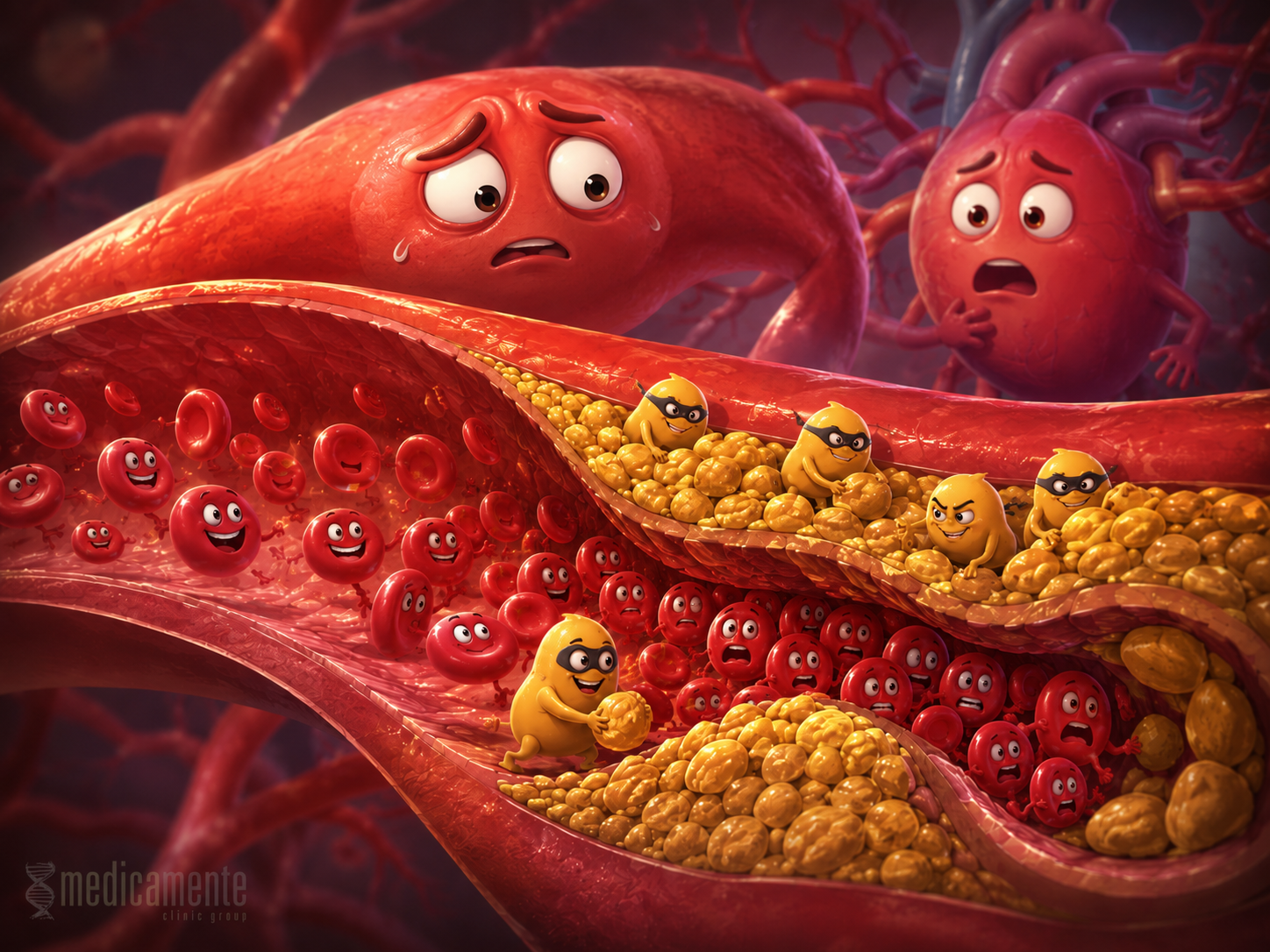
Atherosclerosis is a chronic process in which plaques gradually form inside the walls of arteries. These plaques contain lipids, inflammatory cells, connective tissue and calcium deposits. Over time, they may narrow the vessel, impair blood flow or become a source of thrombosis.
The main danger is that atherosclerosis can progress silently for a long time. A person may feel well, without chest pain, shortness of breath or weakness, while the arterial wall is already damaged. This is why lipid testing is important not only when symptoms are present, but also for preventive cardiovascular risk assessment.
LDL, HDL and triglycerides
A lipid profile usually includes several indicators. Total cholesterol shows the overall amount of cholesterol in the blood, but it is not always sufficiently informative on its own. Two people with the same total cholesterol may have different cardiovascular risk if their LDL, HDL, triglycerides and other factors differ.
LDL cholesterol is often called “bad” cholesterol. This is a simplified term, but it reflects its role in atherosclerosis. LDL particles carry cholesterol to tissues and, when present in excess, can enter the arterial wall. There they contribute to the development of atherosclerotic plaques.
HDL cholesterol is often called “good” cholesterol. HDL particles participate in reverse cholesterol transport, helping move cholesterol from tissues back to the liver. However, high HDL does not always fully protect against risk, especially when LDL is elevated or when diabetes, smoking, hypertension or existing cardiovascular disease are present.
Triglycerides are another form of fat in the blood. Their level may rise with excess calories, obesity, insulin resistance, diabetes, alcohol use, certain diseases and some medications. High triglycerides are often linked to metabolic risk and may be combined with low HDL and a higher number of atherogenic particles.
Why total cholesterol does not show the whole picture
Total cholesterol may be a useful general marker, but it does not answer the main question: which lipoproteins are elevated and how dangerous this is for the vessels. If total cholesterol is high because of LDL, the risk is one thing. If the increase is mostly related to HDL, the situation may be different. Interpretation therefore needs to be more detailed.
LDL cholesterol is especially important. Lowering LDL is one of the key goals in preventing atherosclerotic complications in people with increased risk. The higher the cardiovascular risk, the stricter the usual targets for LDL control.
Non-HDL cholesterol may also be assessed. This marker includes all atherogenic lipoproteins, meaning particles that can participate in atherosclerosis. It is particularly useful when triglycerides are elevated, or in metabolic syndrome and diabetes.
In some cases, apolipoprotein B may also be measured. It reflects the number of atherogenic particles in the blood. Two people may have similar LDL levels, but the number of particles capable of entering the vessel wall may differ. In selected situations, extended testing helps assess risk more accurately.
How an atherosclerotic plaque forms
Atherosclerosis begins with damage or dysfunction of the inner layer of the artery, the endothelium. The endothelium regulates vascular tone, blood clotting, inflammatory responses and the interaction between blood and the vessel wall. When it is damaged, the arterial wall becomes more vulnerable.
High blood pressure, smoking, diabetes, chronic inflammation, elevated LDL cholesterol, oxidative stress, obesity and other factors affect the endothelium. LDL particles may then enter the vessel wall. Inside the wall, they change, trigger an inflammatory response and attract immune cells.
Immune cells absorb altered lipid particles and turn into foam cells. Gradually, a fatty streak forms, followed by a more complex plaque. Connective tissue, calcium, inflammatory cells and other components become involved.
A plaque can grow slowly for a long time. Sometimes it gradually narrows the artery and causes symptoms during exertion, such as angina. But the danger is not only related to plaque size. Some plaques may be unstable. If their surface is damaged, the body responds as if there is an injury to the vessel, and a blood clot can form at that site.
Why heart attack and stroke may happen suddenly
Many people think that a vascular catastrophe occurs only when an artery becomes almost completely “blocked” over time. In reality, heart attack or stroke is often related not only to gradual narrowing, but also to sudden damage to an atherosclerotic plaque and clot formation.
If a plaque becomes unstable, its surface may rupture or erode. Blood clotting is activated at this site. The resulting clot can suddenly block the vessel. If this happens in a coronary artery, myocardial infarction occurs. If it happens in a brain vessel or a vessel supplying the brain, an ischemic stroke may develop.
This is why a person may have no noticeable symptoms for a long time and then suddenly experience an acute event. Sometimes there are no long warning signs before a heart attack or stroke. This makes preventive risk assessment especially important.
Plaque stability depends on many factors: LDL level, inflammation, blood pressure, smoking, diabetes, metabolic health and genetic predisposition. Prevention is therefore aimed not only at lowering cholesterol numbers, but at reducing overall vascular risk.
Which vessels are affected by atherosclerosis
Atherosclerosis may develop in different arteries of the body. If the coronary arteries that supply the heart are affected, the risk of ischemic heart disease, angina and myocardial infarction increases. Symptoms may include pain, pressure or burning in the chest during exertion, shortness of breath and reduced exercise tolerance.
If the brain arteries or carotid arteries are affected, the risk of transient ischemic attacks and stroke increases. Sometimes changes in the carotid arteries cause no symptoms for a long time, but may be detected by ultrasound when indicated.
If the arteries of the lower limbs are affected, peripheral artery disease may develop. A typical symptom is pain or fatigue in the legs while walking, which improves after stopping. This is called intermittent claudication. However, in the early stages there may be no symptoms.
Atherosclerosis can also affect the renal arteries. This may worsen blood pressure control and reduce kidney function. Therefore, atherosclerosis is a systemic process, not a problem of only one vessel.
Who is at increased risk
The risk of atherosclerosis increases when several factors are present together. Elevated LDL cholesterol is one of the key factors. However, cholesterol is interpreted together with age, sex, blood pressure, smoking, diabetes, body weight, kidney function and family history.
People at increased risk include those with hypertension, diabetes, chronic kidney disease, obesity, metabolic syndrome, smoking, low physical activity and previous cardiovascular events. If a person has already had a heart attack, stroke, stenting, bypass surgery or known significant atherosclerosis, the risk of recurrence is considered high.
Family history is also important. Early heart attacks, strokes or severe atherosclerosis in close relatives may suggest increased predisposition. In some cases, very high LDL is caused by familial hypercholesterolemia, an inherited disorder of cholesterol metabolism.
Familial hypercholesterolemia is important because LDL may be significantly elevated from a young age. A person may feel completely healthy for a long time. Without diagnosis and treatment, the risk of early atherosclerosis and cardiovascular complications increases.
Why diabetes accelerates atherosclerosis
Diabetes affects blood vessels through several mechanisms at once. Elevated glucose damages the endothelium, increases oxidative stress, supports inflammation and changes lipid metabolism. In diabetes, atherosclerosis often develops faster and may affect several vascular areas at once.
Patients with diabetes often have a combination of elevated triglycerides, reduced HDL, increased numbers of atherogenic particles, hypertension and obesity. This profile significantly increases cardiovascular risk.
Diabetes can also damage the kidneys. If albuminuria appears or the estimated glomerular filtration rate decreases, vascular risk rises further. This is why patients with diabetes need control not only of blood sugar, but also of lipids, blood pressure, kidney function and body weight.
Even in the absence of symptoms, diabetes requires regular cardiovascular risk assessment. The absence of chest pain or shortness of breath does not mean that the vessels do not need protection.
How lipid profile is assessed
A lipid profile usually includes total cholesterol, LDL cholesterol, HDL cholesterol and triglycerides. In some cases, non-HDL cholesterol, apolipoprotein B, lipoprotein(a) and other markers may be assessed. The choice depends on the clinical situation and risk level.
Context is important when interpreting the result. Temporary lipid changes may be related to acute illness, dietary changes, weight gain, thyroid dysfunction, liver or kidney disease, alcohol use and certain medications. A doctor therefore evaluates the result together with the medical history and other tests.
A lipid profile is especially important for people with hypertension, diabetes, obesity, smoking, chronic kidney disease, family history of early cardiovascular disease and those who have already had a heart attack, stroke or known atherosclerosis.
Dynamics are also important. If LDL is gradually rising or remains high in the presence of several risk factors, this requires attention. If treatment has already been prescribed, repeat testing helps assess its effectiveness.
Why cholesterol targets differ between people
There is no universal “ideal” cholesterol number for everyone. Target values depend on overall cardiovascular risk. The higher the risk, the lower LDL cholesterol usually needs to be.
For example, a person without chronic disease, without smoking, with normal blood pressure and low overall risk may require one approach. A patient with diabetes, chronic kidney disease or severe hypertension may require another. A person who has already had a heart attack or stroke usually has much stricter LDL targets.
This is because lowering LDL reduces the likelihood of new atherosclerotic events. For someone with already high risk, the absolute benefit of cholesterol control is usually greater than for a person with low risk.
Therefore, it is important not to compare your results with someone else’s. The same LDL level may be acceptable for one person and insufficiently safe for another. Interpretation depends on the whole clinical picture.
Diet and cholesterol control
Diet affects lipid metabolism, body weight, glucose, blood pressure and inflammation. It is therefore an important part of atherosclerosis prevention. However, cholesterol control is not simply about avoiding one product.
Overall dietary pattern matters. Important factors include the amount of saturated fats, trans fats, ultra-processed foods, excess sugar, total calories, protein quality, vegetables, fiber, whole grains, fish, nuts and plant oils.
Excess saturated fat can raise LDL cholesterol. It is found in fatty meats, processed meats, butter, high-fat dairy products, some pastries and fast food. Trans fats are especially unfavorable for vessels and may be present in some industrial baked goods, fried foods and processed products.
Fiber, especially soluble fiber, may help lower LDL. It is found in oats, legumes, vegetables, fruits and some seeds. Replacing some saturated fats with unsaturated fats from fish, nuts, olive oil and other plant sources may also be helpful.
At the same time, diet must be realistic and sustainable. Short-term strict diets rarely give long-term results if a person cannot maintain them. A gradual transition to an eating pattern that can be followed for years is usually more useful.
Physical activity, weight and lipids
Physical activity helps improve lipid profile, insulin sensitivity, weight control and blood pressure. It can lower triglycerides, raise HDL and reduce overall cardiovascular risk. Even if LDL changes only slightly, the effect of activity on vessels and metabolism remains important.
Excess body weight, especially abdominal obesity, is often associated with high triglycerides, insulin resistance, hypertension and inflammation. Weight loss in people with obesity may improve lipid profile and reduce the load on the heart and vessels.
Physical activity does not have to be extreme. Regularity matters: walking, swimming, cycling, moderate aerobic activity and strength exercises as tolerated. If cardiovascular disease or significant symptoms are already present, the level of activity should be discussed with a doctor.
A sedentary lifestyle itself is associated with higher risk. Even if a person exercises occasionally, prolonged sitting during the day may negatively affect metabolism. It is therefore useful not only to schedule exercise, but also to increase everyday movement.
Smoking and the vessel wall
Smoking is one of the most important risk factors for atherosclerosis. It damages the endothelium, increases inflammation, raises the tendency of blood to clot, worsens oxygen delivery to tissues and accelerates vascular aging.
When smoking is combined with high LDL, hypertension or diabetes, the risk increases especially strongly. Smoking does not simply add a separate risk; it amplifies the damaging effect of other factors.
Stopping smoking reduces cardiovascular risk regardless of age and smoking duration. The earlier a person quits, the greater the potential benefit, but positive effects are still present even when smoking stops later in life.
It is important to consider not only cigarettes, but also other forms of nicotine and inhaled combustion products or aerosols. They may also affect vessels, blood pressure, inflammation and cardiovascular risk.
When medication may be needed
Lifestyle change is important at all levels of risk, but sometimes it is not enough. If LDL remains high or overall cardiovascular risk is significant, a doctor may prescribe medication to lower cholesterol.
The most commonly used medications reduce cholesterol production in the liver and lower LDL. In some cases, additional medications are used to affect cholesterol absorption or other mechanisms of lipid metabolism. The choice depends on the initial LDL level, overall risk, associated diseases, tolerance and treatment targets.
Medication does not mean that lifestyle is no longer important. Diet, movement, smoking cessation, blood pressure control and glucose control remain part of prevention. Medication and lifestyle work together.
It is also important not to stop treatment independently. If cholesterol decreases during therapy, this usually means that treatment is working. After stopping, levels may rise again and vascular risk may increase. Any change in treatment should be discussed with a doctor.
Why prevention begins before symptoms
Atherosclerosis can develop over decades. Plaques form gradually, and for a long time a person may feel no symptoms. Waiting for chest pain, shortness of breath, leg pain or neurological symptoms is not a good prevention strategy.
A lipid profile helps detect one of the key risk factors early. But it must be evaluated together with blood pressure, glucose, smoking, body weight, family history, kidney function and lifestyle. This approach helps identify who may need lifestyle change alone and who may need more active prevention.
Cholesterol control is not cosmetic work on a lab result. It is a way to reduce the risk of arterial damage. LDL cholesterol is especially important because its long-term elevation is associated with accumulation of atherosclerotic changes.
Cholesterol does not hurt, and atherosclerosis may not interfere with daily life for a long time. This is exactly why these conditions require careful preventive assessment. The earlier lipid disorders are detected and risk factors are controlled consistently, the more opportunities there are to protect the vessels of the heart, brain, kidneys and the whole body.
Write a review
Required fields are marked with *
Categories
- Therapy (81)
- News (48)
- GP (23)
- Cardiology (20)
- urology (12)
- Endocrinology (8)
- Ortopedics (4)
- Dermatology (3)
- Ultrasound (1)
- Mobile app (1)
Articles





Archive
- September 2026 (11)
- August 2026 (11)
- July 2026 (11)
- June 2026 (11)
- May 2026 (9)
- April 2026 (8)
- March 2026 (8)
- February 2026 (8)
- January 2026 (8)
- December 2025 (5)
Categories
- Therapy (81)
- News (48)
- GP (23)
- Cardiology (20)
- urology (12)
- Endocrinology (8)
- Ortopedics (4)
- Dermatology (3)
- Ultrasound (1)
- Mobile app (1)


