
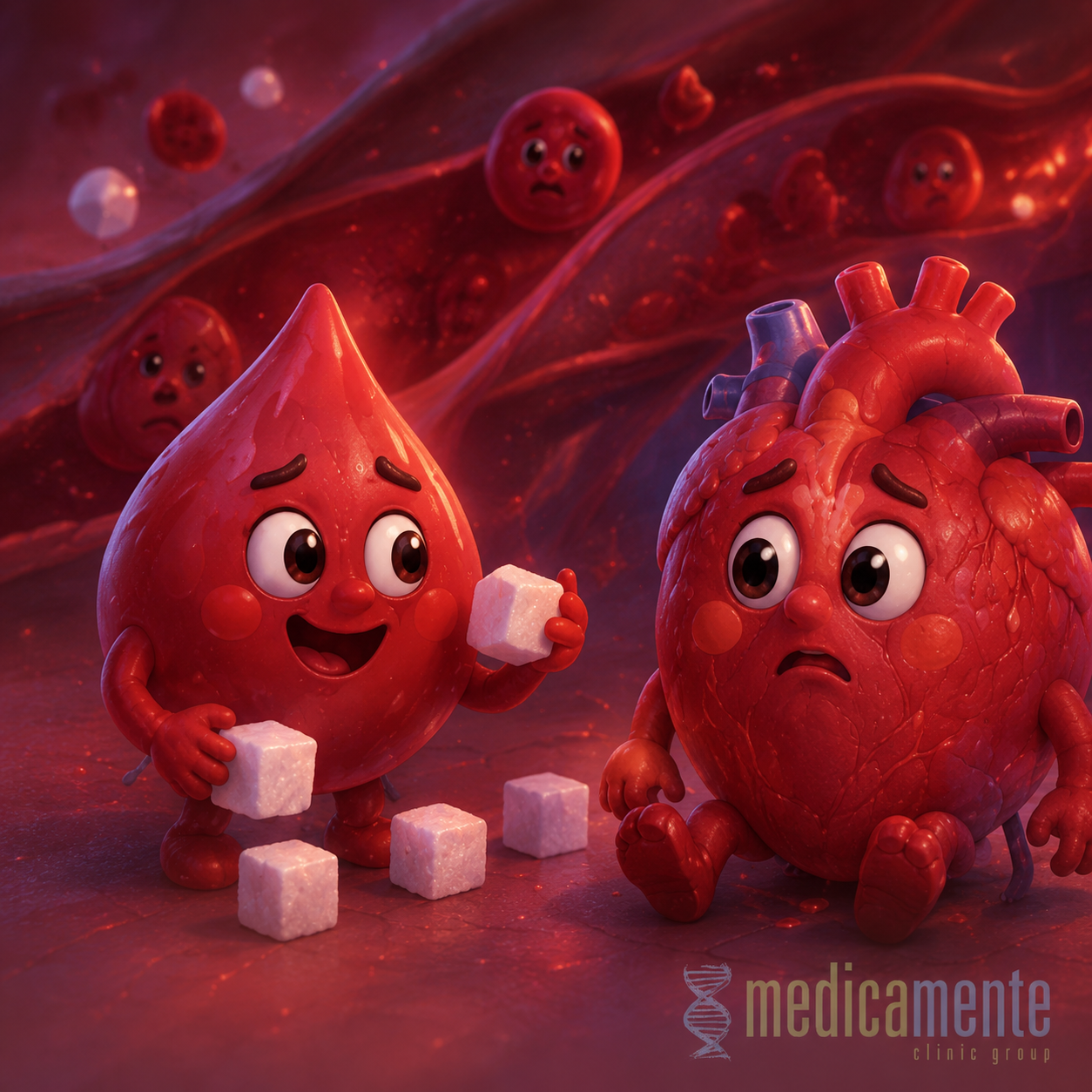
How elevated glucose affects arteries, the heart and kidneys
Diabetes and the heart: why the connection is so strong
Diabetes is not only a condition related to blood glucose levels. It affects blood vessels, nerves, kidneys, lipid metabolism, inflammatory processes and the cardiovascular system. This is why diabetes is considered one of the key cardiovascular risk factors.
Diabetes increases the likelihood of atherosclerosis, myocardial infarction, stroke, heart failure, peripheral artery disease and chronic kidney disease. The risk becomes especially high when diabetes is combined with arterial hypertension, elevated LDL cholesterol, obesity, smoking, low physical activity or already existing vascular changes.
The main challenge is that vascular damage in diabetes can develop silently. A person may not feel chest pain, shortness of breath or weakness, but the vessel wall may already be affected by inflammation, oxidative stress and atherosclerotic changes. This is why, in diabetes, it is important to assess not only blood sugar, but also the overall condition of the heart, blood vessels and kidneys.
Modern diabetes care increasingly focuses not only on glucose control, but also on preventing cardiovascular and kidney complications. This means that treatment and monitoring should take blood pressure, cholesterol, kidney function, body weight, lifestyle and individual risk into account.
How elevated glucose damages blood vessels
Elevated glucose affects the vessel wall in several ways. It disrupts the function of the endothelium, the inner layer of blood vessels that regulates vascular tone, inflammation, blood clotting and the interaction between blood and the arterial wall. When the endothelium is damaged, vessels relax less effectively and become more vulnerable to atherosclerosis.
Glucose also promotes oxidative stress and chronic low-grade inflammation. This creates conditions in which LDL particles can more easily enter the vessel wall, become modified and contribute to the formation of atherosclerotic plaques.
Long-term high blood sugar also changes the structure of proteins and tissues. These changes can reduce vascular elasticity and contribute to damage in small capillaries. This is why diabetes affects both large arteries and small vessels.
Damage to large vessels increases the risk of heart attack, stroke and artery disease in the legs. Damage to small vessels affects the kidneys, retina and nerves. Both processes can develop at the same time and reinforce each other.
Diabetes and atherosclerosis
Atherosclerosis often develops faster in people with diabetes and may affect several vascular areas at once. This means that one patient may have changes in the coronary arteries of the heart, carotid arteries, leg arteries and kidney vessels.
In diabetes, arterial plaques may be more widespread and unstable. If the surface of a plaque is damaged, a blood clot can form on it. Such a clot can block the vessel and cause myocardial infarction or ischemic stroke.
One important feature of diabetes is that symptoms of reduced blood flow to the heart may be less typical. Because of nerve involvement, pain may be less noticeable or may appear in unusual ways: shortness of breath, weakness, nausea, discomfort in the upper abdomen or reduced exercise tolerance. This is why the absence of typical chest pain does not always mean that there is no problem.
Atherosclerosis in diabetes requires active prevention. It is important to control LDL cholesterol, blood pressure, glucose levels, body weight, smoking and physical activity. Risk assessment should be comprehensive, because one number alone does not show the whole picture.
Insulin resistance and metabolic syndrome
Insulin resistance is a condition in which tissues respond less effectively to insulin. The body has to produce more insulin to maintain normal glucose levels. Over time, this can lead to prediabetes and type 2 diabetes.
Insulin resistance is often linked to abdominal obesity, elevated triglycerides, reduced HDL cholesterol, high blood pressure and impaired glucose metabolism. This combination is known as metabolic syndrome. It significantly increases cardiovascular risk.
Visceral fat around the abdomen is not simply an “energy reserve.” It actively participates in metabolism, supports inflammation and influences insulin sensitivity, blood pressure and the lipid profile. This is why waist circumference and fat distribution are important for risk assessment.
It is important to understand that vascular risk can increase even before diabetes is diagnosed. Prediabetes, insulin resistance, obesity and lipid abnormalities can already indicate unfavorable metabolic changes. Therefore, prevention should begin not only after a diabetes diagnosis, but earlier.
Why blood pressure is often elevated in diabetes
Diabetes and arterial hypertension often occur together. This is related to insulin resistance, obesity, impaired vessel function, sodium retention, activation of hormonal systems and kidney involvement.
High blood pressure in diabetes is especially dangerous because both factors damage blood vessels. Glucose disrupts endothelial function and accelerates atherosclerosis, while pressure creates mechanical stress on the vessel wall. Together, they increase the risk of heart attack, stroke, heart failure and chronic kidney disease.
The kidneys play an important role in this connection. Diabetic kidney damage may lead to albuminuria, reduced filtration function and activation of mechanisms that retain sodium and fluid. This can maintain or worsen hypertension.
This is why people with diabetes should measure blood pressure regularly instead of relying only on how they feel. Even moderately elevated but persistent blood pressure can be significant if a person already has diabetes, albuminuria or other risk factors.
Cholesterol in diabetes
Lipid abnormalities in diabetes often have a specific pattern. A patient may have elevated triglycerides, reduced HDL cholesterol and an increased number of atherogenic particles, even if total cholesterol does not look very high.
LDL cholesterol remains one of the key risk indicators. However, in diabetes, it is important to consider not only the LDL level itself, but also the overall vascular risk. In many patients with diabetes, LDL targets are stricter because the likelihood of cardiovascular complications is higher.
Elevated triglycerides are often associated with insulin resistance, excess calorie intake, obesity, alcohol use, poor glucose control and low physical activity. They may be part of metabolic syndrome and point to broader metabolic risk.
The lipid profile in diabetes should be assessed regularly. It helps determine how pronounced the atherogenic risk is and whether nutrition, weight, activity or medication should be adjusted. The goal is not simply to improve a laboratory result, but to reduce the likelihood of heart attack, stroke and other vascular events.
Diabetes and heart failure
Diabetes increases the risk of heart failure. This is not only due to atherosclerosis and myocardial infarction, although they play a major role. The heart is also affected by hypertension, obesity, altered fatty acid metabolism, inflammation, changes in the heart muscle and kidney disease.
Patients with diabetes may develop heart failure with reduced contractility, as well as heart failure with preserved ejection fraction, where the heart contracts relatively normally but relaxes and fills less effectively. The latter form is often associated with hypertension, obesity, older age and metabolic disturbances.
Symptoms of heart failure include shortness of breath, reduced exercise tolerance, swelling of the legs, rapid fatigue, nighttime breathlessness, the need to sleep with the head elevated and sudden weight gain due to fluid retention.
In diabetes, these symptoms should not be attributed only to excess weight, age or tiredness. If shortness of breath and weakness are increasing, the heart, kidneys, blood pressure, rhythm and signs of fluid retention should be assessed.
Diabetes, kidneys and the heart
The kidneys are an important link between diabetes and cardiovascular risk. Diabetic kidney disease may manifest as albuminuria, reduced glomerular filtration rate, elevated blood pressure and disturbances in fluid and salt balance.
If albumin appears in the urine in a person with diabetes, this indicates not only damage to the kidney filters. Albuminuria also reflects vascular system damage and is associated with a higher risk of cardiovascular complications.
Reduced kidney function affects treatment and prognosis. Some medications require dose adjustment, the risk of potassium abnormalities and fluid retention increases, and blood pressure becomes more difficult to control. Chronic kidney disease itself increases the risk of heart attack, stroke and heart failure.
This is why people with diabetes should regularly assess creatinine, estimated glomerular filtration rate and albuminuria. These markers help reveal not only kidney risk, but also overall vascular risk.
Why heart symptoms in diabetes may be atypical
Some patients with diabetes develop diabetic neuropathy, or nerve damage. It can affect nerves responsible for sensation, as well as the autonomic nervous system, which regulates pulse, blood pressure, sweating and the function of internal organs.
As a result, cardiac ischemia may sometimes appear not as classic chest pain, but as less typical symptoms. These may include shortness of breath, sudden weakness, cold sweat, nausea, discomfort in the upper abdomen, unexplained fatigue, dizziness or reduced exercise tolerance.
So-called “silent” ischemia is dangerous because people may seek help too late. A person may not recognize the symptoms as heart-related and may wait for them to pass. As a result, diagnosis and treatment may be delayed.
This is why people with diabetes should pay close attention to new or unusual symptoms, even when there is no obvious chest pain. Symptoms that appear during physical activity, repeat over time or are accompanied by shortness of breath, weakness, sweating or rhythm disturbance are especially important.
Important examinations in diabetes
Cardiovascular risk assessment in diabetes should be regular and comprehensive. It is important to monitor glucose and glycated hemoglobin, but this is not enough. Blood pressure, lipid profile, kidney function, albuminuria, body weight, waist circumference and lifestyle should also be assessed.
An ECG may be used to evaluate rhythm, conduction and signs of previous changes. If there is shortness of breath, reduced exercise tolerance, chest pain or discomfort, palpitations or swelling, echocardiography, stress testing, Holter monitoring or other methods may be needed.
If coronary artery disease is suspected, a doctor may order additional tests, such as stress tests or imaging of the heart or coronary arteries. The choice depends on symptoms, age, risk level and already known diseases.
For the kidneys, creatinine, estimated glomerular filtration rate and the urine albumin-to-creatinine ratio are important. These markers help assess both diabetic kidney involvement and cardiovascular risk.
Glucose control and vascular protection
Glucose control is important for preventing diabetes complications. It helps reduce the risk of small vessel damage, especially in the kidneys, retina and nerves. However, glucose control alone is usually not enough to prevent heart attack and stroke.
Cardiovascular risk in diabetes depends on several factors at once. Even if glycated hemoglobin is close to the target level, risk may remain high if blood pressure is elevated, LDL is high, the person smokes, obesity is present or albuminuria is detected.
This is why modern care emphasizes comprehensive vascular protection. It is important to control blood pressure, lipids, body weight, kidney health, smoking, physical activity and nutrition. In some patients, the choice of glucose-lowering therapy also takes cardiovascular and kidney protection into account.
Treatment goals should be individual. Very aggressive glucose lowering may be undesirable for some patients, especially if there is a risk of hypoglycemia, older age, comorbidities or long-standing diabetes. Treatment should therefore balance benefit and safety.
Nutrition in diabetes and cardiovascular risk
Nutrition in diabetes should take not only blood sugar, but also the heart into account. It is important to consider carbohydrate quality, fiber intake, saturated fats, trans fats, salt, overall calorie intake and meal regularity.
Fast carbohydrates, sweet drinks, frequent sweets and excess processed foods can worsen glucose and weight control. However, the quality of fats is also important: excess saturated fats and trans fats can increase atherogenic risk.
A vascular-friendly diet usually includes enough vegetables, legumes, whole grains, fish, nuts, vegetable oils and sources of fiber. At the same time, nutrition should be adapted to kidney function, potassium levels, body weight, medications and individual needs.
Salt is important, especially when diabetes is combined with hypertension, heart failure or chronic kidney disease. A lot of salt is found in ready-made foods, sauces, cheeses, processed meats, semi-prepared meals, fast food and snacks. Therefore, it is important to consider not only salt added at home.
Physical activity and weight
Regular physical activity improves insulin sensitivity and helps control glucose, blood pressure, weight, lipid profile and vascular function. It also lowers the risk of cardiovascular complications and improves overall well-being.
In diabetes, regularity is especially important. Even moderate activity, such as walking, swimming, cycling, therapeutic exercise or strength exercises within tolerance, can be beneficial. The key is to choose activity safely, especially if there are heart symptoms, neuropathy, foot problems, retinopathy or chronic kidney disease.
Weight loss in people with obesity can improve glucose control, blood pressure, triglycerides, inflammation and the workload on the heart. Even moderate weight reduction can have a noticeable metabolic effect if it is sustainable.
Extremes should be avoided. Crash diets, fasting, excessive exercise and stopping medication without medical guidance can be dangerous. A gradual and stable approach that can be maintained long term is more effective.
Smoking in diabetes
Smoking greatly increases vascular risk in diabetes. It damages the endothelium, accelerates atherosclerosis, increases the tendency to form blood clots, worsens tissue blood supply and raises the risk of heart attack, stroke and peripheral artery disease.
In diabetes, smoking is especially dangerous for the peripheral vessels. It increases the risk of reduced blood supply to the feet, slow wound healing and severe complications, especially if neuropathy or lower limb artery disease is already present.
Smoking cessation is one of the most effective steps for reducing cardiovascular risk. The benefit exists regardless of age and smoking history, although the earlier a person stops, the greater the long-term effect.
It is important to consider not only regular cigarettes, but also other nicotine products and inhaled aerosols. They may also affect blood vessels, blood pressure, inflammation and cardiovascular risk.
Why it is important to treat risk, not just a lab result
In diabetes, it is easy to focus on only one number: blood sugar or glycated hemoglobin. But cardiovascular complications depend on a whole system of factors. One good result does not cancel out other risks.
A patient with moderately elevated glucose but normal blood pressure, a favorable lipid profile, normal kidney function, no smoking and an active lifestyle has one level of risk. A patient with similar glucose but high blood pressure, high LDL, smoking, obesity and albuminuria has a completely different level of risk.
Therefore, diabetes monitoring should include assessment of overall risk. This helps determine which measures matter most: lowering blood pressure, correcting LDL, stopping smoking, weight control, choosing therapy with cardiovascular benefit, treating sleep apnea or monitoring kidney function more often.
Diabetes and cardiovascular diseases are closely connected because elevated glucose, insulin resistance, hypertension, dyslipidemia, obesity and kidney involvement damage the blood vessels together. Protecting the heart in diabetes is not only about controlling sugar, but about comprehensive vascular risk reduction. The earlier blood pressure, cholesterol, albuminuria, weight, smoking and lifestyle are identified and consistently managed, the greater the opportunity to reduce the risk of heart attack, stroke and heart failure.
Write a review
Required fields are marked with *
Categories
- Therapy (81)
- News (48)
- GP (23)
- Cardiology (20)
- urology (12)
- Endocrinology (8)
- Ortopedics (4)
- Dermatology (3)
- Ultrasound (1)
- Mobile app (1)
Articles





Archive
- September 2026 (11)
- August 2026 (11)
- July 2026 (11)
- June 2026 (11)
- May 2026 (9)
- April 2026 (8)
- March 2026 (8)
- February 2026 (8)
- January 2026 (8)
- December 2025 (5)
Categories
- Therapy (81)
- News (48)
- GP (23)
- Cardiology (20)
- urology (12)
- Endocrinology (8)
- Ortopedics (4)
- Dermatology (3)
- Ultrasound (1)
- Mobile app (1)


