
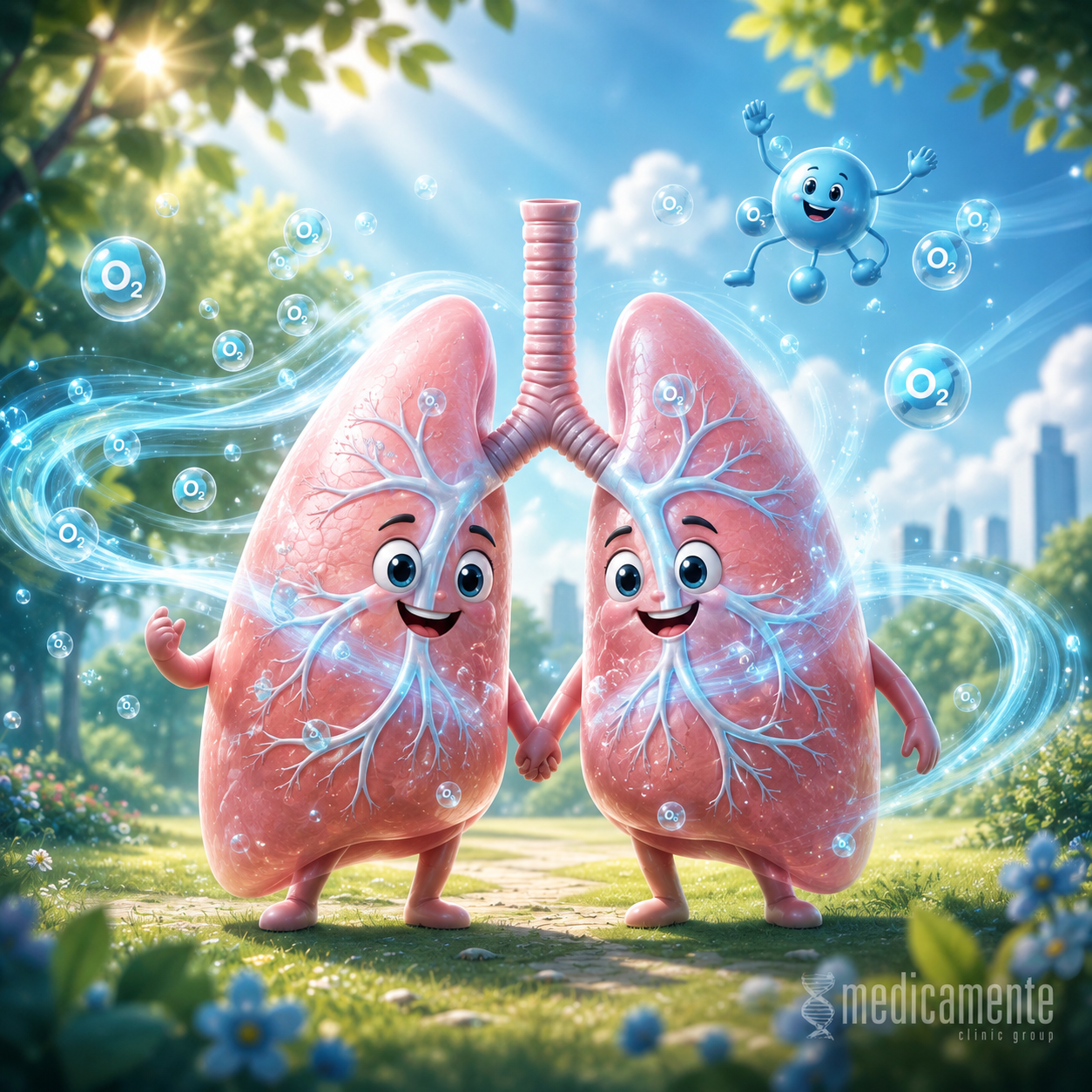
Why breathing matters for the entire body
August Is Lung Health Month
Breathing feels natural and almost invisible until it becomes difficult. Every breath brings oxygen into the body, allowing cells to produce energy. Every exhalation helps remove carbon dioxide, a waste product of metabolism. The lungs work continuously, without pauses, and their condition affects not only the ability to breathe, but also the work of the heart, brain, muscles, kidneys and the entire body.
Lung health is not only the absence of pneumonia or severe shortness of breath. The respiratory system includes the nose, throat, larynx, trachea, bronchi, small airways and alveoli — tiny air sacs where gas exchange takes place. Any disturbance along this pathway can affect breathing: inflammation of the mucosa, narrowing of the bronchi, infection, allergy, damage to lung tissue, smoking, exposure to dust or chronic diseases.
Many lung diseases develop gradually. A person may explain cough as a cold, shortness of breath as poor physical shape, fatigue as stress, and reduced stamina as age or excess weight. Sometimes this is true, but sometimes these symptoms may hide asthma, chronic obstructive pulmonary disease, the effects of smoking, allergic inflammation, cardiopulmonary disorders or consequences of previous infections.
This is why Lung Health Month is an opportunity to talk not only about the treatment of acute diseases, but also about prevention, early recognition of symptoms, examinations and habits that help maintain normal breathing.
How the lungs work
The main function of the lungs is gas exchange. Air enters through the nose or mouth, then passes through the larynx, trachea, bronchi and increasingly smaller airways. At the end of this pathway are the alveoli. Their walls are very thin and closely connected with capillaries. This is where oxygen moves from the air into the blood, while carbon dioxide moves from the blood into the air that is exhaled.
For this process to work effectively, several conditions are important. Air must be able to pass freely through the airways. The alveoli must be open and able to participate in gas exchange. Blood must flow properly through the lung vessels. The breathing muscles, including the diaphragm, must support inhalation and exhalation. The heart must pump blood through the lungs and then to the rest of the body.
If one of these mechanisms is disrupted, a person may develop a feeling of lack of air, reduced exercise tolerance, cough, wheezing, fatigue or low oxygen levels. This is why shortness of breath may be related not only to the lungs, but also to the heart, anemia, anxiety disorders, metabolic disturbances or general physical weakness.
The lungs also perform a protective function. The airways are constantly in contact with the external environment: viruses, bacteria, allergens, dust, smoke, chemical substances and cold air. The mucous membrane, cilia, immune cells and cough reflex help clear the airways and protect them from injury. However, with constant irritation, this system may become overloaded and damaged.
Why cough should not always be considered a common cold
Cough is one of the most common respiratory symptoms. It helps clear the airways of mucus, irritants and foreign particles. After a viral infection, cough may persist for some time even after the fever has resolved and overall well-being has improved.
However, cough is not always related only to a cold. If it lasts a long time, recurs, worsens at night, is accompanied by wheezing, sputum, shortness of breath, chest pain, blood in sputum, weight loss or fever, it should be assessed more carefully.
Chronic cough may be associated with asthma, chronic bronchitis, COPD, allergic rhinitis, postnasal drip, gastroesophageal reflux, side effects of some medications, smoking or diseases of the lung tissue. Sometimes the cause is not in the bronchi, but in the nasopharynx, stomach or heart.
It is important to pay attention not only to how long the cough lasts, but also to its character. A dry paroxysmal cough, cough with sputum, night cough, cough after physical activity, cough after contact with allergens or cough in a smoker may have different meanings and require different approaches.
Shortness of breath: a symptom that requires attention
Shortness of breath is the feeling of not getting enough air, difficult breathing or the inability to take a sufficiently deep breath. It may occur during physical activity, at rest, at night, while speaking, climbing stairs or even during ordinary daily tasks.
Shortness of breath may be pulmonary, cardiac, anemic, metabolic, anxiety-related or mixed. In lung diseases, it is often related to narrowing of the bronchi, inflammation, reduced elasticity of lung tissue, impaired gas exchange or damage to the alveoli. In heart diseases, shortness of breath may occur because of blood congestion in the lung vessels and fluid retention.
It is especially important to assess shortness of breath if it appears suddenly, worsens quickly, occurs at rest, is accompanied by chest pain, blue lips, severe weakness, high fever, coughing up blood, wheezing or low oxygen saturation.
Gradual reduction in stamina is also important. If a person used to climb stairs easily but now needs to stop, this may not be only “poor fitness.” Such a symptom may point to lung disease, heart disease, anemia, consequences of infection or other conditions.
Asthma: inflammation and sensitivity of the bronchi
The bronchi are the airways through which air enters the lungs. In asthma, the bronchi become chronically inflamed and more sensitive to various irritants. In response to allergens, cold air, physical activity, infections, smoke, dust or stress, they may narrow, causing episodes of cough, wheezing, chest tightness and shortness of breath.
Asthma may present differently in different people. In some patients, symptoms occur rarely and only after contact with triggers. In others, they recur often, interfere with sleep, physical activity and daily life. Sometimes the main symptom is not wheezing, but a prolonged dry cough, especially at night or after exertion.
The danger of asthma is that a person may get used to symptoms and consider them normal. However, uncontrolled inflammation of the bronchi may lead to frequent exacerbations, reduced quality of life and the need for urgent care.
Diagnosis of asthma often includes assessment of symptoms, connection with triggers, spirometry, lung function tests and observation of response to therapy. It is important not only to relieve attacks, but also to control inflammation if it persists.
COPD: when the airways are damaged over years
Chronic obstructive pulmonary disease, or COPD, is most often associated with long-term exposure to tobacco smoke. However, occupational dust, chemical substances, air pollution, frequent infections and individual susceptibility can also contribute to its development.
In COPD, the airways narrow, become inflamed and lose the ability to conduct air normally. Lung tissue may become less elastic, making it more difficult to exhale. Air seems to become “trapped” in the lungs, leading to shortness of breath, chronic cough and sputum.
The problem is that COPD often develops silently. At first, a person notices shortness of breath only during physical activity, then begins to move less to avoid discomfort. Because of this, worsening may be masked by reduced activity. A smoker’s cough is also often perceived as something familiar, although it may be a sign of chronic bronchial inflammation.
Spirometry helps detect airway obstruction and assess lung function. Early detection of COPD is important because smoking cessation, treatment, vaccination, physical activity and prevention of exacerbations can slow deterioration and improve quality of life.
Infections of the lungs and airways
The respiratory system often encounters infections. Viruses may cause rhinitis, pharyngitis, laryngitis, bronchitis and exacerbations of chronic diseases. Bacterial infections may lead to pneumonia, especially in people with weakened immunity, older adults, smokers and people with chronic heart, lung, kidney disease or diabetes.
Pneumonia develops when inflammation affects lung tissue. It may present with fever, cough, sputum, chest pain when breathing, shortness of breath, weakness, chills and deterioration of general condition. In older adults, symptoms may be less typical: confusion, weakness, reduced appetite and decreased activity.
Not every cough means pneumonia, but it is important not to miss warning signs. High fever, severe weakness, shortness of breath, chest pain, blood in sputum, low oxygen saturation, deterioration after initial improvement or a severe course of infection require medical assessment.
After infections, cough may persist because the airway mucosa remains irritated. But if cough lasts a long time, worsens, is accompanied by shortness of breath or sputum with warning signs, the cause should be evaluated.
Allergy and breathing
Allergic inflammation can affect not only the skin or eyes, but also the respiratory tract. Allergic rhinitis causes nasal congestion, sneezing, itching, nasal discharge and mucus dripping down the back of the throat. This may provoke cough, especially at night.
In some people, allergy is associated with bronchial hyperreactivity and asthma. Contact with pollen, house dust, dust mites, mold, animal dander or other allergens may cause cough, wheezing, chest tightness and shortness of breath.
The nose and bronchi function as one respiratory system. If allergic rhinitis is poorly controlled, it may worsen sleep quality, increase cough and raise the risk of bronchial symptoms. Therefore, in prolonged cough, it is important to assess not only the lungs, but also the nasopharynx.
Allergic symptoms often have seasonality or a connection with a specific environment: home, workplace, animals, dust, plant blooming or damp rooms. These details help understand the cause and choose the right approach.
Smoking, vapes and damage to the respiratory system
Smoking remains one of the main risk factors for lung diseases. Tobacco smoke contains many substances that irritate the airways, damage cilia, maintain inflammation, increase mucus production and accelerate loss of lung function.
Smoking is associated with chronic bronchitis, COPD, lung cancer, frequent infections, poor asthma control, reduced physical stamina and vascular damage. The longer and more intense the exposure, the higher the risk, but harm may also occur with passive smoking.
Vapes and heated tobacco systems are not a safe alternative for the respiratory system. Aerosols may contain irritating substances, nicotine, flavorings and heating products that affect the bronchi and lung tissue. The long-term effects of many such products are still being studied, but the absence of smoke does not mean the absence of risk.
Quitting smoking is one of the most important steps for lung protection. It helps slow loss of respiratory function, reduce inflammation, lower the risk of exacerbations, improve exercise tolerance and reduce the risk of serious diseases in the future.
How the lungs are examined
Lung assessment begins with a discussion of symptoms. It is important to understand how long cough or shortness of breath has been present, whether there is sputum, wheezing, fever, chest pain, and whether symptoms are connected with exertion, allergens, infections, smoking, work or season.
Examination includes assessment of breathing, respiratory rate, oxygen saturation, listening to the lungs, and evaluation of temperature, pulse and general condition. Already at this stage, a doctor may understand whether urgent assessment or planned diagnostics are needed.
Spirometry is one of the key methods for assessing breathing function. It helps determine whether there is narrowing of the airways, how significant obstruction is and how the lungs cope with inhalation and exhalation. This method is especially important when asthma or COPD is suspected.
Depending on the situation, chest X-ray, computed tomography, pulse oximetry, blood tests, sputum examination, allergy testing, blood gas analysis, bronchodilator testing or additional functional studies may be used. The choice of method depends on symptoms and the suspected cause.
Prevention of lung diseases
Prevention of lung diseases includes several areas. The first and most important is smoking cessation and reduced exposure to smoke. This applies not only to active smoking, but also to passive smoking and regular inhalation of aerosols and irritating substances.
The second area is protection from infections. Vaccination when indicated, hand hygiene, avoiding contact with sick people during infection seasons, timely treatment of chronic diseases and attention to symptoms help reduce the risk of severe respiratory infections.
The third area is air quality. Dust, mold, chemical irritants, dry air, occupational hazards and environmental pollution may worsen the condition of the airways. In chronic symptoms, it is important to assess not only treatment, but also the environment in which a person lives and works.
Physical activity is also important. It does not necessarily “increase lung volume” directly in every person, but it improves the work of respiratory muscles, endurance, oxygen use, cardiovascular condition and the ability to tolerate exertion.
When urgent help is needed
Some respiratory symptoms require immediate assessment. These include sudden or rapidly worsening shortness of breath, difficulty breathing at rest, blue lips or fingers, severe chest pain, coughing up blood, confusion, severe weakness, high fever with deterioration, a sharp decrease in oxygen saturation or inability to speak in full sentences because of lack of air.
It is also important to seek urgent help if symptoms quickly worsen in a person with asthma or COPD, usual medications help less, severe shortness of breath appears, or there is drowsiness, exhaustion or the feeling of not getting enough air even at rest.
Respiratory symptoms should not always be attributed to a cold, stress or fatigue. Sometimes early response helps prevent complications and identify pneumonia, asthma exacerbation, COPD exacerbation, pulmonary embolism, heart failure or another serious condition in time.
August Is Lung Health Month is an opportunity to pay attention to breathing before symptoms become severe. Cough, shortness of breath, wheezing, reduced stamina, frequent infections and the consequences of smoking require careful assessment. The lungs work every day, supplying the body with oxygen, and caring for them begins with simple steps: quitting smoking, controlling chronic diseases, vaccination when indicated, physical activity, clean air and timely diagnosis.
Write a review
Required fields are marked with *
Categories
- Therapy (81)
- News (48)
- GP (23)
- Cardiology (20)
- urology (12)
- Endocrinology (8)
- Ortopedics (4)
- Dermatology (3)
- Ultrasound (1)
- Mobile app (1)
Articles





Archive
- September 2026 (11)
- August 2026 (11)
- July 2026 (11)
- June 2026 (11)
- May 2026 (9)
- April 2026 (8)
- March 2026 (8)
- February 2026 (8)
- January 2026 (8)
- December 2025 (5)
Categories
- Therapy (81)
- News (48)
- GP (23)
- Cardiology (20)
- urology (12)
- Endocrinology (8)
- Ortopedics (4)
- Dermatology (3)
- Ultrasound (1)
- Mobile app (1)


