
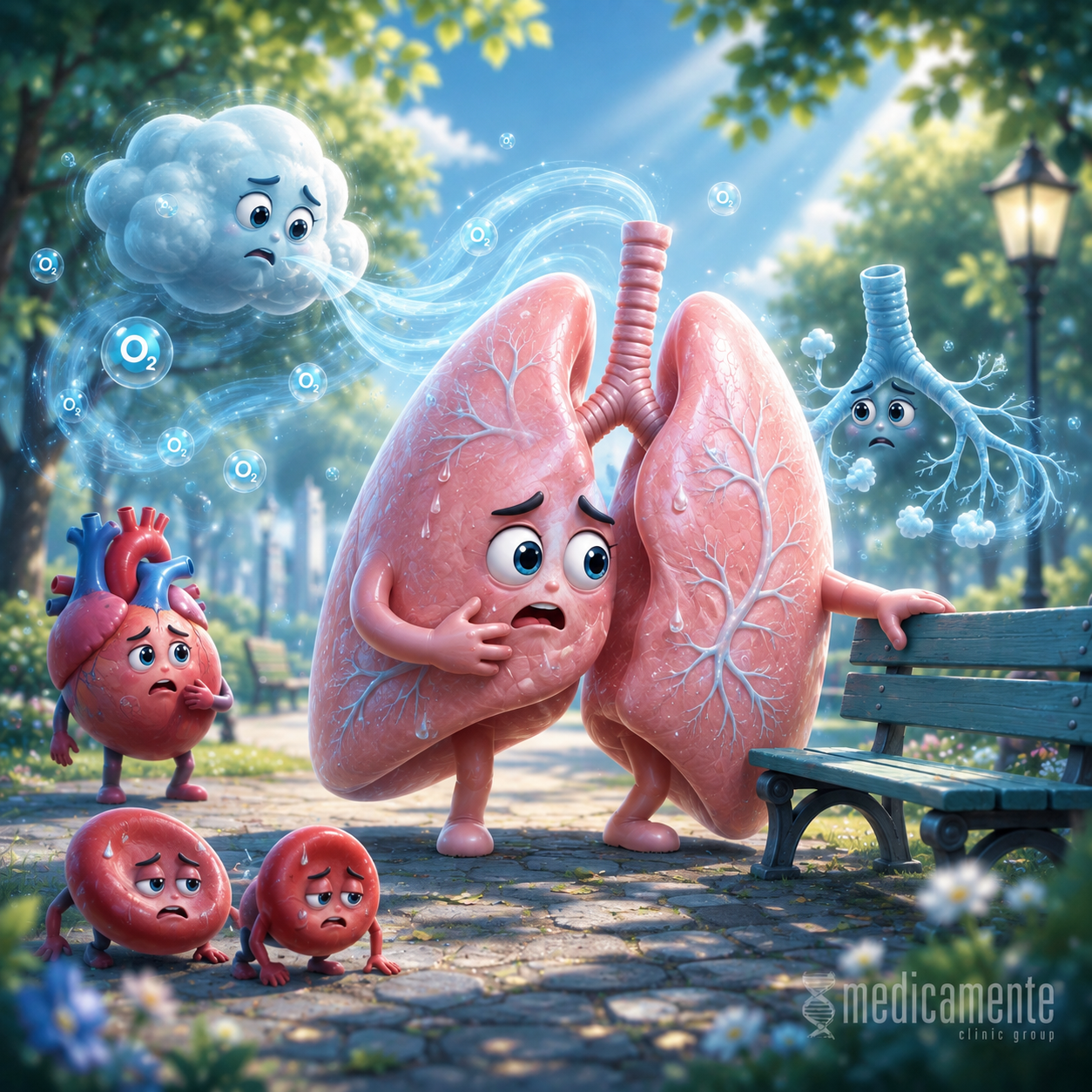
How to distinguish ordinary fatigue from a warning symptom
What shortness of breath is
Shortness of breath is a subjective feeling of difficult breathing. A person may describe it in different ways: “I cannot get enough air,” “it is hard to breathe in,” “I cannot take a full breath,” “I get breathless when walking,” “there is pressure in my chest,” “my breathing has become fast” or “air does not pass through.” Sometimes shortness of breath appears only with exertion, and sometimes at rest, at night, while speaking or even during minimal activity.
It is important to understand that shortness of breath is not a separate disease. It is a symptom that can occur in different conditions. It may be related to the airways, lung tissue, heart, blood vessels, blood, nervous system, metabolism, physical conditioning or anxiety.
Normally, breathing becomes faster during physical activity. When muscles work more actively, they need more oxygen, and the body needs to remove carbon dioxide faster. Therefore, after climbing stairs, walking quickly or exercising, breathing may become more frequent. But if shortness of breath occurs during usual activity, worsens quickly, appears at rest or is accompanied by warning symptoms, it should not be ignored.
Shortness of breath is especially important because it may be an early sign of lung or heart disease. Sometimes a person does not yet feel pain, fever or severe weakness, but already notices that ordinary activities have become harder to tolerate. Such a change requires attention.
Why the feeling of lack of air appears
Breathing is regulated by a complex system. The brain controls the frequency and depth of breathing, the lungs provide gas exchange, the respiratory muscles support inhalation and exhalation, the heart pumps blood through the lungs and to the body, and blood carries oxygen with the help of hemoglobin. If even one link is disrupted, shortness of breath may appear.
In lung diseases, shortness of breath often occurs because air passes less effectively through the airways or because oxygen and carbon dioxide exchange in the alveoli is impaired. For example, in asthma the bronchi may narrow, in COPD air leaves the lungs with difficulty, in pneumonia the inflamed part of the lung participates less effectively in breathing, and in fibrosis lung tissue becomes less elastic.
In heart diseases, shortness of breath may be related to the heart pumping blood less effectively. If blood backs up in the lung vessels, fluid may accumulate in lung tissue, making it harder to breathe, especially during exertion or when lying down.
In anemia, the lungs may work normally, but the blood carries less oxygen because hemoglobin is low. As a result, the body tries to compensate by increasing breathing and heart rate. A person may feel weakness, fatigue, dizziness and shortness of breath with exertion.
Shortness of breath in lung diseases
Pulmonary shortness of breath may be related to the bronchi, alveoli, pleura, lung vessels or respiratory muscles. It is often accompanied by cough, wheezing, sputum, a feeling of chest tightness, pain when breathing or reduced oxygen saturation.
In bronchial asthma, shortness of breath often occurs in attacks. It may appear after contact with an allergen, cold air, smoke, physical activity, infection or stress. Wheezing, cough, chest tightness and difficulty especially with exhalation often occur.
In chronic obstructive pulmonary disease, shortness of breath usually increases gradually. At first, a person notices it only during physical activity, then begins to avoid activity in order not to feel breathless. Chronic cough, sputum and a long history of smoking or exposure to harmful substances are often present.
In pneumonia, shortness of breath may be combined with fever, weakness, cough, sputum, chest pain when breathing and deterioration of general condition. In older adults or people with chronic diseases, symptoms may be less typical, but shortness of breath and weakness often remain important signs.
In pleural diseases, such as inflammation or fluid accumulation around the lung, breathing may become painful. It may be difficult to take a deep breath, chest pain may appear, and sometimes there is a feeling of heaviness or pressure on one side.
Shortness of breath in heart diseases
Cardiac shortness of breath occurs when the heart cannot maintain effective circulation. Most often it is associated with heart failure, coronary artery disease, rhythm disturbances, valve disease or consequences of a heart attack.
One characteristic feature of cardiac shortness of breath is worsening when lying down. When a person lies down, fluid redistributes toward the chest, and the heart may have more difficulty handling the blood volume. This is why some patients feel better sleeping on a high pillow or in a semi-sitting position.
Nighttime shortness of breath may also point to a cardiac cause. A person may wake up feeling short of air, sit up, open a window and breathe sitting for some time. If such episodes recur, especially together with leg swelling, rapid fatigue or weight gain, heart function should be assessed.
In coronary artery disease, shortness of breath may be an equivalent of chest pain. This is especially important in older patients, people with diabetes and women, in whom symptoms of cardiac ischemia may sometimes be atypical. Instead of pronounced pain, there may be lack of air, weakness, sweating, nausea or discomfort in the upper abdomen.
Rhythm disturbances can also cause shortness of breath. If the heart beats too fast, irregularly or too slowly, circulation becomes less effective. A person may feel palpitations, skipped beats, weakness, dizziness, shortness of breath or a near-fainting sensation.
Shortness of breath in anemia and metabolic disorders
Sometimes the cause of shortness of breath is not in the lungs or heart. In anemia, the amount of hemoglobin or red blood cells that carry oxygen decreases. Even if the lungs saturate the blood well with oxygen, tissues receive less of it. The body compensates by increasing heart rate and breathing.
Anemia may present with weakness, paleness, fatigue, dizziness, ringing in the ears, palpitations, reduced exercise tolerance and shortness of breath. Symptoms may develop gradually, so a person does not always notice worsening immediately.
Shortness of breath may also occur in thyroid disorders, disturbances of acid-base balance, severe infections, high fever, dehydration, obesity, marked physical deconditioning or chronic inflammatory conditions.
In obesity, shortness of breath may be related to increased load on the respiratory muscles, reduced mobility of the chest wall, decreased physical stamina, sleep apnea, hypertension, heart failure or a combination of several factors. Therefore, it is important not to attribute shortness of breath only to weight without excluding other causes.
Shortness of breath and anxiety
Anxiety and panic states may cause a feeling of lack of air, rapid breathing, chest tightness, palpitations, trembling, sweating, dizziness and fear. A person may feel that they cannot take a sufficiently deep breath, although oxygen levels may remain normal.
With anxiety, breathing often becomes shallow and frequent. This may change the level of carbon dioxide in the blood and worsen unpleasant sensations: tingling in the fingers, dizziness, a feeling of unreality, weakness. A vicious circle appears: the person becomes frightened by lack of air, starts breathing even faster, and symptoms intensify.
However, it is important not to diagnose anxiety only because the person is worried. Shortness of breath itself can cause fear, especially if it is related to asthma, a heart problem, infection or another disease. Therefore, when shortness of breath appears for the first time, is severe or unusual, dangerous causes should first be excluded.
If examination does not reveal serious lung or heart pathology, and episodes are connected with stress, panic or chronic tension, working with anxiety may indeed become an important part of treatment. But this should be a considered conclusion after assessment, not a way to dismiss the symptom.
How to understand that shortness of breath has become unusual
Shortness of breath should be compared not only with general norms, but also with the previous condition of a particular person. If a person used to walk a certain distance, climb several floors or do ordinary tasks without stopping, and now needs to stop, this is a meaningful change.
Shortness of breath is concerning if it appears suddenly, progresses quickly or occurs with increasingly smaller amounts of activity. For example, first a person became breathless only when walking fast, then during ordinary walking, then while speaking or dressing. Such progression requires medical assessment.
It is important to pay attention to accompanying symptoms. Cough, sputum, wheezing, fever, chest pain, leg swelling, palpitations, fainting, weight loss, night sweats, coughing up blood or severe weakness help guide the search for a possible cause.
Risk factors also matter: smoking, asthma, COPD, previous infections, heart disease, hypertension, diabetes, anemia, recent surgery, prolonged immobility, previous thrombosis, pregnancy, cancer, use of certain medications and occupational exposures.
When shortness of breath requires urgent help
Some types of shortness of breath require immediate medical attention. These include sudden or rapidly worsening lack of air, shortness of breath at rest, inability to speak in full sentences, blue lips or fingers, severe weakness, confusion, fainting or sudden deterioration of general condition.
Chest pain, pressure or burning is a dangerous sign, especially if accompanied by shortness of breath, cold sweat, nausea, weakness or pain spreading to the arm, back, neck, jaw or upper abdomen. This may be related to an acute heart condition.
Coughing up blood, sharp chest pain when breathing, sudden shortness of breath after a long flight, surgery, injury or period of immobility may point to serious vascular or lung causes and require urgent evaluation.
Help should also not be delayed if symptoms suddenly worsen in a person with asthma or COPD, usual medications help less, breathing becomes very difficult, drowsiness, exhaustion, bluish discoloration or low oxygen saturation appears.
How a doctor evaluates shortness of breath
Evaluation of shortness of breath begins with a detailed discussion. It is important to understand when it started, how quickly it is developing, whether it appears with exertion or at rest, whether it worsens when lying down, and whether there are night episodes, cough, sputum, fever, chest pain, swelling, palpitations, anxiety, weight loss or weakness.
The doctor clarifies risk factors: smoking, allergies, asthma, COPD, heart disease, blood pressure, diabetes, anemia, kidney disease, recent infections, surgeries, flights, medications and occupational exposures. These details often help narrow the possible causes.
During examination, respiratory rate, oxygen saturation, pulse, blood pressure, temperature, skin color, use of accessory respiratory muscles, swelling and lung sounds are assessed. Listening to the lungs may reveal wheezing, crackles, reduced breath sounds or other signs.
Further testing depends on the suspected cause. If a lung problem is suspected, spirometry, chest X-ray, CT scan, blood tests, sputum examination, pulse oximetry or blood gas analysis may be needed. If a cardiac cause is suspected, ECG, echocardiography, blood tests for cardiac markers, Holter monitoring or other methods may be used.
Spirometry and assessment of breathing function
Spirometry is one of the key tests for shortness of breath, especially when asthma or COPD is suspected. During the test, a person breathes into a special device that measures air volume and airflow speed. This helps determine whether the airways are narrowed.
With obstruction, air has more difficulty leaving the lungs. This may be typical of asthma, COPD and some other diseases. Sometimes the test is performed before and after an inhaled bronchodilator to assess how much the airways can widen.
Spirometry is useful not only for diagnosis, but also for follow-up. It helps assess the degree of impairment, effectiveness of treatment and changes in lung function over time.
However, normal spirometry does not always exclude all causes of shortness of breath. If symptoms persist, additional studies may be needed: assessment of lung diffusion capacity, exercise testing, chest imaging, heart evaluation, blood tests or assessment of physical endurance.
X-ray, CT and other methods
Chest X-ray is often used for cough, fever, chest pain, suspected pneumonia, fluid around the lungs, marked enlargement of the heart or other changes. It is an accessible method, but it does not show all diseases in detail.
Computed tomography provides a more detailed image of the lungs, bronchi, vessels, pleura and mediastinum. It may be needed for unexplained shortness of breath, suspected pulmonary embolism, interstitial lung disease, tumors, complications of infections or changes that are not clearly visible on X-ray.
Pulse oximetry measures oxygen saturation in the blood. It is a simple and important indicator, especially in acute shortness of breath, infections, asthma or COPD exacerbations. But normal oxygen saturation does not always exclude a problem, especially in early stages or when shortness of breath is related to the heart, anemia or anxiety.
Blood tests may help detect inflammation, anemia, kidney dysfunction, electrolyte disturbances, thyroid problems, cardiac strain or heart muscle injury. The choice of tests depends on symptoms and the clinical situation.
Why treatment depends on the cause
Shortness of breath cannot be treated the same way in all patients, because causes may be completely different. If shortness of breath is caused by bronchospasm, the approach is one thing. If it is caused by heart failure, it is another. If it is related to anemia, infection, anxiety or thrombosis, the approach is different again.
In asthma, it is important to control inflammation and bronchial hyperreactivity. In COPD, the foundation is smoking cessation, inhaled therapy when indicated, vaccination, physical activity and prevention of exacerbations. In pneumonia, treatment is directed at infection and breathing support when necessary.
In heart failure, it is important to reduce fluid congestion, control blood pressure, rhythm, kidney function and the cause of worsening heart function. In anemia, it is necessary to understand why hemoglobin has decreased: iron deficiency, blood loss, chronic inflammation, kidney disease or another cause.
This is why self-treatment of shortness of breath may be dangerous. In particular, one should not use someone else’s inhalers, antibiotics, diuretics or “heart medications” without diagnosis. The symptom may look the same but require different solutions.
What can help with prevention
Prevention of shortness of breath depends on the cause, but there are general measures that support the respiratory and cardiovascular systems. The most important step is quitting smoking and reducing contact with smoke, vapes, dust and irritating substances.
Regular physical activity improves the work of respiratory muscles, endurance, vascular condition and the body’s ability to use oxygen. Activity should match the person’s condition. If shortness of breath is already present, especially if severe or worsening, starting exercise without evaluating the cause is not recommended.
Control of chronic diseases is also important. Hypertension, diabetes, heart failure, asthma, COPD, anemia, obesity, thyroid disease and chronic kidney disease may affect breathing. The better they are controlled, the lower the risk of progression of shortness of breath.
Vaccination when indicated, timely treatment of infections, allergy control, maintaining good indoor air quality, addressing mold and protection in hazardous work environments help reduce the burden on the respiratory system.
Shortness of breath is a symptom that cannot be assessed only as “dangerous” or “not dangerous.” It is important to consider its onset, speed of progression, connection with exertion, body position, accompanying symptoms and risk factors. Sometimes lack of air is related to temporary exertion or anxiety, but sometimes it points to disease of the lungs, heart, blood or blood vessels. The earlier the cause is identified, the more opportunities there are to prevent complications and restore normal tolerance of everyday activity.
Write a review
Required fields are marked with *
Categories
- Therapy (81)
- News (48)
- GP (23)
- Cardiology (20)
- urology (12)
- Endocrinology (8)
- Ortopedics (4)
- Dermatology (3)
- Ultrasound (1)
- Mobile app (1)
Articles





Archive
- September 2026 (11)
- August 2026 (11)
- July 2026 (11)
- June 2026 (11)
- May 2026 (9)
- April 2026 (8)
- March 2026 (8)
- February 2026 (8)
- January 2026 (8)
- December 2025 (5)
Categories
- Therapy (81)
- News (48)
- GP (23)
- Cardiology (20)
- urology (12)
- Endocrinology (8)
- Ortopedics (4)
- Dermatology (3)
- Ultrasound (1)
- Mobile app (1)


