
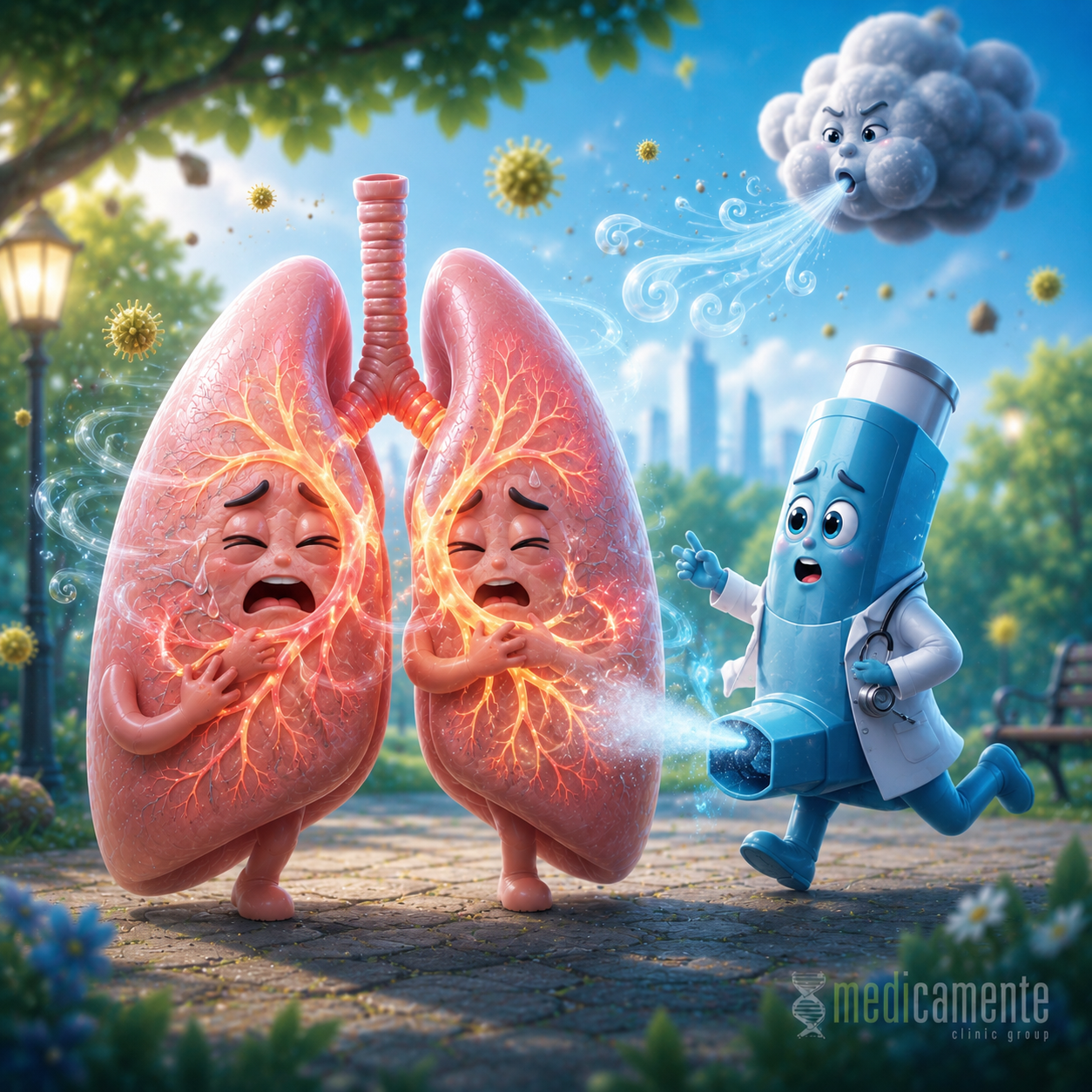
Why episodes of cough and wheezing should not be ignored
What bronchial asthma is
Bronchial asthma is a disease in which the airways become chronically inflamed and excessively sensitive. The bronchi react to irritants more strongly than usual: they may narrow, swell, produce more mucus and make it harder for air to pass through. As a result, it becomes difficult for a person to breathe, especially to exhale.
Asthma does not always present with constant shortness of breath. In many people, symptoms occur in episodes. One day a person may feel almost normal, and another day may experience cough, wheezing, chest tightness or lack of air. This variability of symptoms is one of the characteristic features of asthma.
It is important to understand that asthma is not simply “weak bronchi” and not an ordinary reaction to a cold. The basis of the disease is inflammation of the airways. Even if symptoms do not appear every day, the inflammatory process may persist and increase the risk of exacerbations.
Asthma may develop in childhood, adolescence or adulthood. In some patients it is related to allergy, in others to infections, occupational factors, physical activity, cold air, smoking, air pollution or a combination of several causes.
How asthma affects the bronchi
The bronchi are the airways through which air passes to the lungs and back. Normally, they should allow air to pass freely. In asthma, the bronchial wall becomes inflamed, the mucous membrane swells, the muscles around the bronchi may contract, and mucus production increases.
When the bronchi narrow, air has more difficulty passing through. It is especially often harder to exhale, because air feels as if it is trapped inside the lungs. This may cause a feeling of lack of air, wheezing, cough and chest tightness.
Inflamed bronchi become hyperreactive. This means that they react too actively to factors that would not cause pronounced symptoms in another person. For example, cold air, dust, a strong smell, smoke, physical activity or a viral infection may trigger an attack.
With good asthma control, the bronchi can work almost normally and symptoms become rare. But if inflammation is not controlled, attacks may recur more often, night sleep worsens, physical activity becomes limited and the risk of a severe exacerbation increases.
Main symptoms of asthma
Classic asthma symptoms include shortness of breath, wheezing, cough and chest tightness. However, the disease may present differently in different people. One patient’s main symptom may be wheezing, another’s may be dry coughing attacks, and a third person may mainly notice poor tolerance of physical activity.
Wheezing occurs when air passes through narrowed bronchi. Sometimes the patient hears it, sometimes other people hear it, and sometimes it can only be detected during lung auscultation. Wheezing may worsen during exhalation, during an attack, after exertion or at night.
Cough in asthma is often dry, paroxysmal and persistent. It may worsen at night, in the morning, after laughing, running, contact with cold air, dust, animals, pollen or strong smells. Sometimes cough is the only noticeable symptom of asthma.
Shortness of breath in asthma may appear suddenly or gradually. A person may feel that the chest is “tight,” air passes poorly, or inhalation or exhalation is difficult. During a pronounced attack, breathing becomes fast, anxiety appears, and it becomes difficult to speak in long sentences.
Why symptoms often worsen at night
Night symptoms are a common sign of insufficient asthma control. Cough, wheezing or shortness of breath at night may disturb sleep, make a person wake up, sit up, open a window or look for an inhaler.
Several factors affect the airways at night. In the horizontal position, mucus dripping from the nasopharynx may increase, especially with allergic rhinitis or chronic nasal congestion. Reflux may also worsen, when stomach contents irritate the esophagus and throat, provoking cough.
In addition, regulation of the bronchi and inflammatory processes changes at night. In some people, the bronchi become more prone to narrowing at night or early in the morning. Therefore, morning cough, wheezing or a feeling of heavy breathing may also be a manifestation of asthma.
If a patient regularly wakes up because of cough or lack of air, this should not be considered a normal variant of asthma. Such symptoms mean that the disease needs more careful assessment and control.
Asthma triggers
Triggers are factors that may provoke asthma symptoms or an exacerbation. They are not always the cause of the disease, but they can start an attack in a person with sensitive bronchi.
Common triggers include plant pollen, house dust, dust mites, mold, animal dander, tobacco smoke, vapes, strong smells, cold air, air pollution, viral infections, physical activity, stress and some occupational exposures.
Triggers differ between people. One patient reacts to flowering plants, another to a cat, a third to cold air or running, and a fourth to respiratory infections. Therefore, it is important to notice what happens before symptoms appear.
Sometimes triggers act together. For example, in a person with allergic rhinitis and poorly controlled asthma, a viral infection may cause a more severe exacerbation. Or physical activity in cold air may provoke stronger symptoms than the same activity in a warm room.
Asthma and allergy
In many patients, asthma is related to allergic inflammation. Allergens may enter the airways and cause an immune reaction, leading to inflammation, swelling and increased sensitivity of the bronchi. Such asthma often coexists with allergic rhinitis, conjunctivitis, atopic dermatitis or a family tendency to allergies.
Allergic rhinitis may worsen asthma. The nose and bronchi are parts of one respiratory system. If the nose is constantly blocked, mucus drips down the back of the throat, sleep is disturbed and inflammation persists, the bronchi may also react more strongly.
Seasonality of symptoms may point to pollen allergy. If cough, runny nose, itchy eyes and wheezing appear during certain months, the connection with plant blooming should be considered. If symptoms worsen at home, house dust, dust mites, mold or animals may be possible causes.
However, not all asthma is allergic. In some people, symptoms are more related to infections, physical activity, irritants, occupational factors or obesity. Therefore, each situation should be assessed individually, rather than assuming allergy is the only cause.
Exercise-induced asthma symptoms
In some people, asthma symptoms appear during or after physical activity. These may include cough, wheezing, shortness of breath, chest tightness or unusually rapid decline in stamina. Symptoms often worsen with running, intense exertion, cold dry air or outdoor training in winter.
Exercise-related asthma symptoms do not mean that a person should not move. On the contrary, with good asthma control, physical activity is important and beneficial. The problem appears when the bronchi react to exertion by narrowing while the disease remains insufficiently controlled.
Sometimes a person thinks they are simply “out of shape,” although bronchospasm appears after exertion. Recurrent cough after running, wheezing, chest tightness or the need to stop because of lack of air are especially concerning.
Assessment of such symptoms helps choose a safe approach. It is important to understand whether shortness of breath is related only to exertion, whether symptoms occur at night, after contact with allergens or during infections, and how lung function behaves.
Cough-variant asthma
Not all patients with asthma have pronounced attacks of suffocation or wheezing. Sometimes the main manifestation is chronic dry cough. It may last for weeks and worsen at night, after physical activity, with laughter, in cold air or after contact with irritants.
Cough-variant asthma may long be perceived as the aftermath of a cold. A person treats the throat, uses syrups, waits for the cough to pass, but it returns after each infection or persists without an obvious reason.
In this variant, it is important to assess bronchial hyperreactivity and lung function. A routine examination between attacks may be normal, so spirometry, bronchodilator testing, additional functional tests or observation of symptom dynamics may be needed.
Cough in asthma should be distinguished from cough due to postnasal drip, reflux, COPD, medication side effects and other causes. Sometimes several factors exist simultaneously, and treatment should address each of them.
Asthma and infections
Viral infections often provoke asthma exacerbations. Even a common cold may increase airway inflammation, raise bronchial sensitivity and cause cough, wheezing or shortness of breath.
After infection, symptoms may persist longer than in people without asthma. The bronchi remain irritated, cough worsens at night or during exertion, and breathing may become unstable. Therefore, recurrent prolonged cough after colds may be a reason to check for asthma.
Infections are especially risky if asthma is poorly controlled. With persistent bronchial inflammation, the bronchi react more easily to viruses, and an exacerbation may be more pronounced. Therefore, not only response to an attack matters, but also preventive control of the disease.
Vaccination when indicated, hand hygiene, avoiding contact with infections during high-risk periods and timely assessment of exacerbations help reduce the likelihood of severe respiratory infections in people with asthma.
How asthma is diagnosed
Diagnosis begins with symptom assessment. The doctor clarifies when cough, wheezing, shortness of breath or chest tightness appears, whether there are night symptoms, and whether symptoms are connected with exertion, allergens, infections, cold air, smoke, work or season.
Variability of symptoms is very important. In asthma, symptoms may increase and decrease, appear in attacks, change throughout the day and depend on triggers. If symptoms repeat in a similar pattern, this helps suspect the disease.
Spirometry is one of the key diagnostic methods. It measures the volume and speed of airflow during inhalation and exhalation. In asthma, obstruction may be detected, meaning narrowing of the airways. Sometimes testing is done before and after a bronchodilator to assess reversibility of bronchial narrowing.
If spirometry is normal but symptoms persist, asthma is not always excluded. The disease may be variable, and at the moment of examination the bronchi may function normally. In such cases, repeated testing, peak flow monitoring, provocation tests, allergy assessment or observation over time may be needed.
Peak flow monitoring and symptom diary
Peak flow monitoring measures peak expiratory flow using a small device. It can be used to monitor asthma, especially if symptoms change or it is necessary to understand how the bronchi respond to treatment and triggers.
Peak flow values may decrease during asthma worsening. If a person records values morning and evening, fluctuations in lung function and connections with symptoms, activity, allergens or workplace exposure can be seen.
A symptom diary is also useful. It can include cough, shortness of breath, night awakenings, use of a reliever inhaler, physical activity, contact with triggers and overall well-being. This information helps the doctor assess disease control.
It is especially important to record how often night symptoms occur and how often quick-relief medication is needed. Frequent need for such medication may indicate insufficient asthma control.
What asthma control means
Good asthma control means that symptoms are rare, night sleep is not disturbed, physical activity is not limited, exacerbations are infrequent and the need for quick-relief medication is minimal. A person with well-controlled asthma can live an active life without constant limitations.
Poor control may present with frequent cough, night awakenings, regular shortness of breath, limitation of activity, frequent exacerbations or constant need for a reliever inhaler. Sometimes patients get used to this and consider it normal, although it indicates active bronchial inflammation.
Asthma control includes not only treatment, but also understanding triggers, correct inhaler technique, regular follow-up, assessment of lung function, control of allergic rhinitis, smoking cessation and an action plan for worsening.
Asthma should not be perceived only as attacks. Even if an attack has passed, the disease may require long-term control to reduce the risk of future exacerbations.
Why inhaler technique is so important
Inhaled medications work in the airways, so it is very important that the medicine actually reaches the bronchi. Incorrect inhaler technique may lead to much of the medication remaining in the mouth or throat, or dispersing into the air, making the effect weaker.
Mistakes may include inhaling too quickly or too slowly, not holding the breath after inhalation, incorrect device position, poor coordination between pressing and inhaling, insufficient preparation of the inhaler or incorrect spacer use.
If treatment seems ineffective, it is important not only to change medications, but also to check technique. Sometimes improvement occurs simply after learning to use the inhaler correctly.
Technique may differ depending on the type of device. Metered-dose inhalers, dry powder inhalers, nebulizers and spacers are used differently. Therefore, patients need to understand their own inhaler.
Asthma exacerbation
An asthma exacerbation is a period when symptoms worsen, breathing becomes harder, cough and wheezing become more frequent, and usual activity becomes limited. An exacerbation may develop gradually or quickly.
Common causes include viral infections, contact with allergens, smoke, air pollution, cold air, stopping treatment, incorrect inhaler technique, stress and occupational irritants.
Warning signs include severe shortness of breath, inability to speak in full sentences, pronounced use of chest and neck muscles while breathing, blue lips, drowsiness, confusion, a sharp decrease in peak flow or lack of effect from usual quick-relief medication.
A severe exacerbation requires urgent medical help. The danger is that with pronounced bronchial narrowing, a person may quickly become exhausted and oxygen levels may fall. Therefore, worsening should be addressed in time.
Asthma in children
In children, asthma may not be as obvious as in adults. A child may cough frequently at night, become breathless when running, tire quickly, avoid active play or often have “bronchitis.” Sometimes parents hear wheezing or notice that cough lasts too long after a cold.
Diagnosis in young children may be more difficult because not all children can perform spirometry correctly. The doctor considers symptoms, frequency of episodes, family history of allergy, response to treatment, presence of atopic dermatitis, allergic rhinitis and connection with triggers.
It is important not to limit a child’s activity unnecessarily. With good asthma control, a child can take part in sports and live normally. But this requires understanding triggers, having an action plan and controlling bronchial inflammation.
Frequent night symptoms, repeated episodes of wheezing, shortness of breath, poor exercise tolerance or need for urgent care require careful assessment.
Asthma in adults
Asthma may first appear in adulthood. Sometimes it is related to allergy, sometimes to occupational factors, chronic nasopharyngeal inflammation, obesity, infections, smoke exposure or irritants.
In adults, it is important to distinguish asthma from COPD, heart failure, reflux, chronic cough of another cause and medication side effects. This is especially relevant in smokers or older patients, in whom symptoms may have mixed origins.
Occupational asthma may develop after contact with chemical substances, dust, flour, latex, animals, paints, aerosols or other workplace factors. A clue may be improvement during weekends or vacations and worsening at work.
Adult asthma requires the same attention to control as childhood asthma. Persistent cough, night awakenings or shortness of breath during usual activity should not be considered normal.
Asthma, smoking and vapes
Smoking worsens asthma. Tobacco smoke irritates the airways, increases inflammation, reduces the effectiveness of disease control, raises the risk of exacerbations and accelerates lung damage. Passive smoking is also dangerous, especially for children.
Vapes and heated systems are not safe for the bronchi. Aerosols may contain nicotine, flavorings, heating products and irritating substances that provoke cough, inflammation and bronchial reactivity.
In people with asthma, inhaling smoke or aerosols may trigger attacks, worsen night symptoms and increase the need for quick-relief medication. Therefore, reducing contact with smoke and irritants is an important part of control.
Smoking cessation and protection from passive smoke help improve airway condition, reduce exacerbation frequency and preserve lung function.
Prevention of exacerbations
Prevention of asthma exacerbations is based on several principles. The first is control of bronchial inflammation. If asthma requires regular therapy, it should be used consistently and correctly, not only during attacks.
The second principle is understanding triggers. If symptoms are related to pollen, dust, animals, mold, smoke, cold air or activity, contact with provoking factors should be reduced where possible, and preventive tactics should be discussed with a doctor.
The third principle is control of comorbid conditions. Allergic rhinitis, chronic sinusitis, reflux, obesity, sleep apnea, smoking and chronic stress may worsen asthma. If they are not considered, symptoms may persist even with bronchial treatment.
The fourth principle is an action plan. Patients need to understand what to do when symptoms worsen, what signs are dangerous and when to seek medical help.
When urgent help is needed
Urgent help is needed if shortness of breath quickly worsens, it is difficult to speak in full sentences, bluish lips or fingers appear, there is severe weakness, drowsiness, confusion, strong use of breathing muscles or the feeling that air almost does not pass.
It is also dangerous if the usual quick-relief medication helps poorly or only briefly, symptoms return quickly, peak flow drops sharply or the condition continues to worsen despite measures taken.
One should not wait if an attack occurs in a child, older adult, pregnant woman, patient with heart disease or a person who has already had severe asthma exacerbations.
Asthma is a chronic inflammatory disease of the airways, but with the right approach it can be well controlled. It is important not to get used to constant cough, night symptoms, wheezing or activity limitation. Early diagnosis, understanding triggers, correct inhaler technique, inflammation control and timely help during exacerbations reduce the risk of complications and preserve quality of life.
Write a review
Required fields are marked with *
Categories
- Therapy (81)
- News (48)
- GP (23)
- Cardiology (20)
- urology (12)
- Endocrinology (8)
- Ortopedics (4)
- Dermatology (3)
- Ultrasound (1)
- Mobile app (1)
Articles





Archive
- September 2026 (11)
- August 2026 (11)
- July 2026 (11)
- June 2026 (11)
- May 2026 (9)
- April 2026 (8)
- March 2026 (8)
- February 2026 (8)
- January 2026 (8)
- December 2025 (5)
Categories
- Therapy (81)
- News (48)
- GP (23)
- Cardiology (20)
- urology (12)
- Endocrinology (8)
- Ortopedics (4)
- Dermatology (3)
- Ultrasound (1)
- Mobile app (1)


