
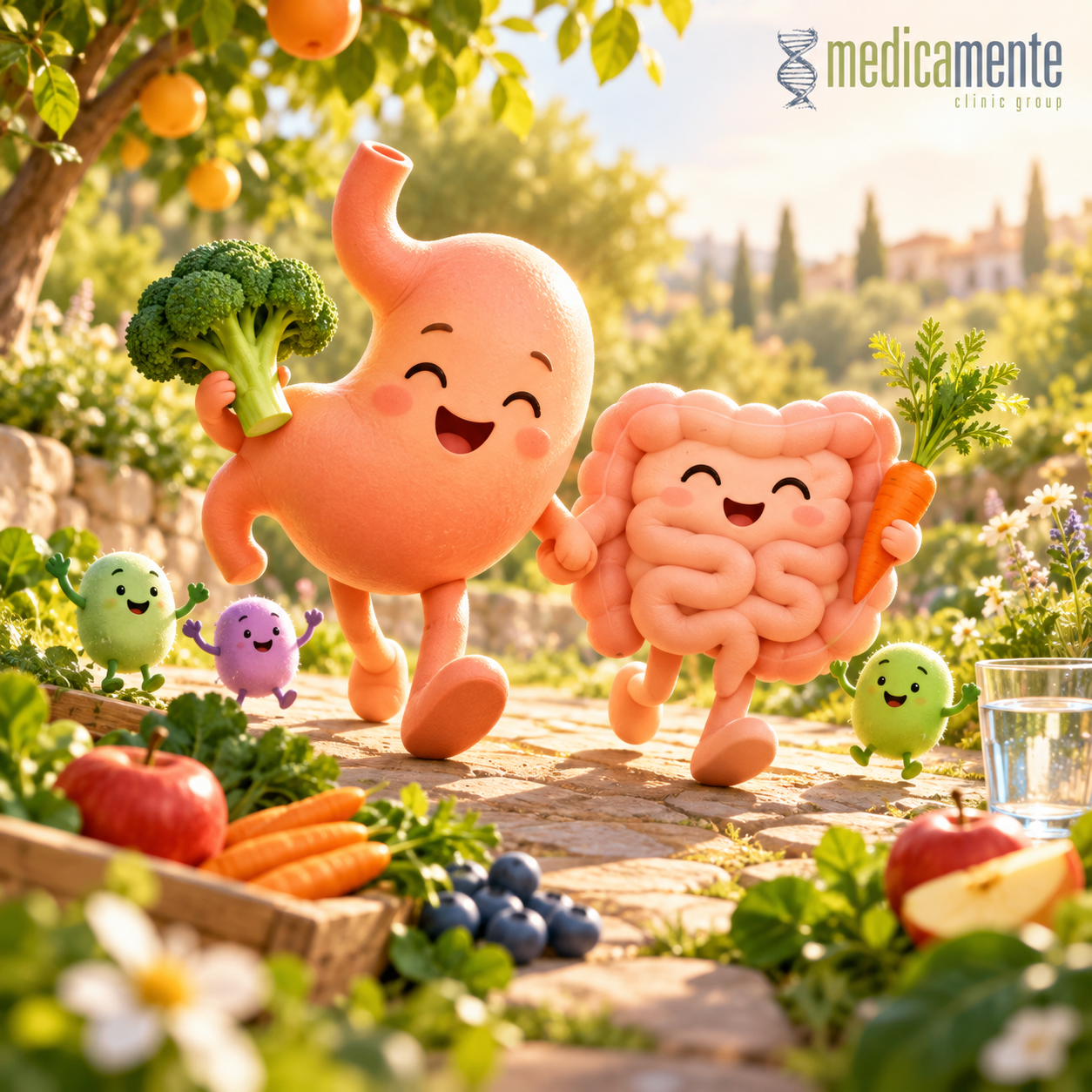
Why the stomach and intestines affect the whole body
Why the digestive system is so important
The digestive system works continuously every day. It receives food, breaks it down, digests it, helps the body absorb nutrients, maintains fluid balance and removes what the body no longer needs. At first glance, it may seem that the stomach and intestines are only responsible for food, but in reality their function is closely connected with energy levels, immunity, weight, skin condition, iron levels, vitamins and overall well-being.
When digestion is disrupted, it does not always appear only as abdominal pain. A person may feel weakness, heaviness after eating, nausea, bloating, unstable bowel movements, reduced appetite, an unpleasant taste in the mouth, heartburn, fatigue or unexplained weight loss. Sometimes symptoms seem mild and familiar, but their repetition and duration make them important.
Many gastrointestinal diseases develop gradually. Heartburn may be perceived for years as a simple reaction to food, although it may be caused by gastroesophageal reflux. Bloating may be related to diet, but in some cases it may indicate food intolerance, irritable bowel syndrome or inflammatory processes. Blood in the stool may be caused by hemorrhoids, but it always requires attention because the causes can be different.
September as Digestive Health Month is a good opportunity to pay attention to symptoms that people often postpone dealing with. The stomach and intestines should not be assessed only when the pain becomes severe. It is better to understand which symptoms may be temporary and which require examination.
How digestion works
Digestion begins already in the mouth. Food is chewed, mixed with saliva and gradually passes through the esophagus into the stomach. The stomach mixes food, processes it with acid and enzymes, and then moves it further into the small intestine.
The small intestine is where most nutrient absorption takes place: proteins, fats, carbohydrates, vitamins, minerals and fluids are absorbed there. This is where food is transformed into components that the body can use for energy, cell repair, muscle function, the nervous system and immunity.
The large intestine is responsible for absorbing water, forming stool and interacting with the intestinal microbiome. The microbiome participates in processing certain substances, maintaining the intestinal lining and supporting immune responses.
The digestive system works together with the liver, gallbladder and pancreas. Bile helps digest fats, the pancreas produces enzymes for breaking down food, and the liver participates in metabolism and detoxification of many compounds. This is why digestive symptoms are not always related only to the stomach or intestines — sometimes the cause is in neighboring organs.
Heartburn and reflux
Heartburn is a burning sensation behind the breastbone or in the upper abdomen, often caused by acidic stomach contents flowing back into the esophagus. This condition is called gastroesophageal reflux.
Sometimes reflux occurs after a heavy meal, fatty foods, coffee, alcohol, a late dinner or lying down soon after eating. If symptoms appear rarely and pass quickly, this may be a temporary reaction. But regular heartburn, a sour taste in the mouth, belching, nighttime cough, hoarseness or a lump-like sensation in the throat require attention.
The lining of the esophagus is not designed for constant contact with acid. If irritation occurs frequently, inflammation of the esophagus, pain, difficulty swallowing and other complications may develop.
It is important not just to constantly suppress acidity on one’s own, but to understand why symptoms keep returning. A doctor evaluates the frequency of heartburn, its connection with food, nighttime symptoms, medications, weight, diet and the presence of warning signs.
Pain and heaviness in the stomach
Pain, burning, heaviness, early fullness, nausea and discomfort in the upper abdomen may be related to different conditions. Possible causes include functional dyspepsia, gastritis, peptic ulcer disease, reflux, gallbladder disorders, pancreatic disease or side effects of medications.
Gastritis is often seen as a universal explanation for any stomach pain, but in practice the situation is more complex. Inflammation of the stomach lining may be related to Helicobacter pylori, certain medications, alcohol, bile reflux and other factors. However, similar symptoms may also occur without obvious inflammation.
Special attention is needed when symptoms appear for the first time at an older age, worsen over time, or are accompanied by vomiting, blood, black stool, weight loss, anemia, difficulty swallowing or persistent loss of appetite. In such cases, examination should not be postponed.
If discomfort keeps returning, it is important not only to change the diet, but also to understand the cause. Sometimes lifestyle correction is enough, while in other cases blood tests, testing for Helicobacter pylori, gastroscopy or evaluation of other digestive organs may be needed.
Helicobacter pylori
Helicobacter pylori is a bacterium that can live in the lining of the stomach. In some people it is associated with chronic inflammation of the stomach lining, peptic ulcer disease of the stomach and duodenum, and an increased risk of certain complications.
The presence of this bacterium does not always mean that it is the cause of current symptoms. But with certain complaints, peptic ulcer disease, changes in the stomach lining or anemia, a doctor may recommend testing.
It is important not to test for or treat Helicobacter pylori “just in case” without understanding the clinical situation. Antibiotics should also not be started independently. Treatment follows a specific regimen, and after treatment a follow-up test may sometimes be needed to confirm effectiveness.
Another important point is that symptoms of Helicobacter pylori infection may be nonspecific: discomfort in the upper abdomen, nausea, heaviness, pain, heartburn or no symptoms at all. Therefore, the decision to test should take the whole clinical picture into account.
Bloating
Bloating is one of the most common digestive symptoms. It may feel like pressure, fullness, an increase in abdominal size, gas, rumbling or discomfort after eating.
The causes of bloating can vary. Sometimes it is related to a large amount of gas-producing foods, eating too quickly, swallowing air, carbonated drinks, excess sweets, changes in diet or stress. In other cases, bloating may be linked to lactose intolerance, fructose intolerance, irritable bowel syndrome, constipation, motility disorders or inflammatory diseases.
It is important to assess when bloating appears: after which foods, at what time of day, whether it is related to bowel movements, and whether there is pain, diarrhea, constipation, weight loss, blood in the stool, fever or nighttime symptoms.
If bloating lasts a long time, worsens, is accompanied by warning signs or significantly changes the person’s usual condition, it is worth seeing a doctor. The cause is not always dangerous, but persistent symptoms should not be explained only by “poor digestion.”
Constipation
Constipation is not only infrequent bowel movements. It may also involve difficulty passing stool, hard stool, a feeling of incomplete emptying, the need to strain strongly or the feeling that the bowel is working slowly.
The causes of constipation are often related to insufficient fiber, low fluid intake, lack of physical activity, stress, changes in routine, certain medications or the habit of suppressing the urge to have a bowel movement. But sometimes constipation may be associated with endocrine disorders, neurological diseases, intestinal diseases or mechanical obstruction.
New constipation requires special attention, especially if it appears suddenly and is accompanied by blood in the stool, weight loss, pain, anemia, vomiting or a change in stool shape. It is also important to be examined if the usual bowel rhythm has noticeably changed without an obvious reason.
Constant use of laxatives without understanding the cause may be inappropriate. The approach depends on the duration of symptoms, diet, medications, age, associated diseases and warning signs.
Diarrhea
Diarrhea means frequent loose stools and may occur with infections, food poisoning, food intolerance, inflammatory bowel diseases, irritable bowel syndrome, medication side effects and other conditions.
Acute diarrhea is often related to infection and may be accompanied by abdominal pain, nausea, vomiting, fever and weakness. The main risk in such cases is dehydration, especially in children, older adults and patients with chronic diseases.
Warning signs include blood in the stool, high fever, severe pain, signs of dehydration, significant weakness, prolonged diarrhea, nighttime symptoms, weight loss or diarrhea after travel to a region with a high risk of infection.
Chronic or recurrent diarrhea requires investigation of the cause. It is important to assess the connection with diet, stress, medications, infections, weight loss, blood tests and signs of inflammation.
Blood in the stool
Blood in the stool is a symptom that should not be ignored. Sometimes the cause is indeed benign, such as hemorrhoids or an anal fissure. But the appearance of blood does not always make it possible to determine the source or seriousness of the problem.
Bright red blood on toilet paper or on the surface of the stool may be related to hemorrhoids or a fissure, especially if there is pain during bowel movements. But blood may also appear with inflammatory bowel diseases, polyps, tumors, infections and other conditions.
Black stool may indicate bleeding from the upper digestive tract, although stool color may also change due to certain foods or medications. If black stool looks tar-like and is accompanied by weakness, dizziness or vomiting blood, urgent medical care is needed.
It is important not to diagnose oneself based only on assumptions. If blood appears repeatedly, is accompanied by pain, changes in stool, weight loss, anemia, weakness or age-related risk factors, examination is necessary.
When gastroscopy and colonoscopy are needed
Endoscopic examinations help the doctor see the lining of the digestive tract from the inside. Gastroscopy evaluates the esophagus, stomach and duodenum. Colonoscopy evaluates the large intestine and the final part of the small intestine.
Gastroscopy may be recommended for persistent pain in the upper abdomen, heartburn with warning signs, difficulty swallowing, suspected ulcer, bleeding, anemia, unexplained weight loss or the need to clarify changes in the stomach lining.
Colonoscopy may be needed for blood in the stool, chronic diarrhea, changes in bowel habits, anemia, suspected inflammatory bowel disease, polyps or preventive screening at a certain age and in risk groups.
Many people are afraid of endoscopy, but these methods often provide important information that cannot be obtained only through blood tests or ultrasound. The decision to perform the examination is made by a doctor based on symptoms, age, risk factors and initial evaluation results.
Diet and digestion
Diet does affect the digestive system, but there is no universal diet that works for everyone. One person may tolerate dairy products well, while another may not. One person may experience bloating after legumes, another after sweet drinks or large amounts of fruit. Individual tolerance matters.
For most people, regular meals, enough fiber, vegetables, fruits, whole grains, adequate fluid intake and moderation with fatty, fried and highly processed foods are helpful. But in some diseases, recommendations may differ.
It is important to avoid extremes. Very strict diets, sudden exclusion of many foods, constant “detoxes” or self-imposed avoidance of entire food groups may lead to deficiencies and increase anxiety around food.
If symptoms recur, keeping a food diary can be useful: what was eaten, when symptoms appeared, what the stool was like, whether there was stress, medication use, menstrual cycle changes, infections or sleep disruption. Such a diary helps the doctor understand the situation more accurately.
Stress and the gastrointestinal tract
The connection between the nervous system and the intestines is very close. Stress can increase pain, cramps, bloating, diarrhea, constipation, nausea and heaviness. This does not mean that symptoms are “imagined.” The nervous system really does influence motility, sensitivity and intestinal function.
In irritable bowel syndrome, symptoms often worsen with stress, lack of sleep, anxiety, irregular meals or after an infection. Tests may be normal, but the discomfort is real and can be significant.
However, it is important not to attribute all complaints to stress without evaluating warning signs. If there is blood in the stool, weight loss, anemia, nighttime diarrhea, high fever, persistent vomiting or progressive pain, an organic cause must be considered.
A good approach takes both sides into account: the condition of the digestive system and the influence of stress, sleep, diet, routine and emotional strain.
When to see a doctor
A doctor should be consulted if symptoms recur, last a long time, worsen or interfere with daily life. This applies to heartburn, abdominal pain, bloating, constipation, diarrhea, nausea, vomiting, reduced appetite or changes in usual bowel habits.
Urgent evaluation is needed for severe abdominal pain, vomiting blood, black tar-like stool, fainting, marked weakness, signs of dehydration, high fever, blood in the stool, sudden weight loss, inability to swallow or persistent vomiting.
It is especially important not to postpone examination if symptoms appeared for the first time and are worsening quickly, if there are age-related risk factors, a family history of serious bowel diseases, anemia or unexplained weight loss.
The digestive system often sends signals gradually. The earlier a person pays attention to recurring symptoms, the more opportunities there are to detect a problem at an early stage and prevent complications.
Prevention of digestive system diseases
Prevention starts with basic habits: regular meals, enough fluid, fiber, movement, weight control, moderation with alcohol, cautious use of painkillers and avoiding self-treatment with antibiotics.
Chronic symptoms should not be ignored. If heartburn, pain, bloating, constipation or diarrhea keep returning, it is worth looking for the cause rather than only temporarily suppressing the symptoms. Many conditions are easier to manage when detected early.
Preventive examinations are also important. At a certain age and with risk factors, a doctor may recommend colon cancer screening, colonoscopy or other methods. Such examinations can detect polyps and other changes before serious symptoms appear.
Digestive health is not only the absence of pain. It means proper absorption of food, stable bowel movements, absence of chronic inflammation, adequate intake of nutrients and good quality of life. Caring for the stomach and intestines begins with attentive awareness of symptoms, reasonable nutrition and timely diagnosis.
Write a review
Required fields are marked with *
Categories
- Therapy (81)
- News (48)
- GP (23)
- Cardiology (20)
- urology (12)
- Endocrinology (8)
- Ortopedics (4)
- Dermatology (3)
- Ultrasound (1)
- Mobile app (1)
Articles





Archive
- September 2026 (11)
- August 2026 (11)
- July 2026 (11)
- June 2026 (11)
- May 2026 (9)
- April 2026 (8)
- March 2026 (8)
- February 2026 (8)
- January 2026 (8)
- December 2025 (5)
Categories
- Therapy (81)
- News (48)
- GP (23)
- Cardiology (20)
- urology (12)
- Endocrinology (8)
- Ortopedics (4)
- Dermatology (3)
- Ultrasound (1)
- Mobile app (1)


