
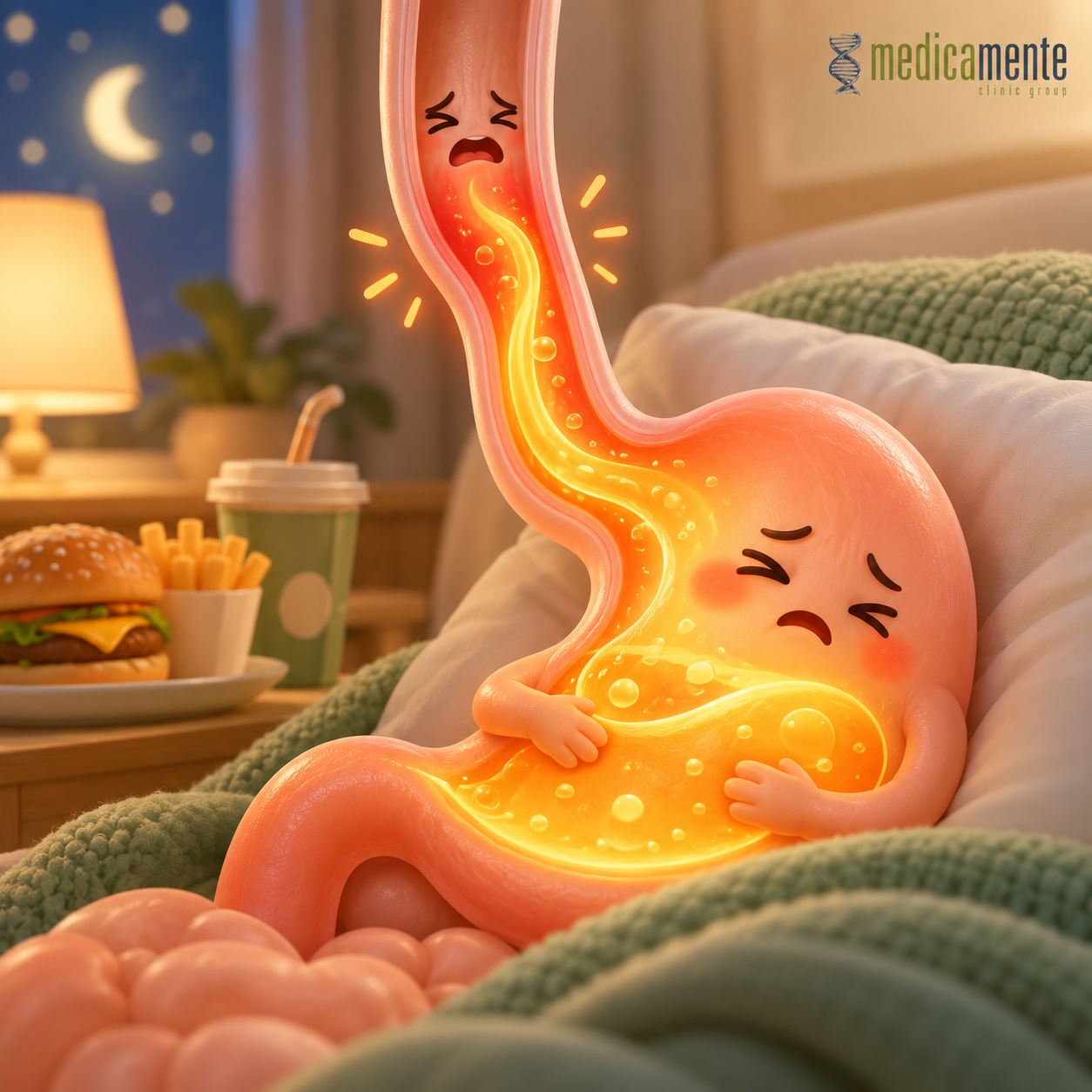
Why burning behind the breastbone and a sour taste should not always be considered harmless
What heartburn is
Heartburn is a burning sensation behind the breastbone, in the upper abdomen or sometimes in the throat. It often appears after eating, when bending forward, lying down, after a heavy dinner, fatty foods, coffee, alcohol or carbonated drinks. Some people describe it as heat, burning, acid or an unpleasant feeling rising upward from the stomach.
Heartburn is not a disease by itself, but a symptom. Most often it is associated with reflux — the backflow of stomach contents into the esophagus. The stomach contains acid, which is necessary for digestion, but the esophageal lining is not designed for regular contact with acid. When this happens often, irritation and inflammation may develop.
Occasional heartburn may occur in many people and does not always mean a serious problem. However, if the symptom repeats regularly, disturbs sleep, requires frequent medication or is accompanied by pain, difficulty swallowing, vomiting, anemia or weight loss, it should not be ignored.
It is important not only to suppress burning temporarily, but also to understand why it occurs. Reflux may be associated with eating habits, excess weight, pregnancy, certain medications, hiatal hernia, smoking, alcohol or impaired function of the lower esophageal sphincter.
How reflux develops
Between the esophagus and the stomach there is a muscular valve — the lower esophageal sphincter. Its role is to allow food to pass into the stomach and then prevent stomach contents from moving back upward.
If this sphincter does not close tightly enough or relaxes at the wrong time, acidic stomach contents may flow back into the esophagus. This is called reflux. Sometimes the refluxate contains not only acid, but also bile or digestive enzymes, which can further irritate the lining.
Reflux may occur after overeating, after fatty or heavy meals, when lying down soon after eating, with increased abdominal pressure, during pregnancy or with excess body weight. Tight clothing, bending forward and lifting heavy objects after meals may also worsen symptoms in some people.
The more often reflux occurs, the longer the esophageal lining is exposed to irritation. Over time, this can lead to inflammation, pain, erosions and other changes.
Why the esophagus suffers from acid
The stomach is naturally adapted to an acidic environment. Its lining has protective mechanisms that help it withstand acid and digestive enzymes. The esophagus does not have the same level of protection.
When acid enters the esophagus, it irritates the lining and can cause burning, pain, inflammation and increased sensitivity. In some people, even a small amount of reflux causes strong symptoms because the esophagus is more sensitive.
If irritation is repeated regularly, reflux esophagitis may develop — inflammation of the esophageal lining. It can manifest as persistent heartburn, pain when swallowing, discomfort behind the breastbone and sometimes a feeling that food passes with difficulty.
Long-term uncontrolled reflux may lead to complications. This does not happen to everyone, but it is one of the reasons why frequent heartburn should not be considered a normal everyday state.
Symptoms of reflux
The most typical symptoms are heartburn and a sour or bitter taste in the mouth. A person may feel acid rising upward, especially after eating or when lying down.
Other common symptoms include belching, burning in the throat, pain or discomfort behind the breastbone, nausea, heaviness after meals, a feeling of a lump in the throat and increased salivation.
Reflux can also appear with symptoms that do not seem directly related to the stomach. These may include chronic cough, hoarseness, throat clearing, sore throat, worsening of symptoms at night, bad breath or a feeling of mucus in the throat.
Sometimes reflux can mimic heart-related chest pain. Because of this, chest pain should not always be automatically explained by the stomach, especially if it is intense, appears with physical exertion, radiates to the arm, jaw or back, or is accompanied by shortness of breath, cold sweat or weakness.
Nighttime reflux
Nighttime reflux deserves special attention. When a person lies down, stomach contents can more easily flow back into the esophagus, especially if dinner was late, heavy or accompanied by alcohol.
Symptoms may include burning at night, waking up from coughing, sour taste in the mouth, hoarseness in the morning, dry throat or a feeling of choking. Some people do not feel classic heartburn but notice chronic cough or throat irritation.
Nighttime reflux may be more harmful because acid can stay in contact with the esophageal lining for longer. During sleep, swallowing is less frequent and natural cleansing of the esophagus works more slowly.
If symptoms regularly occur at night, it is worth discussing them with a doctor. Sometimes changing evening habits is enough, but in other cases examination and treatment are needed.
Foods and habits that can worsen reflux
Some foods and drinks can worsen reflux in sensitive people. Common triggers include fatty and fried foods, chocolate, peppermint, coffee, alcohol, carbonated drinks, spicy foods, citrus fruits, tomatoes and large portions.
However, triggers are individual. One person may react strongly to coffee, another to late dinners, another to fried foods or carbonated drinks. That is why it is not always necessary to exclude all possible triggers at once. It is better to observe which factors actually worsen symptoms.
The size and timing of meals matter. Large portions stretch the stomach and increase the risk of reflux. Late heavy dinners are also important because lying down soon after eating makes backflow easier.
Habits also matter: eating quickly, lying down after meals, smoking, tight belts or clothing, frequent overeating and lack of weight control can all worsen reflux.
Reflux and cough
Chronic cough may be associated with reflux, especially if it worsens after meals, at night or when lying down. Acidic contents can irritate the throat, larynx and airways directly or through reflex mechanisms.
A person may not always feel classic heartburn. Sometimes the main symptoms are cough, hoarseness, throat clearing, a lump-like sensation in the throat or recurrent throat irritation.
However, cough has many causes: infections, asthma, allergies, postnasal drip, smoking, lung diseases and certain medications. Therefore, it is not always correct to explain chronic cough only by reflux.
If cough lasts for a long time, it is important to evaluate the whole picture. A doctor may consider reflux as one of the possible causes, especially if there are digestive symptoms or a clear connection with meals and body position.
Reflux and sore throat
Reflux can irritate not only the esophagus but also the throat and larynx. This is sometimes called extraesophageal reflux. In such cases, a person may complain of sore throat, hoarseness, a burning sensation in the throat, frequent throat clearing or a feeling of mucus.
Symptoms may be more noticeable in the morning because reflux can occur during sleep. The voice may become hoarse, especially after waking up.
But these complaints are not specific. They may also be caused by infections, allergies, vocal strain, dry air, smoking or other ENT problems. That is why persistent throat symptoms may require evaluation by both a gastroenterologist and an ENT specialist.
If throat symptoms are combined with heartburn, sour taste, belching or worsening after meals, reflux becomes a more likely cause, but diagnosis should still be based on the full clinical picture.
When heartburn may be dangerous
Heartburn itself is common, but there are symptoms that require special attention. Difficulty swallowing, painful swallowing, a feeling that food gets stuck, unexplained weight loss, vomiting blood, black stool, anemia, persistent vomiting or progressive symptoms are warning signs.
Chest pain also requires careful evaluation. If pain is strong, squeezing, appears during physical activity, radiates to the left arm, jaw, back, or is accompanied by shortness of breath, weakness, cold sweat or dizziness, urgent medical evaluation is needed.
Heartburn that appears for the first time at an older age or suddenly becomes frequent also should not be ignored. In such cases, a doctor may recommend gastroscopy or other tests.
If a person constantly needs over-the-counter heartburn medication, this is also a reason to consult a doctor. Frequent self-treatment can mask symptoms without addressing the cause.
Gastroesophageal reflux disease
When reflux symptoms occur regularly or cause inflammation of the esophagus, this may be gastroesophageal reflux disease, also known as GERD.
GERD can significantly reduce quality of life. A person may avoid certain foods, sleep poorly, wake up from burning or coughing, constantly carry medication and worry about eating outside the home.
The diagnosis is usually based on symptoms, response to treatment and the presence or absence of warning signs. In some cases, gastroscopy or additional testing is needed.
It is important to understand that GERD is not always just “too much acid.” The problem may involve a weak lower esophageal sphincter, impaired motility, hiatal hernia, increased abdominal pressure, eating habits and esophageal sensitivity.
Hiatal hernia
A hiatal hernia occurs when part of the stomach moves upward through the opening in the diaphragm into the chest cavity. This can make reflux easier because the normal barrier between the stomach and the esophagus becomes less effective.
Not every hiatal hernia causes symptoms. Some people do not know they have it. In others, it may be associated with heartburn, belching, chest discomfort, difficulty swallowing or regurgitation of stomach contents.
The diagnosis may be made during gastroscopy or other imaging studies. Treatment depends on symptoms, the size of the hernia, complications and the person’s overall condition.
Most often, treatment starts with lifestyle changes and medication if needed. Surgery is considered only in selected cases when symptoms are severe, complications develop or conservative treatment is not effective.
Reflux during pregnancy
Heartburn is common during pregnancy. Hormonal changes relax smooth muscles, including the lower esophageal sphincter, and the growing uterus increases pressure on the stomach. This makes reflux more likely.
Symptoms often worsen in the second and third trimester, after large meals, when lying down or after certain foods. Heartburn during pregnancy can be very unpleasant, even if it is not always dangerous.
It is especially important during pregnancy not to choose medications independently. Not all remedies are suitable, so treatment should be discussed with a doctor.
Non-medication measures may help: smaller portions, avoiding lying down soon after eating, raising the head of the bed, avoiding individual triggers and eating dinner earlier. But if symptoms are severe, a doctor can recommend safe treatment options.
Excess weight and reflux
Excess body weight increases abdominal pressure and can make reflux more likely. Pressure on the stomach promotes backflow of contents into the esophagus, especially after meals or when lying down.
Weight reduction, if medically appropriate, can significantly reduce reflux symptoms in some people. Even moderate weight loss may improve well-being.
However, reflux should not be explained only by weight. People with normal body weight can also have GERD, hiatal hernia or increased esophageal sensitivity.
The best approach is comprehensive: diet, meal timing, physical activity, avoiding individual triggers and medical treatment when needed.
Smoking and reflux
Smoking negatively affects the digestive system. It can weaken the lower esophageal sphincter, increase reflux, irritate the lining, worsen healing and increase the risk of complications.
In smokers, reflux symptoms may be more persistent, and inflammation of the esophagus may heal more slowly. Smoking can also worsen cough and throat irritation, which makes reflux symptoms more difficult to distinguish from respiratory problems.
Quitting smoking is important not only for the lungs and heart, but also for digestive health. In reflux disease, it can reduce irritation and improve response to treatment.
Even if quitting completely is difficult, reducing smoking and getting medical support can be an important step.
Alcohol and reflux
Alcohol can worsen reflux through several mechanisms. It can relax the lower esophageal sphincter, irritate the lining, increase acid-related discomfort and provoke overeating or late meals.
Alcohol is especially likely to worsen symptoms when combined with fatty foods, a heavy dinner or lying down soon after eating. Some people notice symptoms even after small amounts.
If heartburn is frequent, it is worth observing whether alcohol is a clear trigger. For some people, reducing or avoiding alcohol significantly decreases symptoms.
Alcohol can also increase the risk of gastritis, erosions and other digestive problems, especially when combined with certain painkillers and anti-inflammatory medications.
How reflux is diagnosed
Diagnosis begins with a discussion of symptoms. The doctor asks how often heartburn occurs, when it appears, what worsens it, whether there are nighttime symptoms, difficulty swallowing, weight loss, vomiting, anemia, blood or black stool.
If symptoms are typical and there are no warning signs, the doctor may begin with lifestyle recommendations and treatment. If there are warning signs or symptoms are persistent, gastroscopy may be recommended.
Gastroscopy allows the doctor to examine the esophagus, stomach and duodenum. It can reveal inflammation, erosions, ulcers, narrowing and other changes. Biopsy may be taken if needed.
In some cases, additional tests are used, for example measuring acidity in the esophagus or assessing esophageal motility. These are not needed for everyone, but may help when the diagnosis is unclear or treatment is not effective.
Why gastroscopy may be needed
Gastroscopy is important when symptoms suggest possible damage to the esophageal or stomach lining. It helps determine whether there is esophagitis, ulcer, bleeding, narrowing or other conditions.
It is especially important when there is difficulty swallowing, food getting stuck, unexplained weight loss, anemia, vomiting blood, black stool or persistent vomiting. These symptoms cannot be safely evaluated only by diet changes or over-the-counter medication.
Gastroscopy may also be needed if symptoms continue despite treatment or return quickly after stopping medication.
Many people are afraid of this procedure, but it gives information that cannot be obtained from an ultrasound or blood test. In some cases, it helps prevent complications by identifying the problem in time.
Treatment of reflux
Treatment depends on the frequency and severity of symptoms, the presence of inflammation, warning signs and individual risk factors. It may include lifestyle changes, diet adjustments and medication.
Medications that reduce acidity can help the esophageal lining heal and reduce symptoms. But they should not always be used indefinitely without understanding the diagnosis, especially if symptoms keep returning.
If reflux is associated with excess weight, late meals, alcohol, smoking or certain foods, addressing these factors may be as important as medication.
The goal of treatment is not just to remove burning temporarily, but to reduce reflux episodes, protect the lining, prevent complications and improve quality of life.
Lifestyle changes that may help
It often helps to eat smaller portions, avoid overeating and not lie down soon after meals. It is usually better to have dinner several hours before bedtime, especially if nighttime symptoms are present.
Raising the head of the bed may help with nighttime reflux. Simply using extra pillows is not always effective because the body may bend at the waist; raising the upper body more evenly is usually better.
It is useful to identify personal triggers. These may include coffee, alcohol, chocolate, fatty foods, tomato-based foods, citrus fruits, mint, carbonated drinks or spicy foods. But there is no need to exclude all possible triggers if they do not worsen symptoms.
Weight control, quitting smoking and reducing alcohol intake may significantly improve reflux in many people.
What not to do
It is not advisable to constantly suppress heartburn without understanding why it occurs. Frequent use of over-the-counter medication may hide symptoms, while the underlying problem remains.
One should not ignore difficulty swallowing, blood, black stool, vomiting, anemia or weight loss. These symptoms require medical evaluation.
It is also not useful to follow overly strict diets without need. If a person excludes many foods for months but symptoms persist, quality of life decreases and the cause remains unclear.
It is better to follow a structured approach: assess symptoms, identify warning signs, adjust habits and consult a doctor if symptoms recur or worsen.
Possible complications
Long-term reflux may lead to inflammation of the esophagus, erosions, ulcers, narrowing and swallowing difficulties. In some cases, chronic irritation can cause changes in the esophageal lining that require monitoring.
Not every person with reflux develops complications. Many people have mild symptoms that respond well to lifestyle changes and treatment. But frequent or long-standing symptoms deserve attention.
Complications are more likely when reflux is severe, prolonged, untreated, associated with nighttime symptoms or accompanied by warning signs.
Timely evaluation helps determine whether the lining is damaged and what treatment is needed.
When to see a doctor
A doctor should be consulted if heartburn occurs more than occasionally, if it interferes with sleep, returns after stopping medication or is accompanied by sour regurgitation, chronic cough, hoarseness or chest discomfort.
Medical evaluation is especially important if there is difficulty swallowing, painful swallowing, vomiting, black stool, vomiting blood, anemia, weight loss, persistent loss of appetite or severe pain.
Urgent care is needed if chest pain may be related to the heart: pressure or squeezing in the chest, pain radiating to the arm, jaw or back, shortness of breath, cold sweat, weakness or dizziness.
Reflux is common, but this does not mean it should always be treated casually. When symptoms repeat, the body is signaling that the esophagus is regularly exposed to irritation.
Prevention of reflux
Prevention includes habits that reduce the chance of stomach contents flowing back into the esophagus. These include moderate portions, avoiding late heavy dinners, not lying down soon after eating, identifying food triggers and maintaining a healthy body weight.
Avoiding smoking and reducing alcohol also help protect the esophagus. Physical activity is useful, but intense exercise immediately after eating can worsen symptoms in some people.
It is important to take medications carefully. Some drugs may worsen reflux or irritate the lining, so persistent symptoms should be discussed with a doctor.
Heartburn should not be seen as a normal part of everyday life if it appears often. Attentive awareness of symptoms, reasonable eating habits and timely diagnosis help prevent complications and keep the digestive system healthy.
Write a review
Required fields are marked with *
Categories
- Therapy (81)
- News (48)
- GP (23)
- Cardiology (20)
- urology (12)
- Endocrinology (8)
- Ortopedics (4)
- Dermatology (3)
- Ultrasound (1)
- Mobile app (1)
Articles





Archive
- September 2026 (11)
- August 2026 (11)
- July 2026 (11)
- June 2026 (11)
- May 2026 (9)
- April 2026 (8)
- March 2026 (8)
- February 2026 (8)
- January 2026 (8)
- December 2025 (5)
Categories
- Therapy (81)
- News (48)
- GP (23)
- Cardiology (20)
- urology (12)
- Endocrinology (8)
- Ortopedics (4)
- Dermatology (3)
- Ultrasound (1)
- Mobile app (1)


