
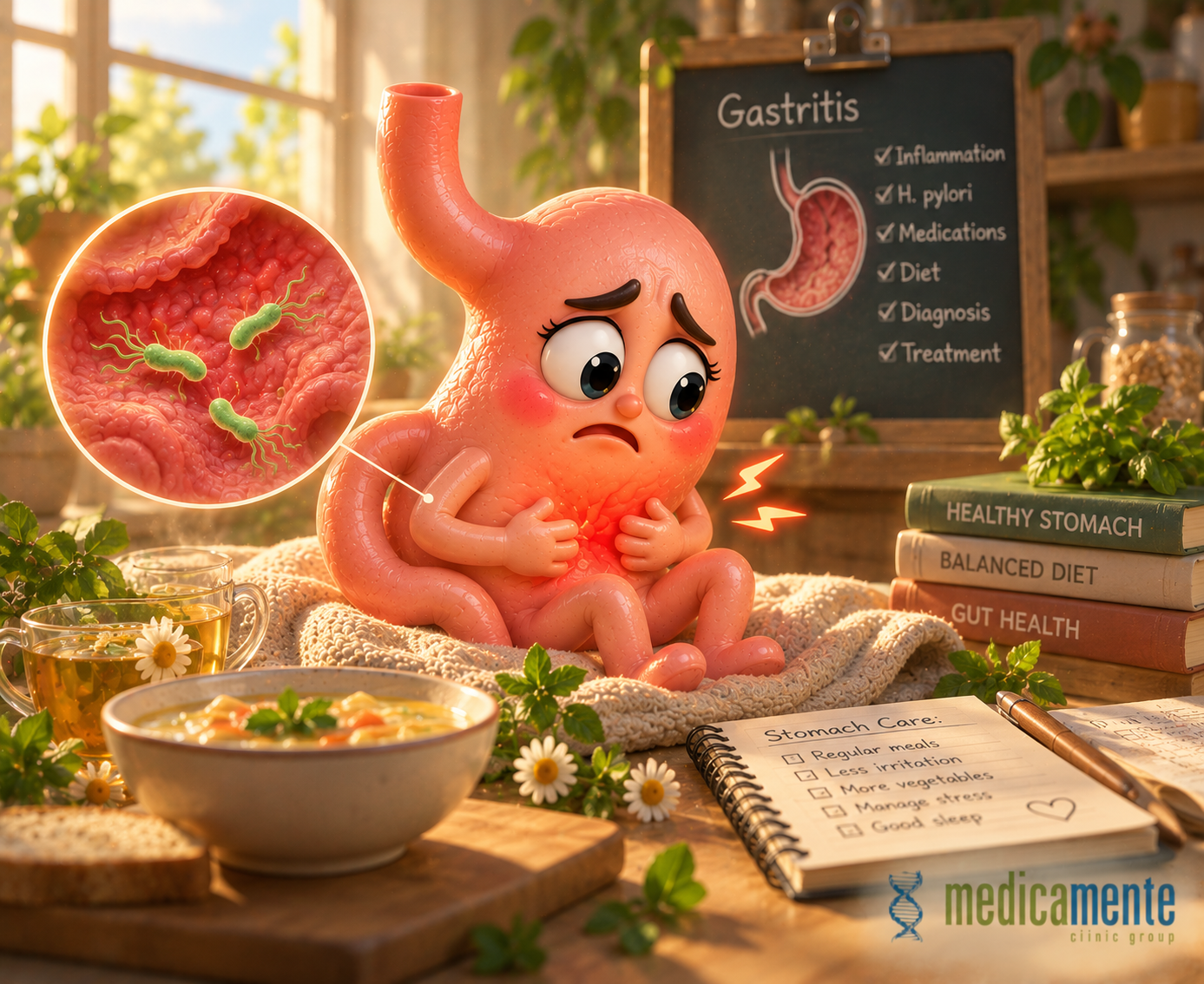
When pain, heaviness and nausea require attention
What gastritis is
Gastritis is inflammation of the stomach lining. The stomach lining has a protective function: it helps the organ tolerate an acidic environment, participates in digestion and protects the stomach wall from damage. When this protection is disrupted, the lining may become inflamed, more sensitive and more vulnerable.
Many people use the word gastritis for almost any pain or heaviness in the upper abdomen. But from a medical point of view, gastritis is not simply discomfort after eating. It means inflammatory changes in the stomach lining that can be confirmed by examination. Similar symptoms may occur in different conditions: functional dyspepsia, reflux, peptic ulcer disease, diseases of the gallbladder, pancreas or even some heart-related problems.
Gastritis may be acute or chronic. Acute gastritis develops relatively quickly, for example after an irritating effect on the lining. Chronic gastritis may last for a long time, sometimes almost silently, and may be found during evaluation for pain, anemia, discomfort or other complaints.
It is important to understand that the severity of symptoms does not always match the degree of changes in the lining. One person may have severe discomfort with minimal changes, while another may have chronic inflammation with few noticeable symptoms. That is why recurring complaints should not be self-diagnosed.
How the stomach lining works
The stomach is an organ that must perform two opposite tasks at the same time: produce acid for digestion and protect its own wall from damage. For this, the stomach has a protective mucus layer, normal blood supply, regulation of acidity and renewal of lining cells.
Stomach acid is needed for processing food, activating enzymes and protecting the body from some microorganisms. But if acid comes into contact with the lining when protection is weakened, irritation and inflammation may occur.
The stomach lining is affected by diet, medications, Helicobacter pylori infection, alcohol, smoking, physical stress on the body, bile reflux and overall health. Sometimes several damaging factors act together, and their combination leads to symptoms.
If the protective barrier is disrupted, a person may feel pain, burning, heaviness, nausea, fullness after a small amount of food or reduced appetite. But these symptoms do not always mean gastritis specifically, so the full clinical picture must be assessed.
Acute gastritis
Acute gastritis develops quickly. It may occur after alcohol intake, irritating foods, certain medications, food infection, severe physical stress, chemical injury to the lining or ingestion of aggressive substances.
Symptoms may include pain or burning in the upper abdomen, nausea, vomiting, heaviness, reduced appetite, an unpleasant taste in the mouth and general discomfort. Sometimes symptoms pass fairly quickly if the irritating factor is removed and the lining recovers.
However, acute gastritis is not always harmless. If vomiting blood, black stool, severe weakness, dizziness, intense pain, persistent vomiting or signs of dehydration appear, urgent medical care is needed.
People taking medications that may irritate the stomach lining should be especially cautious, as should older patients, people with chronic diseases, blood clotting disorders or a known history of peptic ulcer disease.
Chronic gastritis
Chronic gastritis is long-term inflammation of the stomach lining. It may occur with periods of improvement and worsening, and sometimes with almost no symptoms. In some people, complaints appear after eating, during stress, while taking medication or after dietary changes.
The causes of chronic gastritis vary. One common cause is Helicobacter pylori infection. Inflammation may also be related to autoimmune processes, bile reflux, long-term exposure to irritants, certain medications and other factors.
In chronic gastritis, it is important not only to relieve symptoms, but also to understand the cause of inflammation. The approach will differ depending on whether the condition is related to Helicobacter pylori, medications, an autoimmune mechanism or another cause.
Sometimes chronic gastritis may be associated with impaired absorption of certain substances, such as iron or vitamin B12. Therefore, with anemia, weakness, paleness, numbness, changes in the tongue or long-lasting complaints, a doctor may recommend additional tests.
Helicobacter pylori and gastritis
Helicobacter pylori is a bacterium that can live in the stomach lining. In some people, it causes chronic inflammation, increases the risk of peptic ulcer disease and certain complications. It is one of the important causes of chronic gastritis.
The infection may remain without obvious symptoms for a long time. Sometimes a person complains of pain or heaviness in the upper abdomen, nausea, discomfort after eating, heartburn or unstable appetite. But similar complaints may also occur with other conditions, so symptoms alone do not prove the presence of the bacterium.
Special tests are used to diagnose Helicobacter pylori. It is important to undergo testing correctly, because some medications can affect the result. It is also important not to start antibiotics independently: treatment requires a specific regimen, and sometimes a follow-up test is needed afterward.
If Helicobacter pylori is detected and there are indications for treatment, it is important to complete the course fully. Incorrect or incomplete use of medications may reduce treatment effectiveness and increase the risk of antibiotic resistance.
Medication-related stomach injury
Some medications can irritate the stomach lining or increase the risk of erosions and ulcers. This most often concerns nonsteroidal anti-inflammatory drugs, which are used for pain, fever and inflammation. The risk is higher with long-term use, high doses, combining several medications and the presence of other risk factors.
Not everyone develops problems from these medications, but in some people they can cause stomach pain, heartburn, nausea, erosions, ulcers and even bleeding. Older patients, people with a history of ulcers, patients taking medications that affect blood clotting and people with chronic diseases should be especially careful.
It is important not to stop prescribed medications independently, but also not to take painkillers uncontrollably. If stomach pain, black stool, weakness, vomiting blood or severe nausea appears while taking medication, medical evaluation is needed.
If necessary, a doctor may choose a safer regimen, protective treatment for the lining or an alternative therapy. But the decision depends on why the medication is being taken and on the patient’s overall condition.
Alcohol, smoking and the stomach lining
Alcohol can irritate the stomach lining, especially with regular use, high amounts or combination with medications. It may increase inflammation, provoke pain, nausea, heartburn and raise the risk of lining damage.
Smoking also has an unfavorable effect on the stomach. It may weaken the protective mechanisms of the lining, affect blood supply, worsen reflux and impair healing of damaged areas. Smokers have a higher risk of some gastrointestinal diseases and poorer recovery after inflammatory processes.
If gastritis symptoms recur, it is important to assess not only diet, but also alcohol, smoking, coffee, sleep routine, stress, medications and associated diseases. Sometimes a combination of factors keeps inflammation active.
Quitting smoking and reducing exposure to irritants help the lining recover and reduce the risk of repeated flare-ups. This does not replace diagnosis, but it is an important part of prevention.
Bile reflux
Sometimes stomach irritation is related not only to acid, but also to bile flowing back from the duodenum into the stomach. This condition is called duodenogastric or bile reflux.
Bile is needed to digest fats, but if it enters an area where it should not be, it can irritate the stomach lining. This may cause bitterness in the mouth, nausea, heaviness, discomfort in the upper abdomen and sometimes burning.
Bile reflux may be related to motility disorders, previous surgery, gallbladder problems or other factors. It is not always easy to distinguish it from acid reflux based on symptoms alone.
The approach depends on the cause and examination results. Self-treatment “for acidity” does not always solve the problem if bile reflux or motility disturbance plays a significant role.
Symptoms of gastritis
Gastritis may cause pain or discomfort in the upper abdomen, heaviness after meals, nausea, reduced appetite, early fullness, burning, belching or an unpleasant taste in the mouth. Sometimes symptoms worsen after certain foods, alcohol, coffee, medications or stress.
But symptoms alone cannot accurately determine whether inflammation of the lining is present. The same complaints may occur with functional dyspepsia, reflux, ulcers, diseases of the gallbladder, pancreas, intestines or even heart-related conditions.
Sometimes chronic gastritis is almost silent and is found during examination for another reason. For example, this may happen with anemia, vitamin B12 deficiency, suspected Helicobacter pylori infection or during gastroscopy.
Therefore, with recurring symptoms it is important not only to label them as gastritis, but to understand what is actually happening: inflammation, motility disturbance, increased sensitivity, infection, medication injury or another condition.
Pain in the upper abdomen
Pain in the upper abdomen may be related to the stomach, esophagus, duodenum, gallbladder, pancreas and other organs. Sometimes pain in this area can even resemble heart-related pain.
Stomach pain is often connected with food, but this connection may vary. In some people, pain appears on an empty stomach; in others, after eating; in others, after certain foods or alcohol. But this pattern does not always allow an accurate diagnosis.
If the pain is severe, worsening, accompanied by vomiting, fever, black stool, blood, fainting, marked weakness or pain radiating to the back, urgent evaluation is needed.
If the pain recurs regularly, even if it is moderate, it is better to see a doctor. Constant self-treatment may temporarily hide symptoms, but not solve the cause.
Nausea and early fullness
Nausea, heaviness after eating and early fullness may accompany gastritis, but they also occur with functional dyspepsia, impaired stomach motility, reflux, diseases of the gallbladder, pancreas, pregnancy, medication side effects and other conditions.
Early fullness means that a person eats a small portion but already feels overly full. If this happens often and is accompanied by weight loss, vomiting, anemia or persistent loss of appetite, examination is needed.
Nausea after meals may not be related only to the stomach. Sometimes it occurs with gallstone disease, liver disorders, migraine, endocrine disorders, infections or stress-related conditions.
That is why it is important to assess not one symptom, but the whole picture: duration, connection with food, character of pain, bowel movements, weight, medications, stress, temperature and warning signs.
Gastritis and peptic ulcer disease
Gastritis and peptic ulcer disease are not the same. In gastritis, the stomach lining is inflamed. In an ulcer, a deeper defect forms in the lining and may affect the stomach or duodenum.
The causes may overlap: Helicobacter pylori, certain medications, smoking, alcohol and other factors. But an ulcer carries a higher risk of complications, including bleeding, perforation and narrowing.
Symptoms of gastritis and ulcers may be similar: pain, burning, nausea, discomfort after eating or on an empty stomach. Therefore, it is not always possible to understand from symptoms how deep the damage to the lining is.
If black stool, vomiting blood, sudden sharp pain, marked weakness, dizziness or fainting occurs, urgent medical care is needed.
When gastritis may be associated with anemia
Some forms of chronic gastritis may affect the absorption of iron or vitamin B12. This can lead to anemia, weakness, fatigue, paleness, shortness of breath with exertion, dizziness, palpitations or reduced performance.
Autoimmune gastritis may be associated with impaired production of factors needed for vitamin B12 absorption. This condition requires separate diagnosis and monitoring.
If a person has anemia without an obvious cause, a doctor may evaluate the gastrointestinal tract, including the possibility of chronic gastritis, blood loss, impaired absorption or other diseases.
It is important not to limit treatment to iron or vitamins without looking for the cause, especially if anemia recurs, is significant or is accompanied by digestive symptoms.
How gastritis is diagnosed
Diagnosis begins with symptoms and medical history. The doctor clarifies where the pain is, when symptoms appear, whether they are related to food, whether there is nausea, vomiting, heartburn, weight loss, stool changes, blood, anemia, medications, alcohol, smoking and family risk factors.
Gastroscopy is the main method that allows examination of the lining of the esophagus, stomach and duodenum. During the examination, the doctor may see inflammation, erosions, ulcers, signs of reflux and other changes.
If needed, a biopsy is taken during gastroscopy — small tissue samples for analysis. This helps clarify the type of inflammation, detect Helicobacter pylori, evaluate atrophic changes and exclude other processes.
Blood tests, Helicobacter pylori tests, stool testing for hidden blood, assessment of iron, vitamin B12 and other investigations may also be used. The choice depends on symptoms and the suspected cause.
Why gastroscopy may be important
Many people are afraid of gastroscopy and try to replace it with tablets or diet. But with certain symptoms, gastroscopy provides information that cannot be obtained from complaints or routine blood tests alone.
It helps distinguish gastritis from an ulcer, assess the severity of inflammation, see erosions, signs of bleeding, narrowing, changes in the lining and other causes of symptoms. If needed, a biopsy can be taken.
Gastroscopy is especially important with warning signs: difficulty swallowing, vomiting blood, black stool, unexplained weight loss, anemia, persistent vomiting, severe pain or first-time symptoms at an older age.
If complaints are mild and short-term, gastroscopy may not be needed immediately. But the decision is best made with a doctor, taking age, symptom duration and risk factors into account.
Treatment depends on the cause
Treatment of gastritis should not be the same for everyone. If the cause is related to Helicobacter pylori, one approach is needed. If medications are damaging the lining, another approach is needed. If bile reflux, motility disturbance or an autoimmune process is important, the approach again differs.
Sometimes treatment includes changes in diet and habits, avoiding irritants, adjusting medications, drugs that protect the lining or reduce acidity. But the choice depends on the diagnosis, not only on the word “gastritis.”
Long-term self-use of medications may temporarily reduce symptoms, but not eliminate the cause. For example, if Helicobacter pylori is present, it is important to detect and treat it properly. If there is an ulcer or bleeding, a different approach is needed.
The goal of treatment is not simply to remove pain, but to restore the lining, remove the damaging factor, prevent complications and reduce the risk of recurring flare-ups.
Diet in gastritis
Diet in gastritis should be gentle, but not necessarily extremely strict. It is important to avoid what clearly worsens symptoms: alcohol, very spicy foods, excess fried foods, large portions, late heavy dinners and foods that the individual does not tolerate well.
Many people feel better with regular meals in small or moderate portions, without long fasting periods and overeating. But there is no universal menu for everyone. Different people have different triggers.
It is not advisable to exclude many foods for a long time without need. Overly strict diets may worsen nutrition quality, lead to deficiencies and increase anxiety around food.
It is better to observe individual reactions, keep a food diary and discuss diet with a doctor, especially if there are chronic diseases, anemia, weight loss or the need for long-term treatment.
Stress and gastritis
Stress can worsen stomach symptoms: pain, heaviness, nausea, cramps, heartburn and reduced appetite. The nervous system affects stomach motility, lining sensitivity, appetite and pain perception.
But it is important not to attribute everything to stress. Even if symptoms worsen during tense periods, this does not exclude Helicobacter pylori, ulcers, reflux, medication injury or other causes.
Stress may not be the only cause, but a factor that makes symptoms more noticeable. For example, if inflammation or increased stomach sensitivity already exists, emotional strain may intensify discomfort.
A good approach considers both physical causes and lifestyle: sleep, diet, coffee, alcohol, medications, level of workload, anxiety and recovery.
When to see a doctor
A doctor should be consulted if pain or heaviness in the upper abdomen recurs, lasts a long time, worsens, interferes with eating, is accompanied by nausea, vomiting, heartburn, loss of appetite or requires constant medication.
Urgent medical care is needed for vomiting blood, black tar-like stool, severe or sharp pain, marked weakness, fainting, persistent vomiting, signs of dehydration or rapidly worsening condition.
Examination should also not be delayed in cases of unexplained weight loss, anemia, difficulty swallowing, a feeling of food getting stuck, prolonged loss of appetite or first-time symptoms at an older age.
Gastritis is common, but it is not always simple. Different causes and different risks may be hidden behind this word. That is why it is important not only to temporarily reduce pain or heaviness, but to understand what is irritating the stomach lining and how to prevent repeated flare-ups.
Prevention of gastritis
Prevention includes careful protection of the stomach lining. It is important not to abuse alcohol, not to smoke, not to take painkillers and anti-inflammatory medications uncontrollably, not to self-treat with antibiotics and to pay attention to recurring symptoms.
The diet should be regular and well tolerated. It is not necessary to follow strict restrictions without a diagnosis, but it is worth avoiding overeating, late heavy dinners and foods that consistently cause discomfort.
If Helicobacter pylori is detected and there are indications for treatment, it is important to complete therapy correctly and check the result if needed. This helps reduce the risk of repeated inflammation and peptic ulcer disease.
Prevention is not only about diet. It also includes medication control, quitting smoking, moderation with alcohol, treatment of associated diseases and timely examination when warning symptoms appear.
Write a review
Required fields are marked with *
Categories
- Therapy (81)
- News (48)
- GP (23)
- Cardiology (20)
- urology (12)
- Endocrinology (8)
- Ortopedics (4)
- Dermatology (3)
- Ultrasound (1)
- Mobile app (1)
Articles





Archive
- September 2026 (11)
- August 2026 (11)
- July 2026 (11)
- June 2026 (11)
- May 2026 (9)
- April 2026 (8)
- March 2026 (8)
- February 2026 (8)
- January 2026 (8)
- December 2025 (5)
Categories
- Therapy (81)
- News (48)
- GP (23)
- Cardiology (20)
- urology (12)
- Endocrinology (8)
- Ortopedics (4)
- Dermatology (3)
- Ultrasound (1)
- Mobile app (1)


