
Neck Stiffness and Tension: Causes and Approaches to Recovery
Why Neck Pain Develops
The cervical spine supports the head and allows it to move. Vertebrae, intervertebral discs, joints, ligaments and muscles work together during turning and bending. Nerve structures pass through this region, which is why some neck conditions also produce symptoms in the shoulders, arms and hands.
Pain may follow unfamiliar activity, prolonged time in one position or an injury. Sometimes there is no obvious trigger. Symptoms range from mild stiffness to a considerable restriction of movement. Their location and intensity do not identify the source with certainty. Assessment considers how symptoms developed, accompanying problems and examination findings.
The Influence of Computer Work
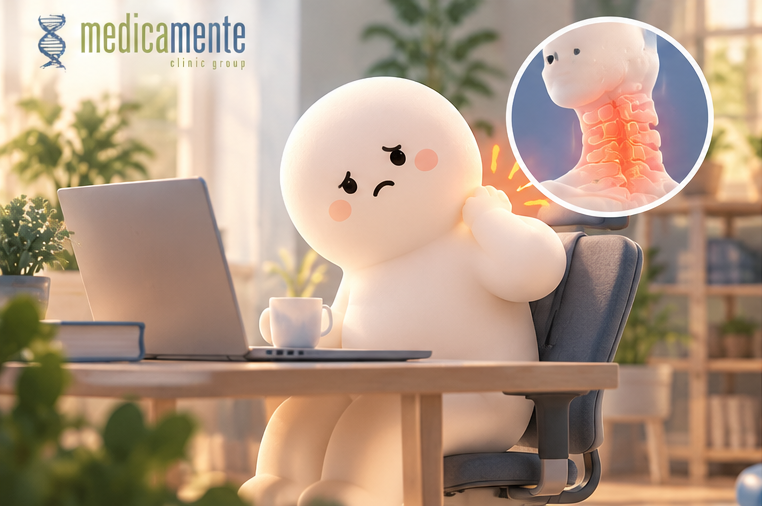
Screen work can involve holding the head and shoulders in one position for a long time. Concentration may reduce spontaneous movement, allowing discomfort to build gradually. Working hours, equipment, opportunities to change position and overall physical activity can all be relevant.
There is no universal posture that guarantees freedom from pain. Even a comfortable position may become tiring when maintained too long. A workspace should make position changes easy. The screen, keyboard and mouse can be arranged to reduce the need to reach forward, lift the shoulders or repeatedly turn the head in one direction.
Phones and Everyday Activities
Reading from a phone, crafts and other activities performed with the head bent forward may provoke discomfort, particularly when continued without breaks. Bending the neck is nevertheless a normal movement. It does not automatically mean that the spine is being damaged or developing a dangerous deformity.
It is more useful to consider duration and the body’s response than to monitor every angle constantly. Changing the device position, supporting the arms and alternating activities may help. When symptoms recur, other demands should also be reviewed, including work, exercise, carrying loads and opportunities for recovery.
Muscle Tension, Stress and Sleep
A feeling of muscle tension often accompanies neck pain. People may restrict movement or hold their shoulders raised when uncomfortable. Stress and anxiety can also influence muscle activity and pain processing. These mechanisms do not make the symptoms imaginary or purely emotional.
Sleep affects recovery and tolerance of daily demands. Morning stiffness may sometimes follow an uncomfortable head position. Pillows are selected according to comfort, support and usual sleeping position. No particular model, height or shape is necessary for everyone, and a specialist pillow cannot address every possible cause of neck pain.
Why Pain May Travel into the Arm
Neck-related pain can extend into the shoulder, between the shoulder blades or down the arm. This does not always indicate nerve compression. Pain may be referred from muscles or joints, while a separate shoulder or peripheral nerve problem can produce similar symptoms.
Irritation of a nerve root may cause shooting pain, tingling, numbness or weakness in the arm or hand. This is called cervical radiculopathy. Diagnosis considers symptom distribution and neurological examination. New or worsening weakness, such as difficulty holding objects, needs timely medical assessment.
Clicking and Changes on Scans
Clicking or grinding during neck movement is common. Without pain, injury or neurological changes, these sounds usually do not indicate a serious problem. Sound alone cannot reveal the condition of the discs, the extent of joint changes or whether treatment is needed.
Disc and joint changes become more common with age and can be found in people without symptoms. Imaging findings must therefore be interpreted alongside clinical information. Terms such as “spondylosis” or “degenerative changes” do not explain every episode of pain or mean that disability will inevitably progress.
When Investigations Are Appropriate
Initial assessment begins with questions and examination. Relevant details include the onset of pain, any injury, restricted movements and arm symptoms. Where appropriate, a clinician checks muscle strength, sensation, reflexes, coordination and walking.
MRI is not always needed immediately for ordinary neck pain without injury or warning signs. Further tests address particular concerns, such as trauma, nerve involvement, infection or another suspected condition. Persistent symptoms may also require reassessment. The choice of investigation depends on the clinical question rather than pain intensity alone.
Symptoms Requiring Urgent Attention
New balance or walking difficulties, clumsy hands, dropping objects, weakness or altered sensation in the limbs need particular attention. Prompt assessment is especially important when symptoms are progressing or accompanied by changes in bladder or bowel function. These findings may indicate spinal cord involvement.
Emergency care is needed after serious trauma or when sudden unusual neck or head pain occurs with speech or visual problems, facial asymmetry or limb weakness. Marked neck stiffness accompanied by fever, a severe headache and worsening general health also requires immediate assessment.
Restoring Movement
Once serious causes have been excluded, maintaining manageable activity and gradually resuming familiar movements are usually encouraged. Complete immobilisation and prolonged self-prescribed use of a neck collar are generally unnecessary. Recommendations may differ after injury or for particular conditions.
Exercise is adapted to individual circumstances. It may include gentle neck movements, shoulder muscle strengthening and general physical activity. Movements should avoid sudden force and attempts to push through severe pain. New numbness, weakness or a clear deterioration are reasons to stop the provoking activity and seek assessment.
Treatment and Everyday Function
Medicines, warmth or cold may help symptoms, with appropriate protection for the skin. Medication choices depend on contraindications, other conditions and current treatment. Massage and other hands-on methods may be useful additions, but they do not replace an individual plan for restoring activity.
Assessment is appropriate when pain fails to improve over several weeks, keeps returning or interferes with sleep and work. Progress can be measured through practical changes: easier head turning, better tolerance of working tasks and improved daily activity. Care aims to restore function and provide a clear plan for managing further episodes.
Write a review
Required fields are marked with *
Categories
- Therapy (81)
- News (48)
- GP (23)
- Cardiology (20)
- urology (12)
- Ortopedics (8)
- Endocrinology (8)
- Dermatology (3)
- Ultrasound (1)
- Mobile app (1)
Articles





Archive
- October 2026 (4)
- September 2026 (11)
- August 2026 (11)
- July 2026 (11)
- June 2026 (11)
- May 2026 (9)
- April 2026 (8)
- March 2026 (8)
- February 2026 (8)
- January 2026 (8)
Categories
- Therapy (81)
- News (48)
- GP (23)
- Cardiology (20)
- urology (12)
- Ortopedics (8)
- Endocrinology (8)
- Dermatology (3)
- Ultrasound (1)
- Mobile app (1)


